
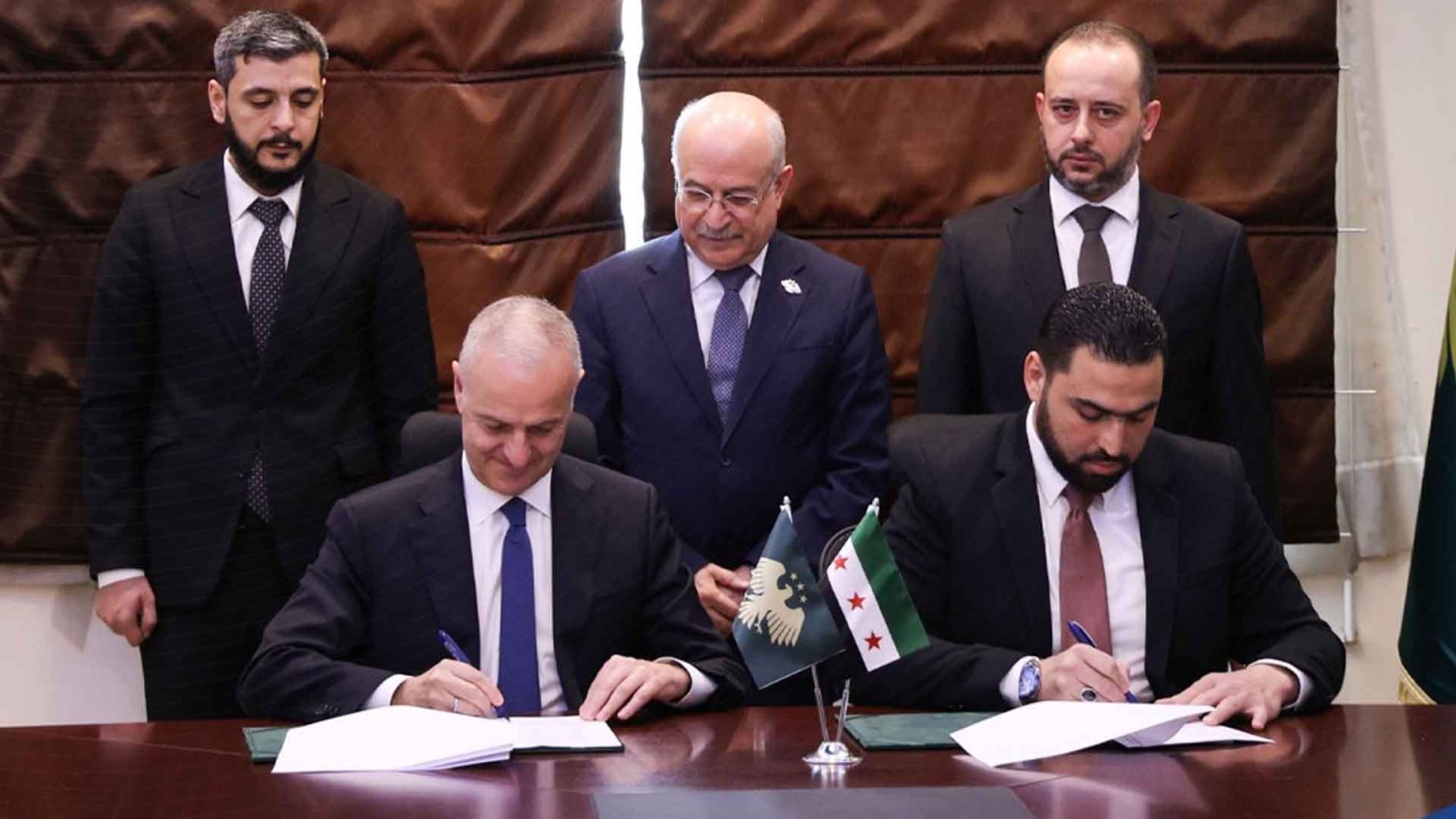
 The General Establishment of Syrian Railways and the Latakia International Container Terminal Company signed a memorandum of understanding aimed at developing rail connections between the Port of Latakia and inland dry ports across Syria.
The agreement establishes a framework for future cooperation between the two sides and lays the groundwork for more detailed operational and financial contracts. Officials said the project is intended to strengthen Syria’s transport and logistics infrastructure while improving cargo movement between coastal and inland commercial hubs.
Linking Ports Across the Country
Under the memorandum, the two parties will study a railway project connecting the Port of Latakia with dry ports in Aleppo, Homs, and Damascus. Officials said the proposed network would improve integration between Syria’s seaports and inland logistics centers, allowing goods to move more efficiently throughout the country.
Joseph Daqaq said the memorandum will remain in effect for four months while both sides complete a comprehensive feasibility study. Daqaq said the study aims to prepare for a final concession agreement covering the operation of railway lines between the targeted areas. He added that the project seeks to improve operational efficiency and logistical connectivity.
Expanding Dry Port Investments
According to Daqaq, the company has expanded its investments in Syria’s free zones and dry ports since the start of 2025. He said contracts have already been signed to operate dry ports in Aleppo, Adra, and the Nasib Border Crossing near the Jordanian border.
“The railway project represents the completion of an integrated logistics vision based on linking seaports with inland dry ports within the country,” Daqaq said. He added that the project could help accelerate cargo transportation, lower shipping costs, and improve supply chain efficiency across Syria.
Daqaq also praised what he described as Syria’s broader strategy to develop the transport and logistics sector, saying the recent steps could encourage new investment and strengthen Syria’s role as a regional transit and trade center.
Preparing for Future Agreements
Osama Haddad said the memorandum forms part of ongoing studies aimed at reactivating rail transport between Syrian seaports and inland logistics facilities. Haddad noted that the agreement establishes a broad framework for cooperation while preparing the way for more detailed future contracts covering technical, operational, and investment issues.
He said both parties will complete the required studies during the agreed period before moving toward implementation and contracting phases. Officials described the project as part of wider efforts to rebuild Syria’s transportation infrastructure and modernize logistics networks after years of disruption to the sector.