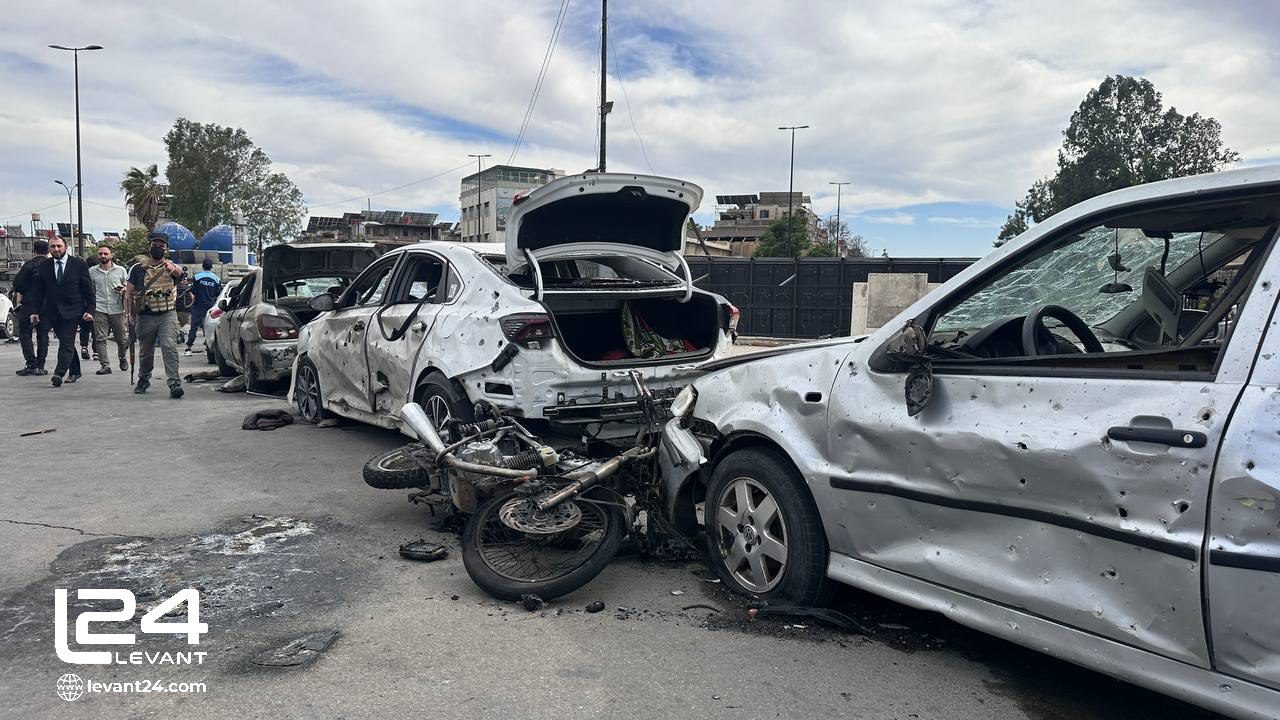
A car bombing near the Syrian Defense Ministry’s armament administration in Damascus killed one Syrian army soldier and wounded at least 23 people on May 19, marking the latest in a string of security incidents inside the capital.
The explosion struck the Bab Sharqi area, a densely populated district in eastern Damascus near the Douilaa neighborhood. Syrian state media reported that army engineers had discovered an improvised explosive device near a Defense Ministry building shortly before the blast occurred.
According to the Syrian Defense Ministry’s Media and Communication Department, soldiers attempted to dismantle the device before a car bomb detonated nearby. Officials said the blast killed one soldier and injured others, including civilians.
Najib al-Naasan, director of ambulance and emergency services at the Syrian Ministry of Health, later confirmed that the number of wounded had risen to 23 as additional victims arrived at hospitals. Medical teams continued treating the injured throughout the evening.
Eyewitnesses reported seeing ambulances and security vehicles rushing to the scene while authorities sealed off surrounding roads. Videos circulated on social media showed thick smoke rising above the Bab Sharqi tunnel area following the explosion.
Interior Ministry Points to Organized Cell
The Syrian Interior Ministry condemned the attack and said preliminary investigations indicated that an organized group carried out the bombing. Interior Ministry spokesman Nouruddin Baba told the media investigators had identified “initial leads,” gathering evidence pointing toward a “specific party” suspected of involvement in the attack.
Baba said the perpetrator allegedly exploited confusion surrounding the discovery of the suspicious device before remotely detonating the car bomb after leaving the area. He said authorities were examining whether the cells involved were linked to Assad remnants, foreign militias or extremist organizations.
Syrian officials did not publicly identify any group responsible for the attack. “The ultimate goal is to reach zero terrorist operations within Syrian society,” Baba said during an interview. He added that the Interior Ministry planned to hold a press conference soon detailing arrests, suspected militant cells and methods used in planned attacks. Authorities also stressed that security agencies continued pursuing what Baba described as a strategy of “preventive security and proactive operations.”
Series of Attacks Deepens Anxiety
Tuesday’s bombing comes amid increasing concern over renewed militant activity in Damascus despite heightened security measures imposed by the government. More than a week earlier, five civilians were injured when an explosion struck a bus in the Wuroud neighborhood on the outskirts of Damascus.
Initial reports differed on the cause, with some residents attributing the incident to a battery explosion while others suspected an explosive device planted inside the vehicle. Security teams also reportedly dismantled another explosive device near a neighborhood official’s office in Ash al-Wurour days before the Bab Sharqi attack. The recent incidents follow several deadly attacks over the past year.
In June 2025, a suicide bombing targeted Mar Elias Church in the Douala area near Bab Sharqi, killing 13 people and injuring 53 others. At the time, the Syrian Interior Ministry said an attacker affiliated with the Islamic State entered the church, opened fire and detonated an explosive vest.
Another explosion occurred in Aleppo on Dec. 31, 2025, during New Year’s celebrations. According to local reports, a suspected attacker blew himself up after being confronted by public security personnel near the Qasab gate in Old Aleppo. One security officer died and two others were injured.
Earlier this month, ISIS claimed responsibility for the assassination of Shiite cleric Farhan Hassan al-Mansour in the Sayyida Zeinab area south of Damascus, further fueling fears that terrorist cells may be attempting to expand operations in areas considered heavily secured.
Authorities Promise Expanded Surveillance
Syrian officials said the government was strengthening surveillance and intelligence capabilities in response to the recent attacks. Baba said the Interior Ministry was modernizing monitoring and tracking systems while increasing cooperation with local and international security experts. He also urged civilians to report suspicious activity to authorities.
Despite describing Tuesday’s bombing as a “painful breach,” Syrian officials insisted security forces would continue pursuing militant cells operating inside the country. The bombing exposed the fragile security situation facing Damascus as authorities confront threats from terrorism, armed factions and networks linked to the former regime while attempting to stabilize the capital after years of conflict.