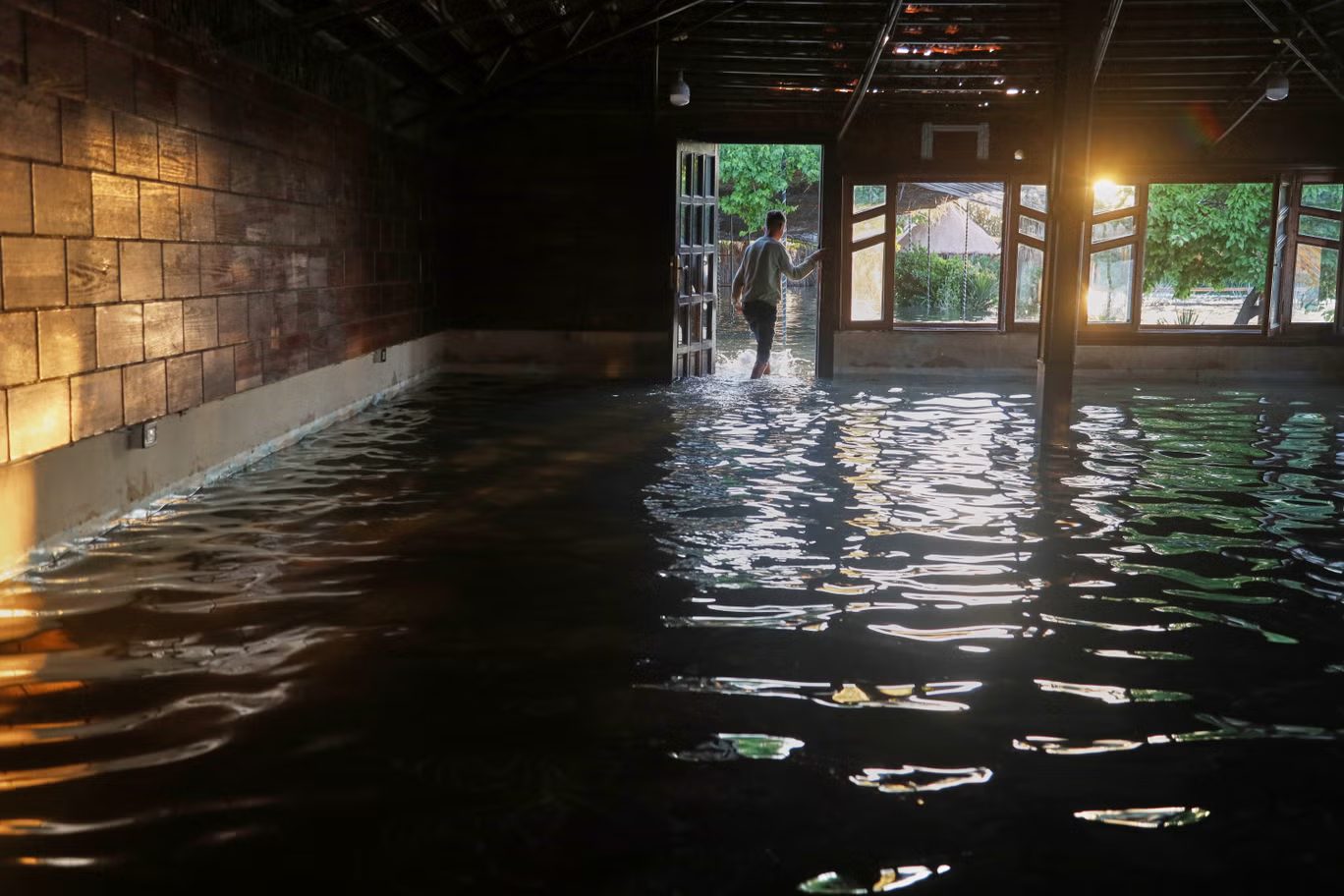
Syrian authorities intensified emergency operations, May 28, as rapidly rising water levels in the Euphrates River flooded homes, damaged infrastructure and threatened communities across the governorates of Deir Ezzor and Raqqa.
The Syrian government announced its response involving multiple ministries, emergency teams and local authorities as water flows surged from around 500 cubic meters per second to nearly 1,800 cubic meters per second in recent days. Officials linked the rise to heavy seasonal rainfall and increased water releases from dams upstream in Turkey.
The Ministry of Emergency and Disaster Management established a joint operations room with the governorates of Deir Ezzor and Raqqa and the Ministry of Water Resources to coordinate response efforts along over 600 kilometers of the river inside Syrian. Emergency and Disaster Management Minister Raed al-Saleh said he cut short a trip to Canada to return to Syria and oversee operations in the affected areas.
“I am on my way back to Syria, to be with you in facing the danger of the flood, and this is my duty,” Saleh posted online. Authorities ordered the immediate evacuation of the Hawija Saqr and Hawija Katea areas in Deir Ezzor amid fears additional flooding could affect thousands of residents living near the riverbanks.
Communications and Health Services Reinforced
As concerns mounted over service disruptions, the Ministry of Communications and Information Technology announced emergency measures maintaining communication in flood-affected areas. Communications Minister Abdulsalam Haykal said maintaining citizens’ ability to contact their families and emergency services remained a “top priority under these circumstances.”
The ministry made mobile and internet calls free of charge in affected areas, including internet-based services such as WhatsApp. Officials also temporarily restored suspended internet subscriptions and activated roaming between mobile operators so residents could connect through any available network tower.
Technical teams remained on standby around the clock while authorities deployed mobile towers to strengthen coverage in areas experiencing outages or network pressure. At the same time, the Ministry of Health announced the formation of a joint operations room with health directorates in Raqqa and Deir Ezzor, the Syrian Arab Red Crescent, the Ministry of Emergency and Disaster Management and local authorities.
Officials said hospitals and ambulance teams raised preparedness levels while epidemiological surveillance teams monitored potential public health risks linked to flooding and disrupted water services. The Ministry of Local Administration and Environment said it secured logistical support for evacuation operations, earthen embankment reinforcement and emergency drinking water services.
Infrastructure Damage Spreads Along Riverbanks
Floodwaters damaged homes, farmland, bridges and water infrastructure across eastern Syria. In Deir Ezzor province, officials said several bridges, including Muraiya, Turabi and Ashara, went out of service after water levels rose sharply.
Local authorities reported approximately 50 out of 210 water stations in Deir Ezzor had stopped operating after floodwaters reached pumping facilities. Ahmad al-Musa, director of the General Establishment for Drinking Water and Sanitation in Deir Ezzor, said authorities activated an emergency plan to secure drinking water if conditions worsen further.
“We have prepared raw water pumping stations on the Damascus road to pump water toward the Safiya station,” Musa said, according to SANA. Emergency teams constructed earthen berns around pumping stations while removing electrical equipment and generators from vulnerable sites before waters reached them.
In Raqqa province, floodwaters inundated homes, agricultural lands, schools and mosques in several communities near the river. Residents also reported extensive damage to wheat fields, fish farms and irrigation infrastructure.
Officials Stress Dam Safety Amid Public Warnings
Despite concerns among residents, Energy Minister Muhammad al-Bashir ensured all Syrian dams and water facilities remained structurally safe. “There is no structural risk to the dams, gates, or operational system,” he told SANA.
The General Authority for the Euphrates Dam said reservoir storage levels exceeded 98.5% capacity, forcing authorities to continue passing large volumes of water downstream to maintain operational safety.
Officials stated that water inflows from Turkey reached nearly 2,000 cubic meters per second during recent days, creating what authorities described as an “exceptional operational reality” for Syrian water facilities.
Meanwhile, the Ministry of Energy warned residents to avoid riverbanks, flooded roads and low-lying areas as strong currents and sudden flash floods continued to threaten nearby communities. Authorities confirmed three children drowned in separate incidents while swimming in the river, while another child remained missing.
Officials stressed the deaths were not directly caused by flooding itself but renewed calls for residents to stay away from the Euphrates until water levels stabilize. Current forecasts indicate elevated water flows could continue through the end of the month before gradually declining.