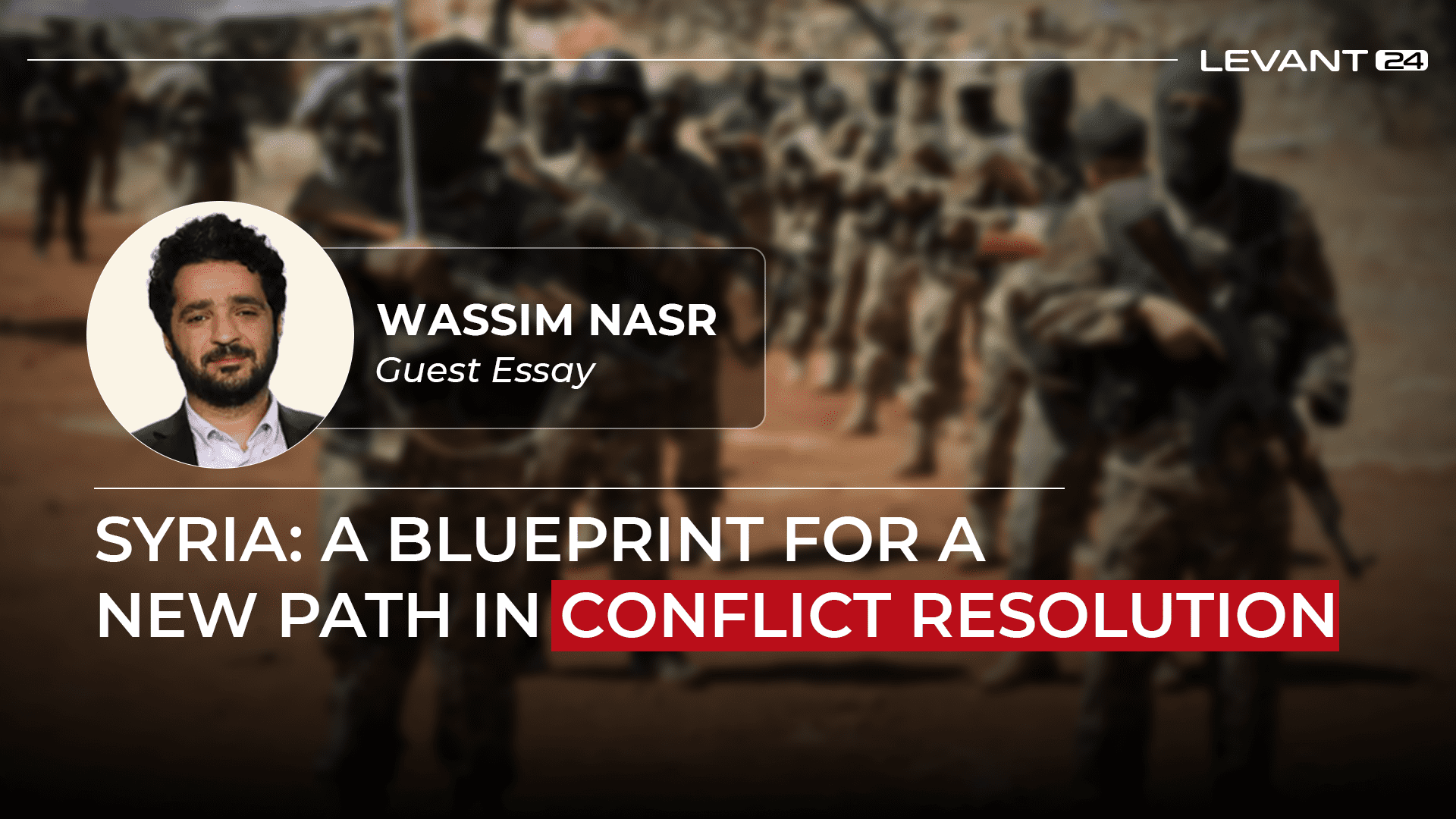
Wassim Nasr, a prominent French journalist, analyst, and Senior Research Fellow at The Soufan Center, has spent over a decade tracking jihadist movements and the evolving landscape of global terrorism. Reporting for France 24 in French, English, and Arabic, Nasr has become one of the leading experts on militant Islamist organizations, conducting high-level interviews and investigations across the Middle East, Africa, and Europe. He is also a frequent contributor to the Combating Terrorism Center at West Point.
In this guest article for Levant24, Nasr examines how the political and military evolution of Syria’s former revolutionary stronghold in Idlib, and the subsequent rise of Syria’s new authorities following the fall of the Assad regime, may offer a new framework for conflict resolution in regions affected by jihadist insurgencies. Drawing comparisons between Syria, Afghanistan, and Mali, he explores whether the transformation of former armed movements into political actors can provide a viable path toward stabilization, governance, and international reintegration.
_______________________________
Back in April 2023, when I made my first visit to Idlib, I was driven by a clear idea that needed to be tested against the reality on the ground in Syria’s last rebel stronghold. The idea had been forming in my mind since as early as 2019: to observe firsthand how a designated jihadi organization could choose to renounce global terrorism and govern accordingly.
Although the doors were technically open for a visit, the greatest challenge was convincing all the stakeholders involved despite the obvious risks and the conflicting calculations of each party. I failed more than once. Eventually, in an apparent paradox, the earthquake that struck Turkey and Syria created the opportunity. The renewed suffering of the Syrian people brought Idlib back into the world’s attention. Idlib was suddenly open for the world to see, and amid the rubble, the last obstacles standing in my way disappeared.
If Hayat Tahrir al-Sham’s (HTS) governance experience in Idlib created a “draft model” for other conflict zones affected by jihadi insurgencies, then the success of overthrowing the Assad regime against all odds, followed by governing Syria and reintegrating the country into the international community, has created a potential blueprint for conflict resolution and pacification in other war-torn countries facing similar jihadi dynamics.
A Path Out of Global Terrorism for a Designated Group Became Possible
The success of the process that led to Damascus resulted in the delisting of individuals and entities. HTS paved the way for a historic first regarding jihadi movements, although, in a broader historical perspective, this would not be entirely unprecedented if we consider other formerly designated actors such as the Irish IRA, the Spanish ETA, or the Palestinian PLO.
Nevertheless, HTS leadership went one step further by reaching power and becoming recognized as the sole legitimate representative of Syria on the international stage.
While jihadi groups around the world closely monitored HTS’s political evolution, the Syria-focused movement no longer considered itself part of the global jihadi spectrum. This shift occurred while influential figures such as the late Abu Maria al-Qahtani were openly calling on Al-Qaida of the Arabian Peninsula (AQAP) and Al-Qaida of the Islamic Maghreb (AQIM), and therefore Jamaat Nusrat al-Islam wal-Muslimin (JNIM), to sever ties with Al-Qaida, while also urging Al-Qaida itself to dissolve.
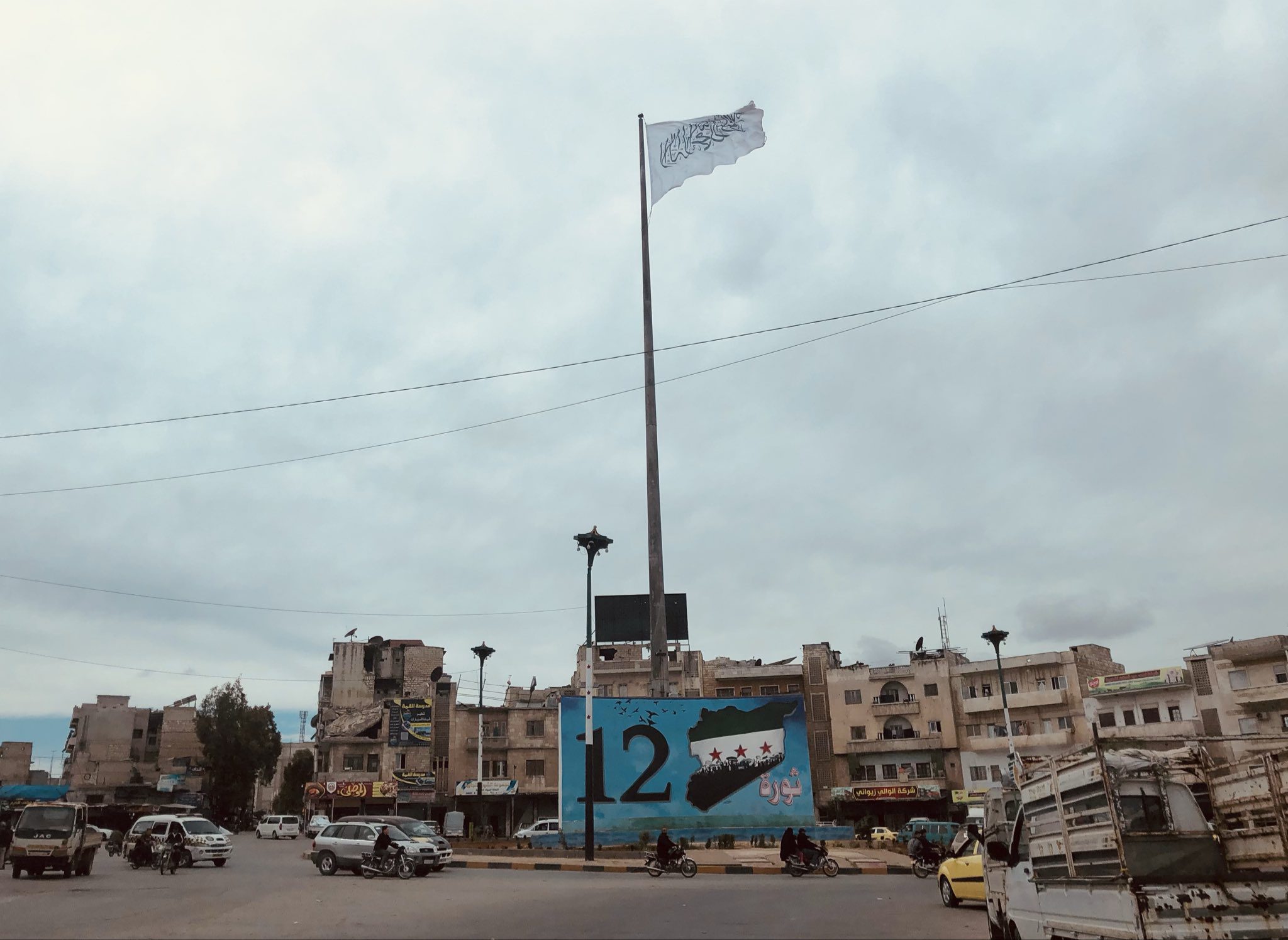
During my first visit to Idlib, I met with Mr. Asaad al-Shaibani, then head of the Political Bureau in Idlib, his first words to me were: “You are an expert on jihadi movements. We are not a jihadi movement (in a global sense), so why should we speak with you?” My answer was simple: “Who better than an expert to say that you are not?” On that visit, after a long meeting I was granted a meeting with Mr. Ahmad al-Sharaa, I had a unique insight on the ongoing measures and the upcoming policies for Idlib and Syria.
HTS’s jihad was slowly directed against the Assad regime and its allies, and the group ultimately demonstrated this by publicly addressing Moscow and Baghdad while Assad was living his final hours in Damascus. After his fall, sustained diplomatic and security efforts were launched with the objective of reducing tensions with neighboring countries and the broader international community.
Some observers have drawn parallels between the Taliban’s takeover of Kabul and HTS’s takeover of Damascus. Yet these historical events differ significantly in both their dynamics and their consequences. The international community engages with Kabul’s rulers in a cautious, pragmatic, and minimalist manner, whereas engagement with Damascus has been rapid and driven by the objective of moving beyond mere stabilization toward the full reintegration of Syria into the international order.
How does JNIM Assess the HTS Experience?
Just as Afghanistan’s situation differs fundamentally from Syria’s, Mali’s reality differs from both. Therefore, what JNIM, the Al-Qaida Sahel affiliate, is examining are not merely the processes of containing or breaking with Al-Qaida, but rather the process of political acceptance and normalization that followed in Syria.
It would be a mistake to assume that JNIM will replicate the exact trajectory followed by Jabhat al-Nusra (JN), namely severing ties with Al-Qaida before embarking on the military and political process later enabled by HTS.
In 2016, Al-Qaida leader Ayman al-Zawahiri was still alive, and the organization maintained a representative in Syria, Abu al-Khair al-Masri. Both men were later killed in US drone strikes, Zawahiri in Kabul in 2022 and Masri in Mastumah, Idlib, in 2017, the latter strike marking the first operational use of the R9X bladed Hellfire missile.
Today, Al-Qaida no longer appears to have a clearly identified senior representative in the Sahel. The organization has neither formally acknowledged Zawahiri’s death nor publicly designated a successor.
Which presents a major challenge for a future break similar to Syria’s JN break in 2016. Nevertheless, JNIM faces a challenge similar to the one confronted by JN since 2013: the risk of losing fighters to ISIS. Since combating ISIS remains both a doctrinal and political priority for JNIM, any eventual break with Al-Qaida would need to emerge through a process considered religiously legitimate by its own ranks.
Unlike JN, which lost significant numbers of foreign fighters at the time, JNIM risks losing large numbers of local Fulani fighters who currently bear much of the group’s military burden. For this reason, breaking with Al-Qaida is “not the priority of the hour,” although it could eventually occur de facto through governance arrangements with other actors rather than as a prerequisite for political participation.
It is also notable that AQAP issued a communique congratulating JNIM and allied tribes for their successes in Mali. This may be interpreted as a “blessing” of the alliance with non-jihadi actors or an attempt to keep them within Al-Qaida’s orbit, since losing the Sahel after the Levant could prove devastating for the organization with regard of the global competition with ISIS.
In this regard, ISIS already views the alliance between Azawad Liberation Front (FLA) rebels and JNIM as a replay of the Syrian scenario, as explicitly stated in an editorial published in Al-Naba. Which they use as proof of Al-Qaida “losing its way” and them being on the “righteous way.” Knowing that the mubahala (practice of two parties invoking the punishment of God on the lying party between them) between Sheikh Atoun, of JN, and the late ISIS Spokesman Adnani is viewed also a proof that JN, and therefore HTS, was on the right path.
Is Mali’s Kidal the African Sahel’s Idlib?
Breaking with Al-Qaida is one matter. Unifying armed factions under a single banner in Idlib was another most difficult matter, and a costly but decisive step that enabled the governance project of the “Salvation Government” to function effectively.
What is referred to as taghallub, the consolidation of authority through military dominance, became a prerequisite for the success of the movement. The subsequent political outreach toward other opposition forces and the international community proved equally crucial on the path to toppling Assad.
The few years of governance of Idlib functioned as a live test of HTS’s political viability and institutional capacity. Without the coercive and political measures implemented by the leadership, as well as the maintenance of open channels, through the efforts of the “Political Bureau” of Mr. Shaibani, with the outside world, the road to Damascus would likely have remained blocked, much as it had during the early years of the Syrian revolution when fear of the unknown prevailed.
Kidal, long the symbolic capital of Tuareg rebellions in northern Mali, could potentially play a role similar to the one Idlib played in Syria: a testing ground for governance practices and a showcase for the outside world.
It could become the space where joint governance between the FLA and JNIM materializes. However, such governance would largely involve populations from the same northern ethnic groups and the same geographic region, despite the fact that the main military burden during the coordinated operations of April 25 was carried by Fulani fighters from central and southern Mali, who have yet to obtain any significant political gains.
At the same time, after communiques issued by both the FLA and JNIM acknowledged military coordination and political alignment, the head of the FLA later stepped back, stating that no formal alliance existed between the two groups.
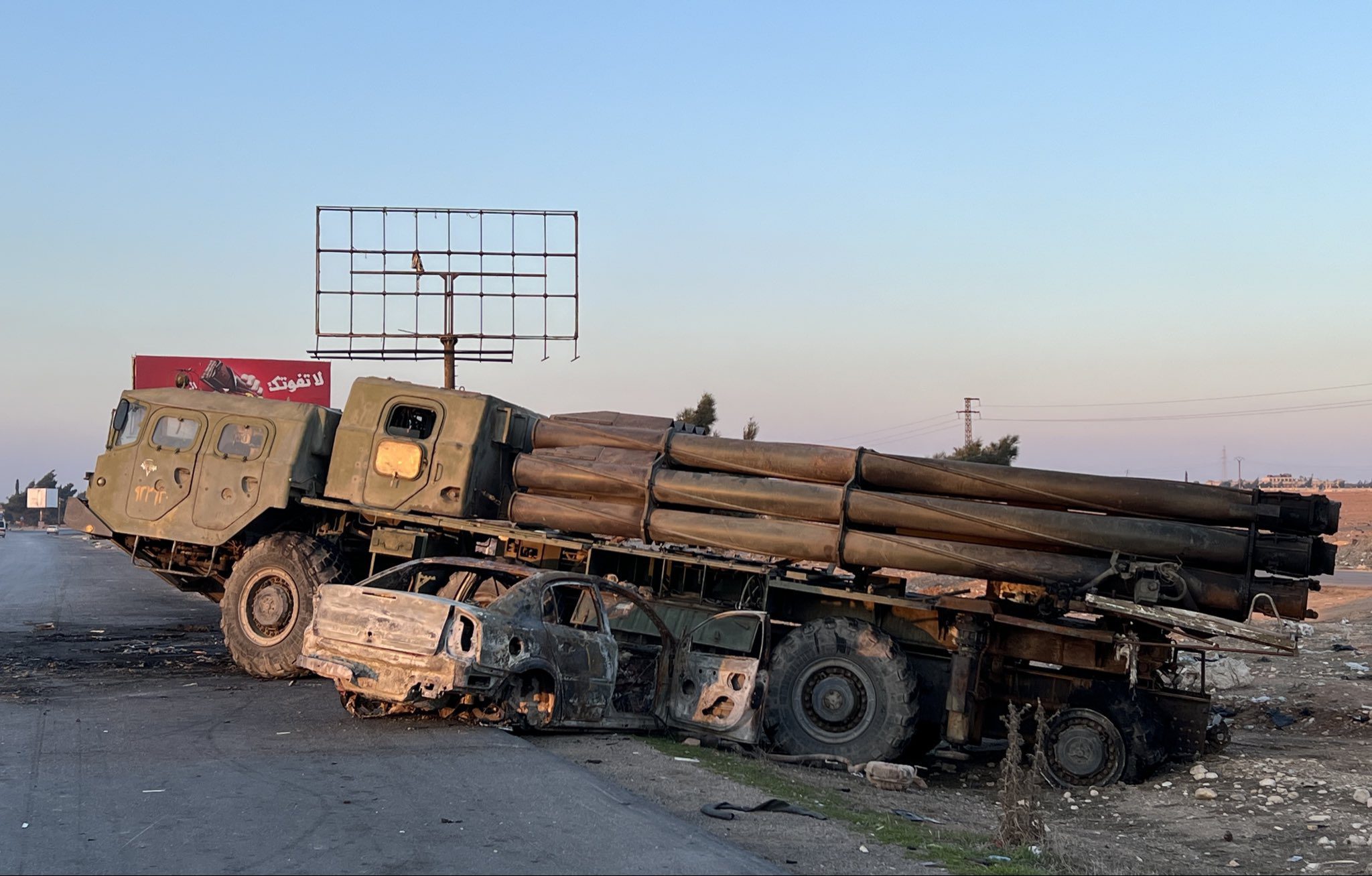
Here again, parallels can be drawn with Syria’s fragmented wartime factions and fear of an alliance with a designated terrorist organization.
When rebel factions lost Kidal in 2023, I asked JNIM sources why the group had not intervened in support of the rebels. The answer was blunt: “We have no interest in sacrificing assets and men to save the rebels’ capital.”
The agreement reached between the FLA and JNIM in 2025 suggests that concessions were ultimately made on both sides.
JNIM’s public messaging toward Russia and its political opponents during the April 25 battle clearly demonstrates that lessons have been learned from HTS’s Syrian playbook. Yet major challenges remain. Bamako and Moscow, fully aware of the political significance that the remote desert city could acquire, continue to bomb its infrastructure and buildings from the air.
To date, JNIM appears more inclined toward the Taliban model of governance, viewing the current authorities in Damascus as overly permissive on certain issues it considers fundamental. Nevertheless, the group continues to observe and assess the political trajectory adopted by Syrian authorities since Assad’s fall.
Because JNIM ultimately needs to incorporate other Malian political actors if it hopes to overthrow the ruling junta in Bamako, political inclusiveness remains necessary. However, the longer meaningful political coordination among anti-junta forces fails to emerge, the fewer concessions JNIM may feel compelled to make, and the more plausible the Afghan model becomes in comparison to the current Syrian model. Despite the fact that JNIM is active in five African countries, according to its leadership, a conflict resolution in Mali will have a positive regional impact through negotiations.
Can Damascus Play a Role?
It is still too early to determine whether Damascus can, or is even willing to, play a role in future negotiations of this kind regarding the situation in Mali or any other part of the world.
Yet interest of all parties in the Syrian example, as a blueprint for conflict resolution after two decades of the “war on terror” is undeniably real.
Having demonstrated a possible pathway and gained the trust of much of the international community, Syrians may now be able to leverage both their experience, contacts and their political credibility as intermediaries.
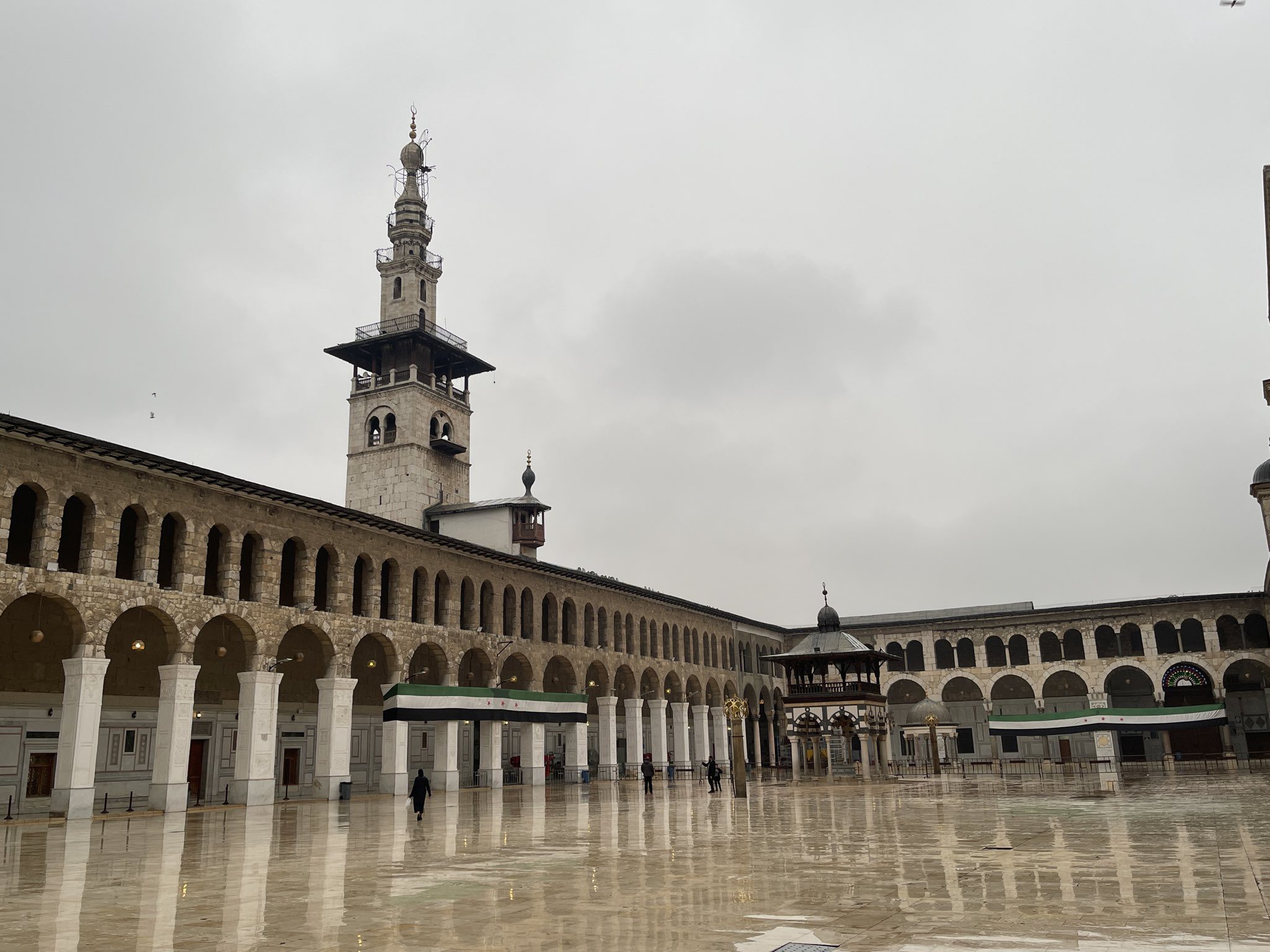
Historically, Damascus often stood at the crossroads of negotiations involving numerous actors from the Middle East and even North Africa. That role could potentially be revived under the new Syrian authorities, provided there is both a clear mandate from the parties involved and support from the relevant international power brokers.
Applying the principle of Maqasid al-Shariah (upholding the core principles of Islamic jurisprudence), the new Syrian authorities possess in their ranks the intellectual capacities, as well as the religious and political credentials, to become a regional hub for negotiations and conflict resolution rather than the center of conflict projection it had been for the past fifty years.