The UN Security Council convened, June 4, to review developments in Syria’s chemical weapons file, with international officials and member states pointing to significant progress in uncovering remnants of the former Assad regime’s undeclared chemical weapons program while calling for continued accountability and international support.
The meeting focused on advances made by Syria’s current authorities in cooperation with the Organization for the Prohibition of Chemical Weapons (OPCW), as well as ongoing efforts to secure evidence, locate undeclared stockpiles and pursue justice for victims of chemical attacks.
UN Under-Secretary-General and High Representative for Disarmament Affairs Izumi Nakamitsu described recent discoveries by OPCW inspectors as a major breakthrough. “Significant progress has been made since the council’s last meeting,” Nakamitsu told members of the Security Council, noting OPCW teams deployed to Syria in May uncovered a “significant” quantity of previously undeclared chemical weapons-related materials, including dozens of chemical munitions.
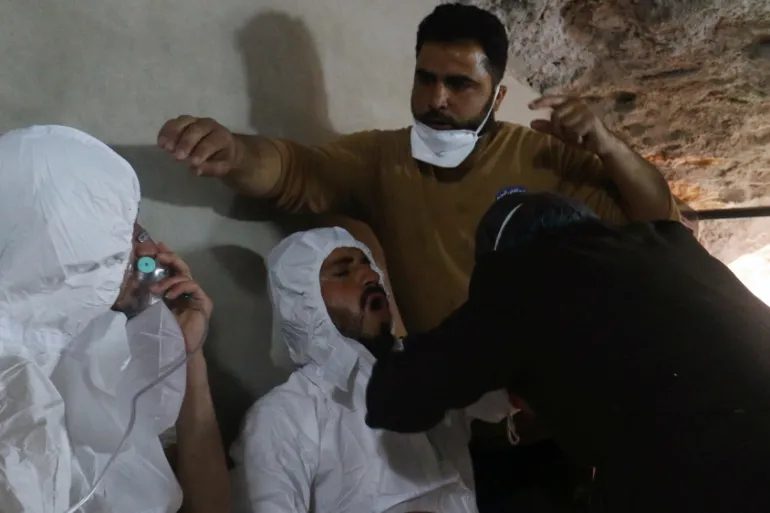
Nakamitsu said the OPCW remains concerned that chemical munitions linked to attacks in Latamneh, Ghouta and Khan Sheikhoun may still exist and have not yet been fully disclosed. She added Syria’s current government has submitted 34 boxes of documents for analysis as part of efforts to establish a complete picture of the former program.
National Effort Produces Tangible Results
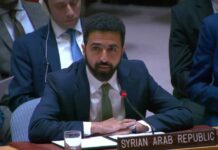
Syria’s UN envoy Ibrahim Olabi highlighted what he described as a coordinated national effort involving multiple government institutions. “We reaffirm commitment to national and regional security and report securing missiles and chemical munitions linked to the former regime’s program,” Olabi said.
According to Olabi, national teams from the Ministries of Interior, Defense, Emergency, Health and Foreign Affairs worked continuously to advance the file despite significant logistical and technical challenges. He reported Syria facilitated 32 OPCW visits to suspected sites and provided more than 60,000 documents related to the former chemical weapons program.
The progress reflects months of work by Syrian authorities seeking to identify, secure and document remnants of the program inherited from the previous government. International officials noted the discoveries further undermine repeated claims by the Assad government that all chemical weapons activities had ceased after 2014.
Accountability Remains Central Demand
Alongside technical progress, speakers stressed the importance of justice for victims of chemical attacks carried out during the Syrian conflict. Olabi announced authorities have arrested several individuals connected to Assad’s chemical weapons program as part of ongoing accountability measures.
The UK welcomed those efforts, describing recent arrests of suspects linked to the 2013 Ghouta sarin attack as an important step toward justice. “For over ten years, the international community has sought justice for those who suffered under the brutality of the Assad regime,” the British delegation said in a statement.
“Owing to Syria’s efforts, accountability for those who used chemical weapons is now in reach.” The focus on accountability reflects longstanding demands by survivors and families affected by chemical attacks, including those in Ghouta, Khan Sheikhoun and other communities.
Calls for Greater International Support
Several delegations emphasized eliminating the remnants of Assad’s chemical weapons program will require sustained international assistance. US Deputy Permanent Representative Tammy Bruce welcomed what she called “meaningful progress” made by Syria and the OPCW, including the discovery of previously undeclared chemical agents, munitions and related equipment.
“This is a major milestone for both Syria and the international community,” Bruce said. She praised Syria’s current authorities for demonstrating determination to close the chemical weapons chapter urging member states to provide financial and technical support to OPCW operations in Syria.
The UK echoed that message, pointing to the launch of the “Breath of Freedom” Task Force, which coordinates international expertise and assistance aimed at identifying, securing and ultimately destroying remaining chemical weapons assets.
Keeping the File Technical and Professional
Syrian officials stressed the importance of maintaining technical neutrality in the handling of the chemical weapons dossier. They argued the issue should remain focused on professional investigations, verification efforts and compliance with international obligations rather than becoming a subject of political disputes.
Recent cooperation between Syrian authorities and OPCW inspectors has been cited by several Security Council members as evidence that technical engagement can produce concrete results despite years of mistrust surrounding the file.
As the meeting concluded, Syrian representatives emphasized what they described as the human dimension of the issue. “We promised the people of Douma and Khan Sheikhoun that their voices would reach the Security Council,” Syrian officials said. “Today we are speaking on their behalf.”
That message served as a reminder that behind the technical discussions, inspections and investigations remain communities still seeking answers, accountability and justice for some of the conflict’s most devastating attacks.