
US envoy Tom Barrack’s endorsement of Syrian Democratic Forces (SDF) commander Mazloum Abdi’s latest statements on unity with Damascus has stirred mixed reactions at home and abroad, as skepticism deepens within northeastern Syria. The comments follow a renewed push by Abdi to reaffirm his group’s commitment to the March 10 agreement with the Syrian government, which proposes the SDF’s integration into the Ministry of Defense under a single national military structure.
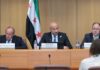
US Envoy to Syria Tom Barrack, reiterated US support for “constructive dialogue aimed at promoting integration and unity,” describing Abdi’s leadership and Syrian President Ahmad al-Sharaa’s role as “central to Syria’s stability.” Barrack’s remarks followed Abdi’s televised statement in which he asserted that “Syria will have one army, not two,” signaling continued commitment to the unity agreement and rejecting any notion of partition.
Agreement Reaffirmed While Implementation Lags
Abdi’s comments largely mirror those made in the months since the original agreement, suggesting slow progress in actualizing the March deal. He confirmed “daily communication” with Damascus, noted the lack of progress in forming integration committees, and said upcoming talks in Paris would address practical mechanisms.
While Abdi framed the agreement as a step toward national reconciliation and institutional integration, he acknowledged unresolved issues around constitutional guarantees and cultural rights for Syria’s diverse communities. “We have not yet reached clear understandings,” he said, regarding the rights of Syriacs, Assyrians, and Armenians.
Mounting Criticism from Inside Northeast Syria
The statements come as pressure intensifies within SDF-controlled territories. A growing number of political figures, community leaders, and activists in Raqqa, Deir Ezzor, and Hasakah recently issued a memorandum demanding the dissolution of both the SDF and its civilian counterpart, the Autonomous Administration of North and East Syria (AANES). Addressed to foreign ministers of Syria, France, and the US, the document accused the SDF of authoritarian practices and demographic manipulation, calling for a return to centralized Syrian governance and full state control over resources and security.
The nine-point demand list urged the end of forced conscription, closure of militant training camps, and the formation of an independent inquiry into alleged human rights violations. The signatories emphasized a vision of “equal rights under the Syrian constitution,” and rejecting any integration of the current de facto authorities into state structures as a bloc.
A Need for National Consensus
As the US praises diplomatic overtures, Abdi warned that political success hinges on broader national consensus and trust. He voiced concern over Damascus’s unwillingness to recognize the SDF as an institutional force rather than a collection of individuals—a stance he said could “weaken the chances of achieving results.”
While Western envoys like Barrack express hope for “a secure future,” the unfolding reality in northeastern Syria reveals a region caught between international diplomacy, local unrest, and unresolved national questions.