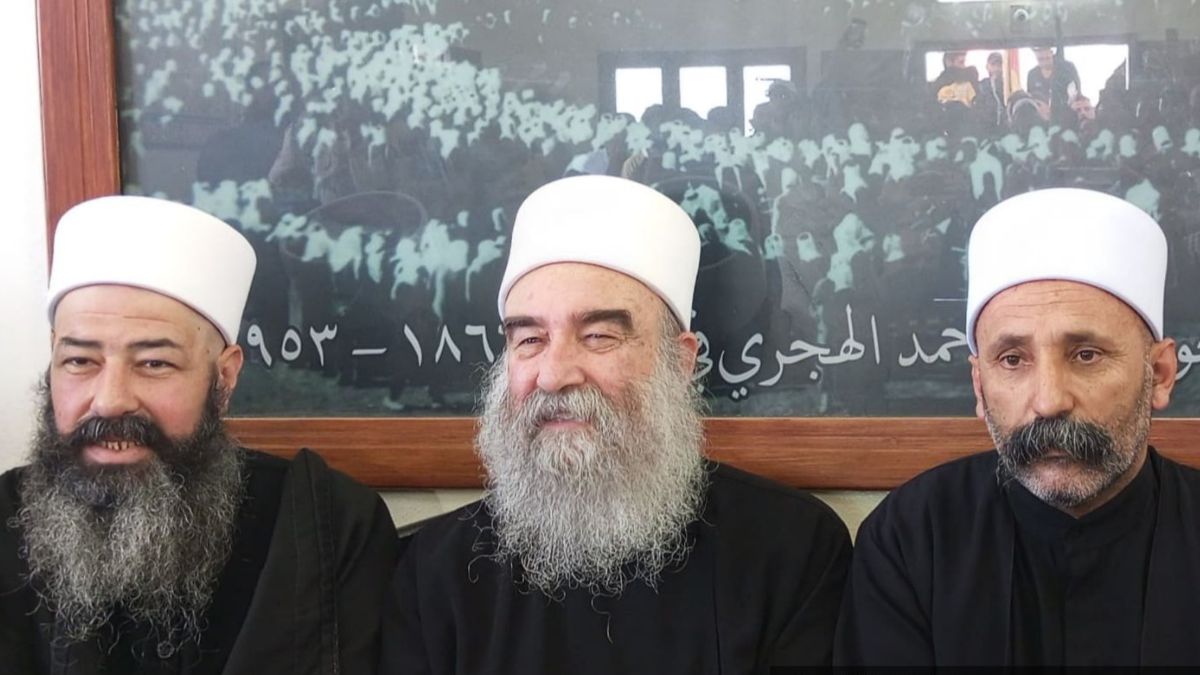
Mounting frustration is spreading across Suwayda Province as residents face worsening economic hardship and administrative dysfunction under the control of local militias and institutions loyal to Druze spiritual leader Hikmat al-Hijri. From fuel shortages to forced “donations,” residents accuse Hijri’s so-called National Guard and affiliated councils of exploiting the population and entrenching a climate of corruption and fear.
With winter nearing, Suwayda is enduring one of its harshest fuel crises in years. Diesel has nearly vanished from official channels, forcing families to buy on the black market at more than double the official price. According to field data cited by Syria TV, the National Guard has taken control of tanker entry into the province and the distribution network, diverting much of the fuel to private warehouses before reselling it at inflated rates.
Local sources said the price of diesel has soared to 23,000 Syrian pounds per liter, compared to the government rate of 11,500 pounds, crippling transportation, heating, and agriculture. “The black market doesn’t operate spontaneously,” one resident said. “It’s run by an organized network affiliated with the National Guard.” Proceeds from the illicit trade, residents believe, fund the group’s fighters and operations, cementing its influence.
Forced ‘Contributions’ and the Erosion of Public Trust
Alongside fuel shortages, residents are being pressed into paying mandatory “donations” to cover essential services such as sanitation and water. What began as volunteer initiatives has evolved into what locals describe as an unofficial tax system. In Shahba, families were required to pay 10,000 Syrian pounds to “support” the sanitation sector, while the city council imposed a new fee on every vehicle purchasing fuel.
Although officials claim the measures aim to keep vital services running, residents told local outlets the campaigns are coercive and lack transparency. “This is no longer about donations,” a Shahba resident said. “These are taxes imposed on every family without legal basis.” Many said they paid out of fear of public shaming or reprisals from the National Guard.
Similar campaigns in Al-Qarya reportedly raised funds under the pretext of repairing water pumps, but no repairs followed. Local activists say the collected money—along with funds from expatriates—is being mismanaged by the same militia-backed authorities, creating a parallel economy beyond oversight.
Education Crisis and Political Manipulation
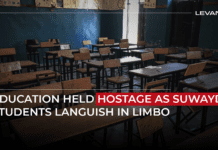
The deterioration extends to the education sector. The Directorate of Education, working under Hijri’s “Supreme Legal Committee,” recently suspended school hours indefinitely, citing alleged security concerns. Teachers and parents criticized the move, describing it as arbitrary and politically motivated.
Many accused the administration of attempting to preempt a teachers’ strike over unpaid salaries. Protests regarding the situation already erupted, demanding accountability, salaries and return of services and normalcy.
In the village of Rima al-Lahf, anger erupted after the Legal Committee dismissed the elected municipal council and replaced it with unqualified appointees. Residents accused the committee of forging petitions to justify the move. “What happened resembles a coup against the will of the people,” one villager told local outlets.
Public resentment toward Hijri’s forces is rising as corruption deepens and services collapse. Residents say the National Guard’s growing control over resources and governance is tainted by repression with new forms of coercion.