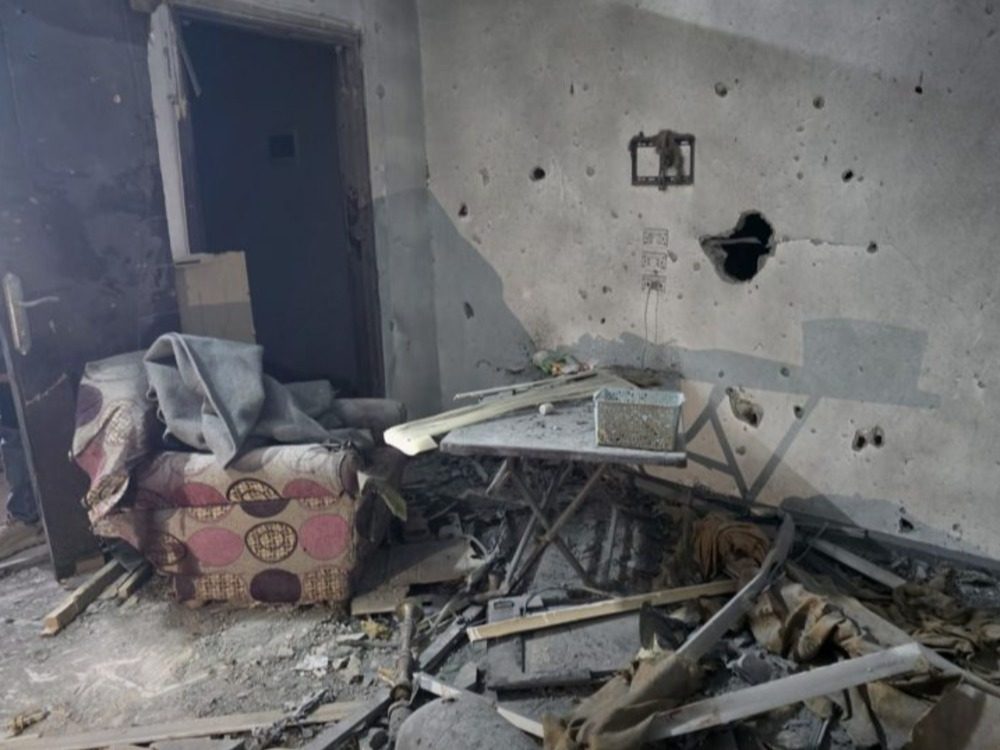
Syrian authorities continued to examine debris and interview witnesses on Saturday after two Katyusha rockets struck the Mezzeh 86 district of Damascus, Friday evening November 14. Attacks injured several civilians while damaging residential buildings. The attack marked an unusual escalation in a city that has seen comparatively few such incidents since the fall of Assad’s government last year.
Details From the Scene
The Syrian Ministry of Defense (MoD) said the rockets were launched from the outskirts of the capital toward populated areas in Mezzeh. In its statement through the Media and Communication Department, the ministry reported that “a number of civilians” were injured and that security forces had begun a joint investigation with the Ministry of Interior (MoI) to determine the missile trajectory and identify those responsible. State media, including the SANA, described the strike as a “treacherous attack.”
Local residents interviewed by local outlets said the explosions rattled buildings across Mezzeh 86, a dense neighborhood known for informal housing clusters. According to Syria TV and AP a woman was among those wounded. Witnesses said one of the rockets struck a three story building near Talaat Supermarket Fadi in the Ain Al Krum quarter of Mezzeh 86.
Security forces sealed off surrounding streets shortly after the blasts. An Associated Press journalist observed extensive cordons as police restricted access to damaged structures before later allowing reporters inside.
Search for the Launch Site
By early Saturday, the Ministry of Defense said it had identified the launch point in the Lawan area of Kafr Souseh, on the city’s western outskirts. Assim Ghalioun of the ministry’s Media and Communication Department said on Facebook that a military team used the angles of impact and debris patterns to locate the site. Footage carried by the state run Al-Ikhbariyah channel showed what it described as “electrical circuits” used to fire the rockets.
The channel’s map indicated that one rocket landed inside Mezzeh 86, while the second fell on the road leading to the People’s Palace, less than 1.5 kilometers from the neighborhood. Local sources reported heavy deployment of security units and multiple road closures as investigators worked through the night. Officials also highlighted how the response to the attack reflected changes in how state institutions communicate during emergencies.
A Shift Toward Faster Public Communication
Syrian officials framed the government’s rapid reporting and security response as evidence of a broader shift in crisis management. Deputy Minister of Information for Content Affairs Abdullah al-Musa said security forces located the launch site in less than four hours. He said the Ministry of Information provided frequent updates throughout the night, which he characterized as an example of institutional discipline and an effort to rebuild trust between the public and the state.
Musa said the handling of the incident showed how Syria had moved from “a state of survival” to a reliance on formal institutions. His remarks followed comments from the MoD’s Media and Communication Department, which told Al-Ikhbariyah investigators had secured the area around the launch point and recovered what it described as “primitive tools” used in firing the rockets and those responsible would be brought to court soon.
A City on Edge After Years of Conflict
While Damascus experienced bombings during Syria’s revolution, direct rocket attacks inside the capital have been rare in recent months. The Mezzeh district has, however, experienced periodic violence, including Israeli strikes on aleeged Hezbollah and Iranian targets in residential buildings that killed and wounded dozens.
Authorities have not identified suspects or attributed responsibility for Friday’s attack. The Defense Ministry said it “will not hesitate to pursue those responsible for this criminal act” as teams continue gathering evidence and interviewing residents.