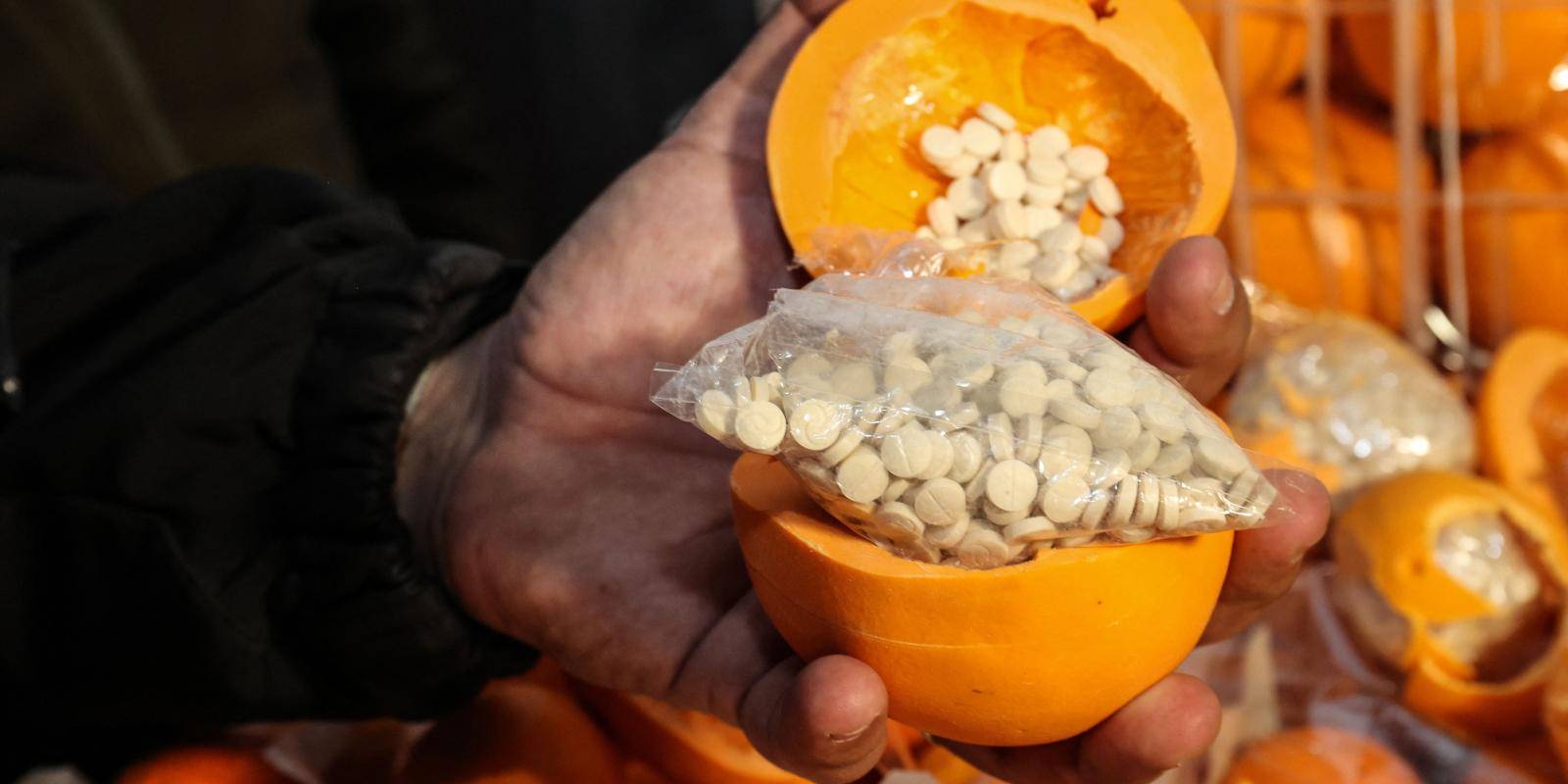
 The Captagon trade under Assad’s fallen regime evolved beyond a criminal or security issue into an economic and political concern that attracted the attention of the UN, Western governments and international research centers. Numerous reports and studies linked the expansion of Captagon production during the regime’s final years to its increasing reliance on illicit economies as traditional sources of revenue collapsed.
The 2025 World Drug Report, released by the UN Office on Drugs and Crime (UNDOC), found that the Assad regime earned billions of dollars from the Captagon trade during the revolution as sanctions pushed it toward illicit sources of income. The report identified Assad’s Syria as a primary production and trafficking hub but noted that precise revenues remain difficult to determine because of the trade’s secretive and cross-border nature.
These findings align with estimates from the New Lines Institute for Strategy and Policy, which placed the regime’s annual earnings at approximately $2.4 billion, while the global market associated with Captagon reached an estimated $10 billion per year. Together, these estimates highlight the regime’s growing dependence on drug revenues as Syria’s economy deteriorated.
Economy Shifted Toward Illicit Revenues
The World Bank’s 2024 Syrian Economic Monitor reported the Captagon trade became one of the clearest indicators of the Syrian economy’s transformation during the regime’s final years. According to the report, the shift resulted from government policies and actions which weakened productive sectors and contributed to international sanctions.
The report estimated the annual market value of Syrian-origin Captagon ranged from $1.9 billion to $5.6 billion between 2020 and 2023. Those figures exceeded the value of Syria’s legal exports, which totaled about $960 million in 2023. However, the report cautioned that the amount of revenue ultimately reaching Syria remains unclear because of sanctions and restrictions on financial transfers.
The Carnegie Middle East Center also concluded that the Captagon trade became one of the regime’s primary sources of foreign currency. It argued that the economy gradually shifted away from traditional productive sectors toward illegal activities helping cushion economic pressures and international sanctions. According to the center, those revenues also financed networks and individuals connected to military and security institutions.
Western Sanctions Targeted Captagon Networks
The findings of research institutions were echoed by Western governments. On March 28, 2023, the US Department of the Treasury, through its Office of Foreign Assets Control, announced sanctions coordinated with the UK against individuals accused of supporting Captagon production and trafficking on behalf of the Assad regime. The Treasury said the trade had become a criminal enterprise generating billions of dollars and that the fallen regime increasingly relied on drug production and trafficking to generate hard currency amid sanctions and economic crisis.
Less than a month later, on April 24, 2023, the European Council imposed sanctions on 25 individuals and eight entities linked to Captagon production. The measures targeted members of the Assad family, businessmen and figures associated with the toppled regime’s military and security agencies who were already subject to sanctions. The council said the Captagon trade had become a business model directed by the fallen regime that enriched its inner circle and helped sustain its policies.
Dismantling the Captagon Infrastructure
Although estimates vary, most reports agree that Captagon became one of the Assad regime’s most important sources of foreign currency during its final years, providing a vital financial lifeline. Since the regime’s fall, the Syrian government has introduced a series of security and legal measures to dismantle Captagon production and trafficking networks.
Authorities have arrested numerous individuals allegedly involved in the trade, including Wassim al-Assad, a cousin of Bashar al-Assad. The remaining challenge is dismantling the infrastructure of an illicit economy that for years served as a significant source of revenue for the former regime.