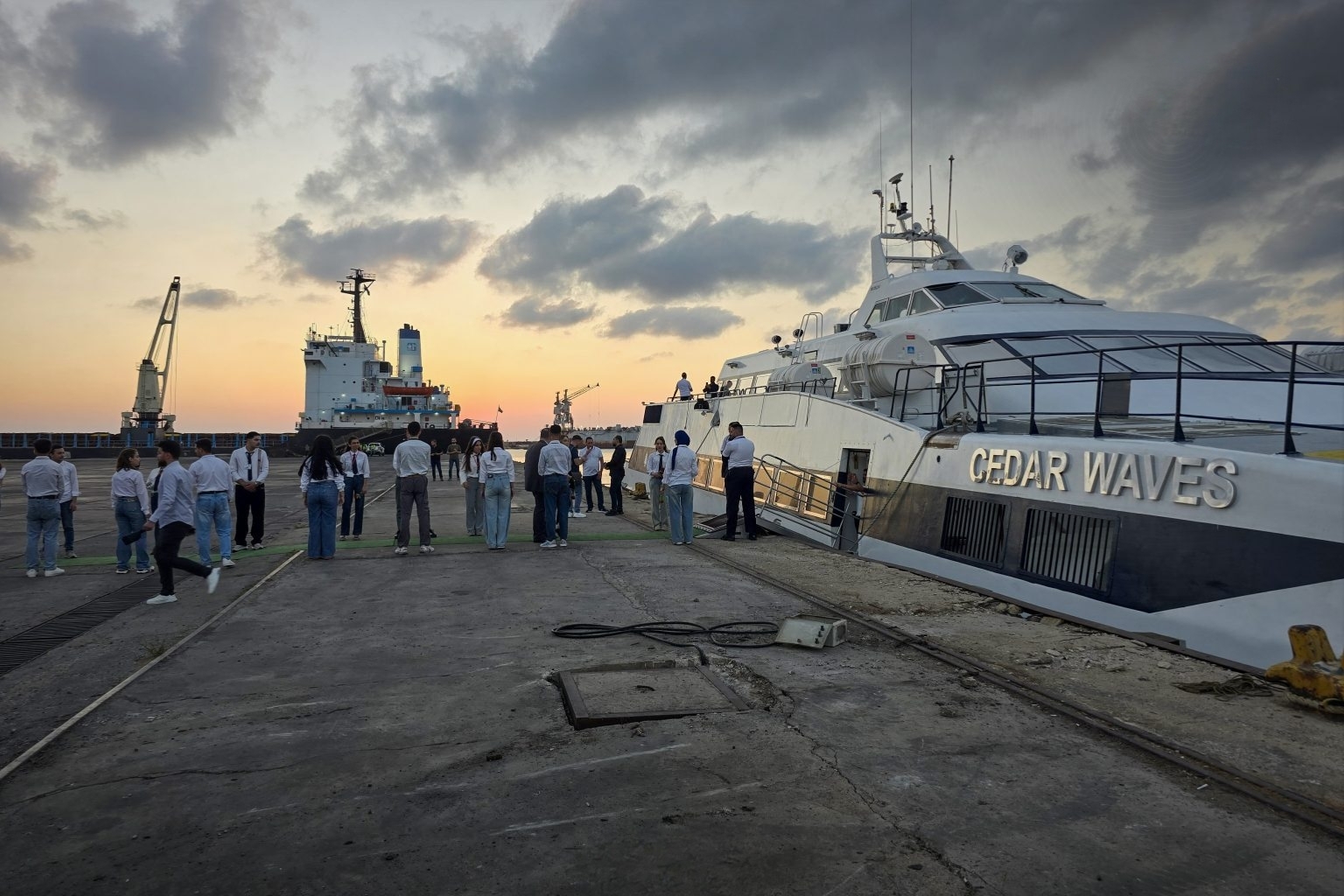
 A passenger vessel traveling from Lebanon arrived at the Port of Latakia June 22, marking the resumption of regular maritime passenger services between Syria and Lebanon after years of suspension.
The tourist vessel Cedar Waves docked in Latakia after departing from Lebanon’s Port of Jounieh, reopening a route officials view as both an economic and transportation milestone. The development comes as Syrian President Ahmad al-Sharaa promotes a regional strategy focused on economic cooperation and connectivity.
With a capacity of about 350 passengers, the vessel is expected to operate two to three weekly voyages linking ports in Syria and Lebanon, with connections extending to Turkey and Cyprus. Officials say the service provides an alternative transportation option while strengthening regional mobility across the Eastern Mediterranean.
Expanding Regional Connectivity
Rakan al-Tayeh, director general of the Public Authority for Tourism and Hotel Training, described the voyage to SANA as the first initiative since liberation aimed at reviving maritime passenger tourism. According to Tayeh, demand for the route is expected to grow as travelers seek faster transportation options and as Syria’s tourism season gains momentum.
He added authorities anticipate increasing voyage frequency in response to passenger demand. The restoration of maritime services reflects broader efforts to improve regional connectivity and support economic activity through transportation infrastructure. Officials emphasize the role of maritime routes in facilitating movement between neighboring countries and expanding opportunities for trade and tourism.
Economic Cooperation Takes Center Stage
The reopening of the route aligns with Syria’s stated approach toward strengthening economic ties with Lebanon. President Sharaa has repeatedly emphasized the importance of building economic links between the two countries, arguing stability and prosperity are closely connected across the region.
Within that framework, the renewed maritime service represents a practical step toward expanding cooperation and creating new channels for economic exchange. Syrian officials also highlighted the growing importance of Mediterranean ports within regional logistics and transportation networks.
The launch of the service was supported by logistical measures introduced by the General Authority for Border Crossings and Customs. Izzuddin al-Hussein, head of passenger affairs at the Port of Latakia, said the vessel carried passengers of various nationalities and noted improvements in services provided through Syria’s maritime and land border crossings. He added that additional maritime routes may be announced in the future as authorities continue efforts to expand transportation links.
Tourism Sector Eyes New Opportunities
The reopening of the maritime connection is also expected to support tourism activity in both Syria and Lebanon. Industry representatives say the route could encourage greater cooperation between tourism operators and travel agencies while offering travelers additional options for regional travel.
Madonna Hweik, project manager of Cedar Waves, welcomed the return of services after years of interruption. She expressed hope that the route would strengthen tourism cooperation and help expand joint tourism initiatives between the two countries.
As regional governments increasingly focus on development and reconstruction, the renewed maritime link highlights efforts at strengthening economic cooperation and transportation networks. Officials also expect the initiative to enhance the role of the Port of Latakia as a regional center for maritime passenger travel in the Eastern Mediterranean.