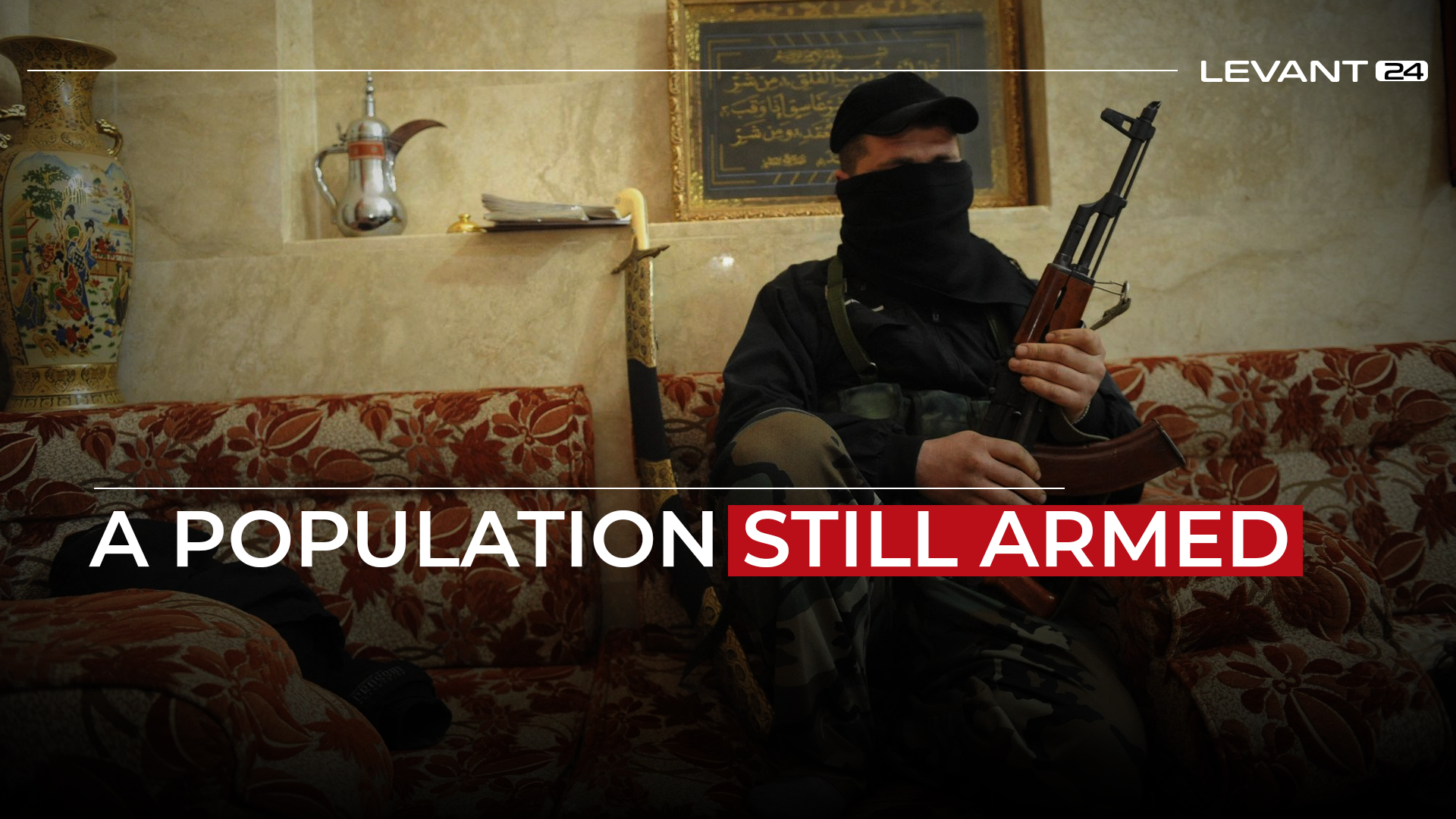
The rifle hanging on the wall has not been fired in years. Still, Abdulhadi Khateeb keeps it close. Like many Syrians, the former fighter no longer walks the streets armed as he did during the conflict. Yet he is reluctant to part with the weapon altogether. The nearest police station is far away, security institutions are still being rebuilt, and memories of years of violence have not faded.
“People feel safer knowing if they need to defend themselves or their family, they will be able to,” Khateeb told Levant24. “I haven’t taken my gun down since the liberation but my family feels better knowing it’s there if we need it.”
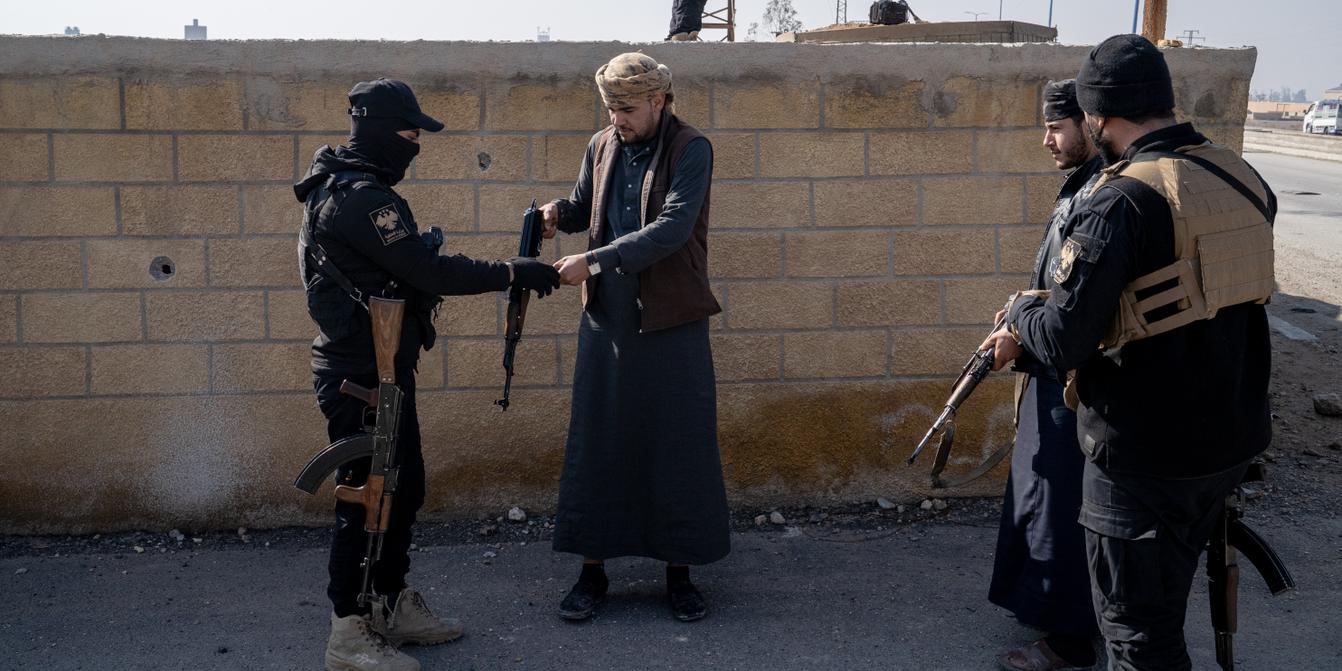
Nearly two years after the fall of the Assad regime, Syria’s new authorities made it clear they intend to ensure all weapons are under state control. President Ahmad al-Sharaa repeatedly emphasized the goal of restricting arms to official institutions while building a professional national army and security apparatus.
The government has repeatedly maintained that weapons should be restricted to state institutions. Foreign Minister Asaad al-Shaibani described an arms monopoly by the state as essential to protecting citizens, strengthening stability and enforcing the rule of law, arguing security cannot be achieved while uncontrolled weapons remain widespread. Levant24 contacted the government but had not received an official response by the time of publication.
Yet across Syria, from the deserts of the northeast to the cities of Suwayda, Damascus, Hama and beyond, the question of disarmament remains far more complicated than simple government policy. For many Syrians, weapons are not instruments of violence. They are tied to culture, livelihood, personal security and the realities of a country emerging from 14 years of war.
A Society Shaped by Conflict
Syria’s conflict transformed the country’s relationship with weapons. According to a 2017 estimate by the Small Arms Survey, Syria possessed over 1.54 million small arms, including roughly 124,000 civilian-owned firearms. Researchers and observers believe those figures increased following the collapse of the Assad regime in December 2024, when military depots, security facilities and weapons stockpiles fell into civilian hands.
For some, the prevalence of weapons represents a dangerous legacy of war. “We are tired of weapons and an armed militarized society,” Ayman al-Hamwi, a teacher from Damascus, told Levant24. “I see weapons in the hands of civilians as a major risk that can cause problems and disaster, not protection.”
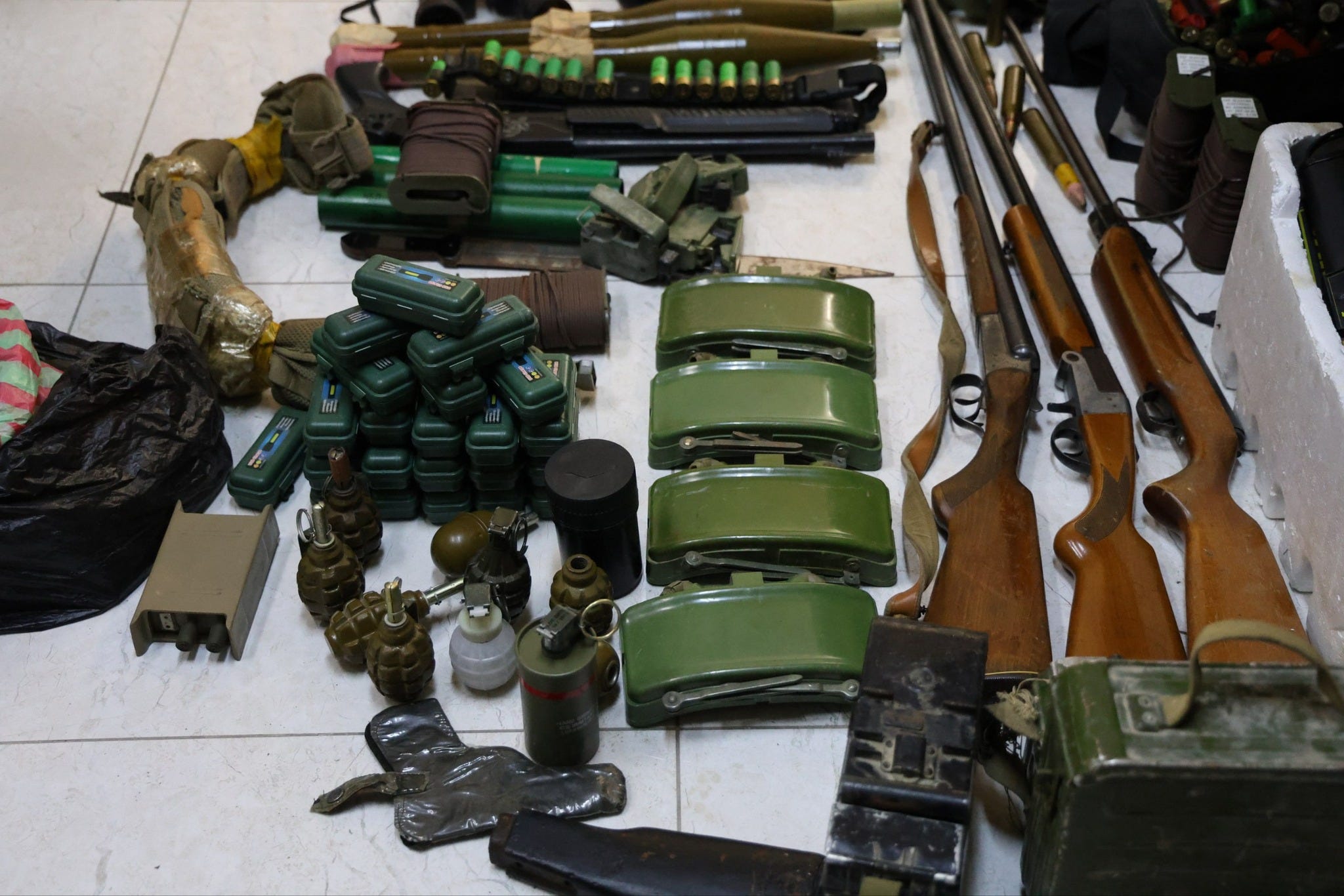
Hamwi recalled seeing military weapons sold openly after the regime’s collapse. “I saw a teen selling a Kalashnikov for $100 and another selling a pistol for $100,” he said. Yet others see the issue differently.
“Even before the revolution, guns were a part of Syrian society, especially in the Badia (deserts) and Jazeera (northeastern Syria) and with the Arab tribes,” Khateeb said. “Criminals and gangs will always get weapons illegally. The rest of us shouldn’t be penalized.”
That divide reflects one of the central challenges facing policymakers. Weapons ownership in Syria is not solely a product of the recent conflict. In many rural, tribal and Bedouin communities, firearms have long been viewed as tools of protection and self-reliance.
Beyond Politics: Culture and Daily Life
In northern Suwayda province, Abu Hamza, a Bedouin livestock owner, described weapons as an ordinary part of life. “Bedouin families live in desert and remote areas and they need weapons to protect themselves and their livestock from predatory animals and thieves,” he told Levant24. “Almost every night there are attacks from wolves and hyenas against my house and livestock,” he recalled.
For communities living far from police stations and urban centers, the debate over firearms often has less to do with politics than geography. “I cannot travel the land with my livestock without my own arms,” Abu Hamza said. The distinction between urban and rural realities emerged repeatedly throughout Levant24’s interviews.
Nawaf al-Shaar, a businessman from the Damascus suburb of Jaramana, said he sees little need for civilian firearms in densely populated areas. “I don’t see any threats in my daily life in Jaramana and Damascus that would require me to have guns,” he said. “Peaceful citizens don’t need guns if they live in urban areas.”
Even Hamwi, who favors broad disarmament, acknowledged conditions differ outside major cities. “In rural and desert areas, the farmers and shepherds have the right to have weapons to protect themselves and families, livestock and lands from attackers, thieves and predators,” he said.
The Limits of State Power
While Syria’s authorities have pursued weapons collection efforts and settlement agreements with former regime personnel, analysts say comprehensive disarmament faces significant practical obstacles. Researcher Amer al-Mithqal of the Syrian Dialogue Center told local outlets the government still faces difficulties in areas where its authority remains limited or contested. He pointed to regions such as Suwayda and areas formerly outside government control.
Southern Syria presents an additional complication: Israeli military incursions and the occupation of areas around Quneitra emphasize Damascus’ limitations in the south. Reporting by the Associated Press found residents in Quneitra expressed frustration at being left to “fend for themselves” amid Israeli advances.
Syria’s government acknowledges avoiding direct military confrontation, limiting Damascus’ options in the south. Meanwhile, local communities continue facing security concerns ranging from smuggling networks and criminal activity to the presence of armed local factions such as the National Guard, reinforcing arguments among some residents that civilian weapons remain a necessary safeguard until state institutions become fully established.
According to a 2025 report by the UN Office on Drugs and Crime (UNODC), post-conflict societies frequently experience what researchers describe as a “criminalized peace,” where violence persists not because of active warfare but because weapons are still widely available among civilians, criminal networks and armed groups.
The same report noted approximately 85% of firearms worldwide are held by civilians or private security entities, highlighting the scale of the challenge governments face when attempting to reassert control after conflict. Zuhair al-Omar, a welder from Hama, attests Syria’s security institutions remain in a rebuilding phase.
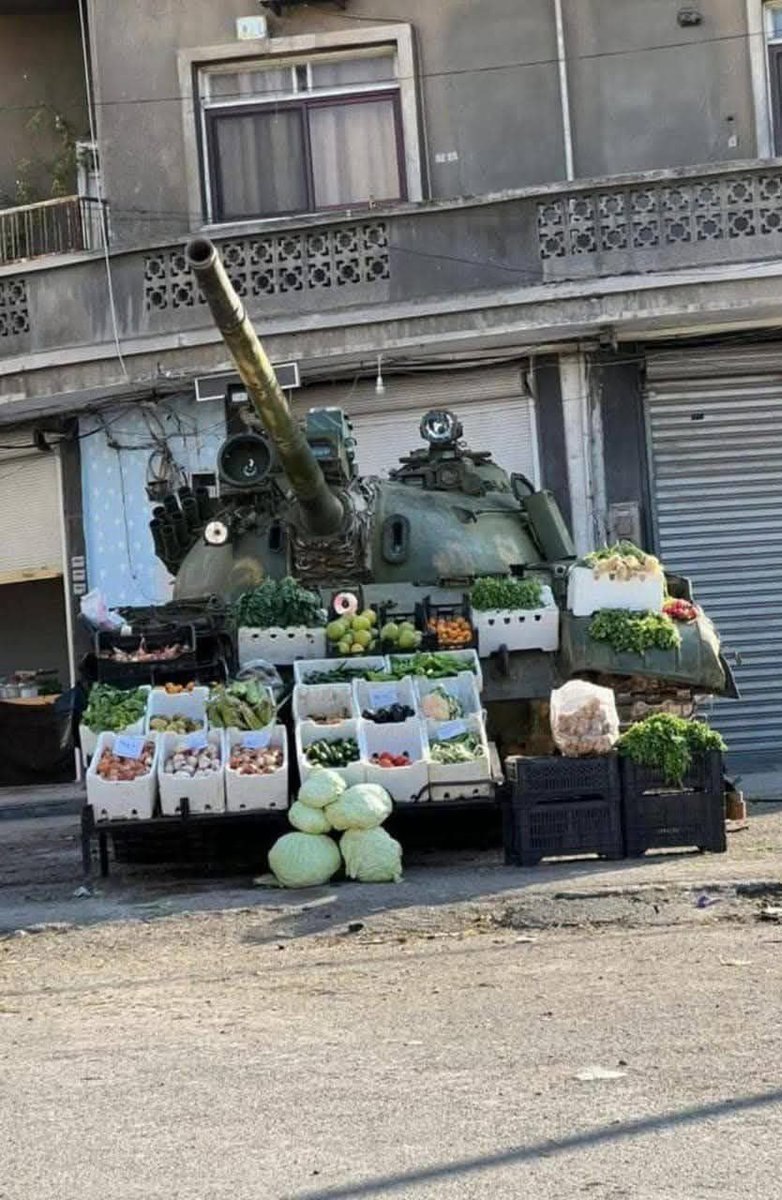
“The security and police institutions are also building themselves up and may take a while longer to fully develop responsive and preventive capabilities to crime,” he said. He also cited external security concerns. “For a country whose military institutions won’t be fully ready to protect itself for years to come, an armed population is a safety net,” he argued.
Searching for a Middle Ground
Despite sharp disagreements over civilian gun ownership, many Syrians interviewed by Levant24 converged on one point: regulation may be more realistic than outright confiscation. Abu Hamza argued for a licensing system tailored to specific needs. Farmers, livestock owners and other professions facing unique security risks could retain firearms through a legal process, while authorities focus on removing illegal weapons.
Khateeb offered a similar proposal. “The government and police should know who has them and they should be licensed and registered, like with cars,” he said. That approach would not be unprecedented. In 2023, Assad-era legislation allowed residents of remote areas to obtain licenses for military rifles under specific conditions.
International experience suggests successful post-conflict arms control often depends on balancing security concerns with local realities. A study by Adedeji Ebo of Columbia University found weapons collection efforts are most effective when paired with broader reforms, including stronger institutions, security sector reform and community participation. Technical disarmament measures alone rarely produce lasting results.
Muhsin al-Mustafa of the Omran Center for Strategic Studies said Syrian institutions are gradually moving toward greater control over weapons through integration programs, settlements and future legislation. New laws, he posits, could eventually replace older regulations, reflecting the country’s current circumstances.
For now, Syria remains a country where memories of conflict are still fresh, security conditions vary dramatically between regions, and many citizens continue to view firearms through the lens of necessity rather than ideology. The debate over disarmament may ultimately be less about whether weapons should be controlled than about how quickly a recovering state can convince the population they are no longer needed.