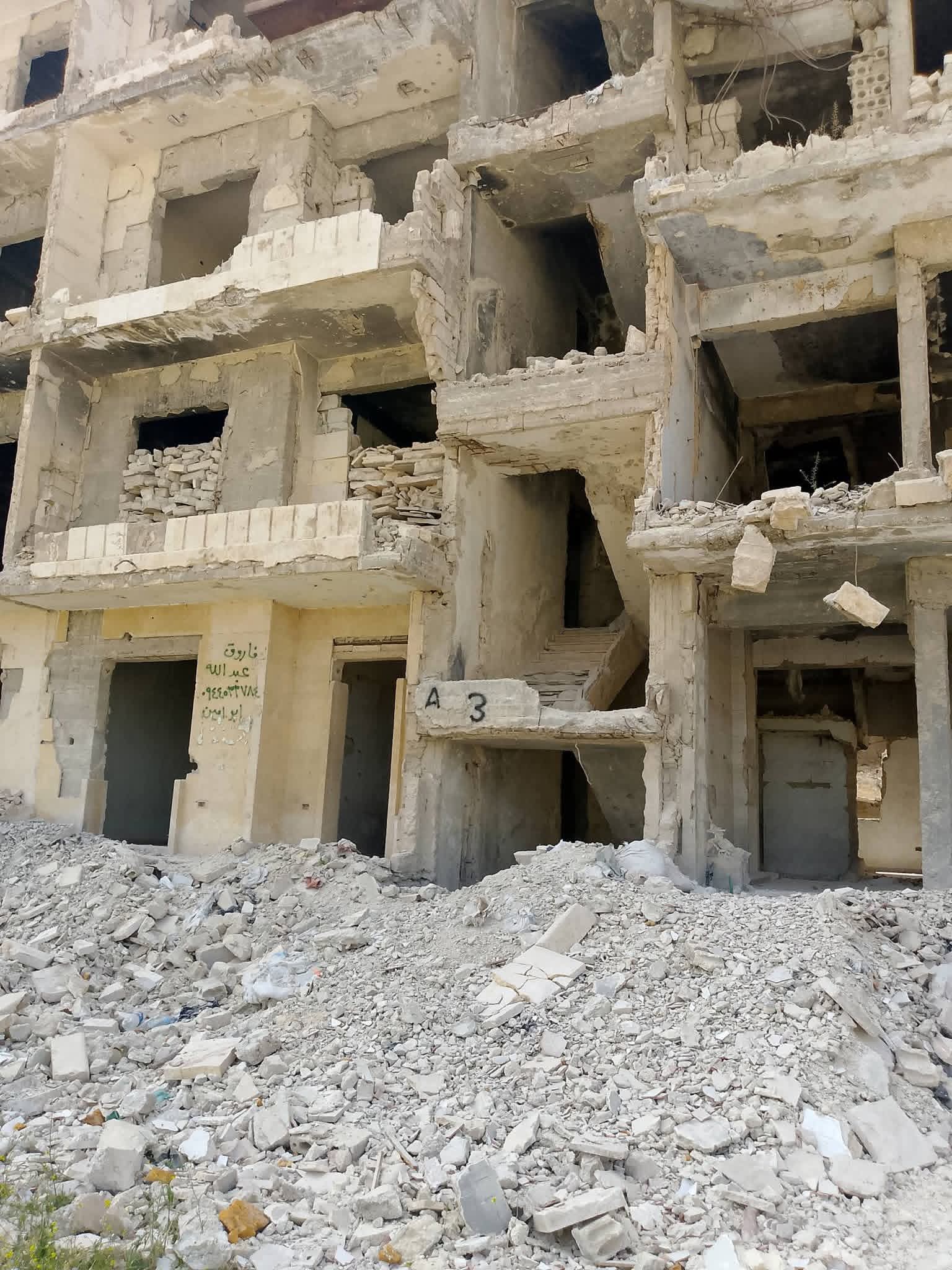
 Aleppo Governorate continues efforts to clear rubble and debris from Sakan al-Shababi, commonly known as Youth Housing, in the city’s Ashrafieh district. The work forms part of broader efforts to facilitate the return of displaced residents to their homes. Authorities report approximately 60% of the rubble was removed, while crews continue clearing streets, sidewalks, and building entrances in preparation for further rehabilitation.
Thousands Remain Unable to Return
Despite ongoing progress, Youth Housing remains largely uninhabitable. The area is home to approximately 2,500 displaced families, many of whom cannot return because of extensive damage to buildings and the near-total absence of essential services. Majida Hijo, a resident of the area, told Levant24 years of conflict left deep scars throughout the neighborhood.
“Throughout the past period, the area was under bombardment and was only liberated earlier this year. Youth Housing is full of tunnels that belonged to the Syrian Democratic Forces (SDF), and residents are still discovering new tunnels from time to time,” she said.
According to Hijo, a committee recently visited the area to assess the damage following repeated appeals from residents. She described the condition of the buildings as “poor,” saying basic services remain unavailable. “The condition of the buildings is very poor, and basic necessities of life are non-existent, no electrical cables, and no water.”
Residents Organize Amid Difficult Conditions
Residents took steps to support recovery efforts while waiting for larger rehabilitation projects to begin. Shadi, another resident, told Levant24 volunteers formed a team to guard the area and assist ongoing work.
“We are waiting for service providers to rehabilitate infrastructure, electricity, water, sewage, and telephone services, as well as streets, sidewalks, and building facades, so we can repair our destroyed homes,” he said.
Shadi also highlighted an environmental concern affecting the neighborhood. A large pit at the edge of the area serves as a dumping site for rubble, but municipal vehicles have also been disposing of garbage there. Residents say the waste has led to fires, unpleasant odors, smoke, and an increase in insects.
He added most families depend on financial support from relatives abroad. With few homes remaining intact and reconstruction costs beyond the reach of many residents, families continue to struggle with rent and daily expenses.
Rehabilitation Requires Long-Term Support
An official source in the Aleppo Governorate told Levant24 authorities remain committed to restoring the area despite significant challenges. “Most of the main roads have indeed been opened, but many of them are still unsuitable for traffic due to the widespread destruction,” the source said. The official added restoring the housing project requires more than rubble removal and will depend on sustained financial and technical support.
Authorities continue to coordinate with service institutions to accelerate infrastructure repairs and create conditions for residents to return safely. However, major challenges remain, including rebuilding essential services, inspecting damaged homes, and addressing the waste disposal problem. For thousands of displaced families, the pace of rehabilitation will determine how soon they can return and begin rebuilding their lives.