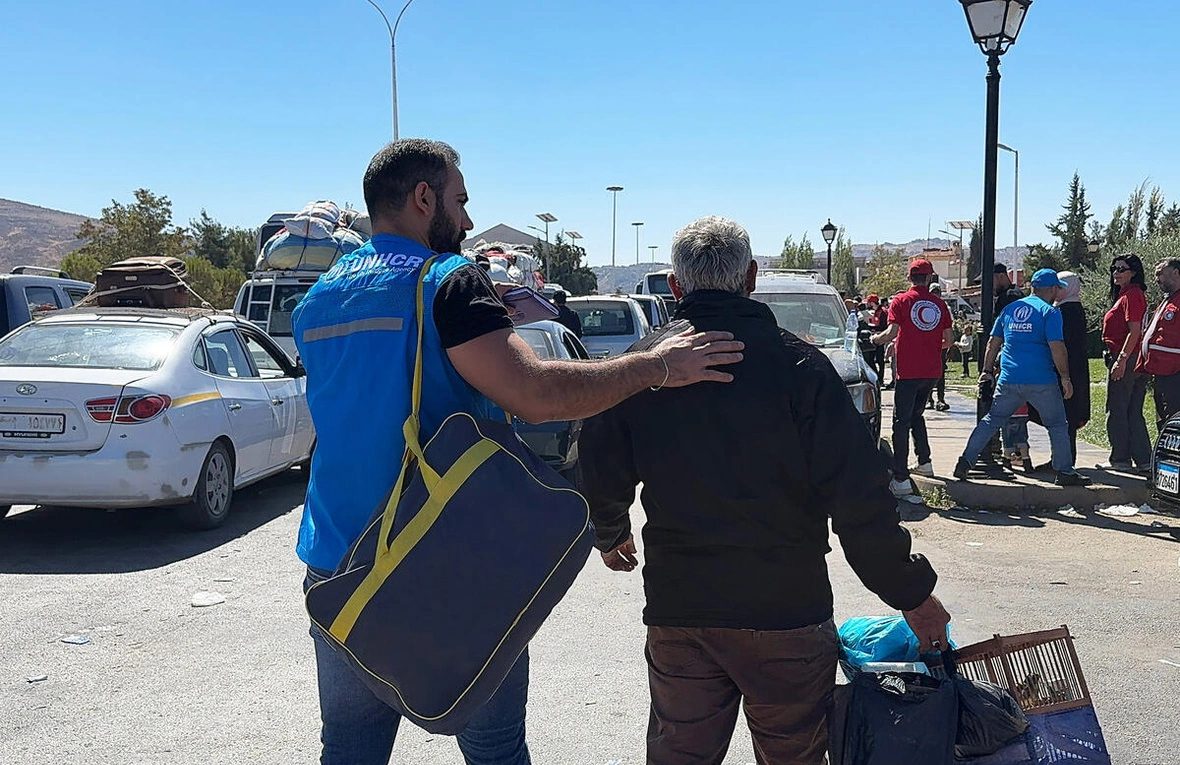
The United Nations High Commissioner for Refugees (UNHCR) says over 80,000 Syrians have crossed from Lebanon into Syria since March 2 amid escalating security developments. UNHCR spokesperson Celine Schmitt said many arrivals fled their homes urgently after bombings near residential areas, forcing families to leave without personal belongings. Many are now staying with relatives and extended family members in Syria.
UNHCR Expands Presence at Border Crossings
UNHCR increased its presence at key crossings along the Syrian-Lebanese border to assist authorities in managing the rising number of arrivals. Schmitt said the agency is coordinating closely with Syrian authorities at both national and local levels, particularly at the Jdeidet Yabous Border Crossing, Josiah Border Crossing and Arida Border Crossing.
She praised the efforts of border officials, highlighting the opening of a new immigration hall at Jdeidet Yabous as a key step in improving processing capacity. The facility has been equipped with additional staff, computers and other equipment to speed up procedures and reduce congestion.
Coordination With Syrian Authorities
Schmitt said UNHCR’s response includes collecting arrival data in coordination with Syrian authorities and working with the Syrian Civil Defense. Immediate assistance provided at the crossings includes water, blankets and transportation for those who lack their own means of travel.
According to UNHCR, most arrivals are heading to areas already experiencing strain from previous waves of returns, including Damascus, Rural Damascus Governorate, Aleppo, Homs, Hama and Daraa. Schmitt noted these regions face significant challenges due to damaged infrastructure and shortages of basic services while continuing to absorb returning refugees and internally displaced persons (IDPs).
Call for Additional Funding
To address the growing needs, UNHCR calls for increased funding supporting its programs in destination areas. Existing initiatives include community centers providing psychosocial support, legal counseling and child protection services. Additional programs focus on shelter rehabilitation and livelihood assistance to help families secure housing and income.
Schmitt also highlighted ongoing cooperation with Syrian border authorities, noting that staff have received training on information collection and data-sharing mechanisms. She added that UNHCR remains ready to expand its support, including providing emergency shelter for arrivals who are traveling alone or lack family support networks.