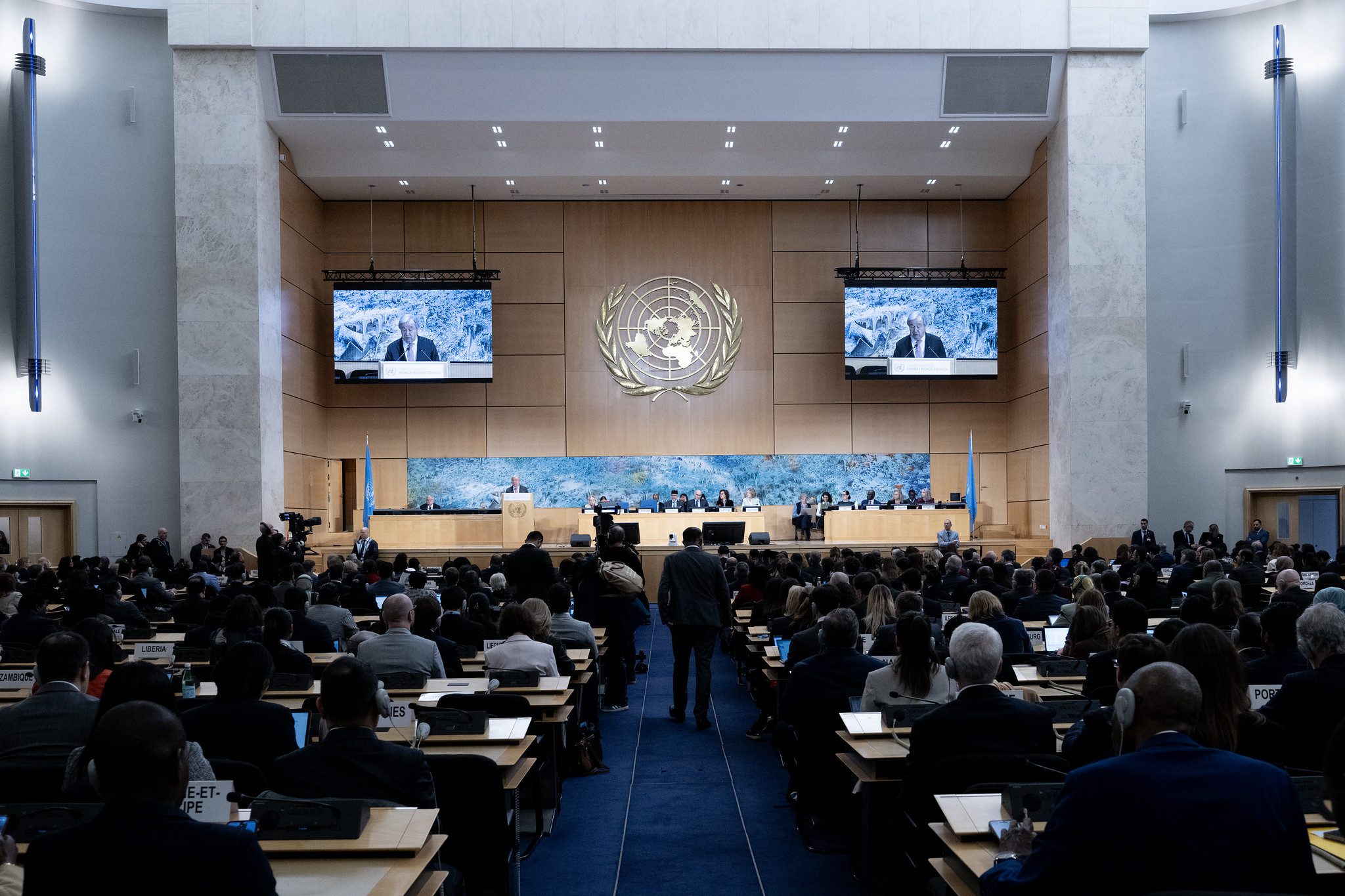
The UN Human Rights Council adopted a draft resolution condemning Israeli settlement activity in occupied territories, including East Jerusalem and the occupied Syrian Golan, in a move renewing international focus on the legal and humanitarian status of Syrian land held since 1967. According to the UN, 34 countries voted in favor of the measure, while three opposed, and 10 abstained.
The resolution called for an immediate halt to settlement expansion and condemned a range of practices, including population transfers, land confiscation, home demolitions, infrastructure destruction and measures described as amounting to de facto annexation. It said those actions alter the geographic and demographic character of the occupied territories and violate international humanitarian law.
The council also requested a report identifying settlers and groups linked to acts of violence, intimidation or harassment against civilians, along with steps taken by Israel and other countries to ensure accountability. The UN high commissioner for human rights was asked to submit a follow-up report at a future session.
Golan Status Remains a Diplomatic Fault Line
The Syrian Golan Heights has remained under Israeli occupation since the 1967 Arab-Israeli war. Israel declared its annexation of the territory in 1981, a move the international community rejected, including through UN Security Council Resolution 497, which declared the decision “null and void.”
At the end of 2025, the UN General Assembly again demanded a full Israeli withdrawal from the occupied Syrian Golan to the June 4, 1967, line. The resolution reaffirmed that Israel’s application of its laws and jurisdiction in the territory “has no legitimacy whatsoever” and said the occupation remains an obstacle to a just and lasting regional peace.
Israeli Ambassador Danny Danon criticized the vote, saying the General Assembly was “detached from reality.” He added that Israel would not return to the 1967 lines or relinquish the Golan, describing such resolutions as annual measures typically advanced by Syria and other Arab states.
Southern Syria Sees Rise in Security Incidents
A separate report by SARI Global, published on the UN’s site Friday, documented 897 incidents attributed to Israeli activity in southern Syria, including 123 in March 2026 alone. That compared with 91 incidents in January and 97 in February, indicating a rising pace rather than a stabilization of the front.
The report said activity in Quneitra and western Daraa has evolved beyond limited strikes into what it called a coercive security structure, combining patrols, aerial surveillance, checkpoints and movement restrictions. Researchers described the approach as a “hybrid” model blending military operations with direct management of civilian movement.
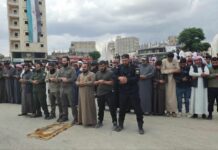
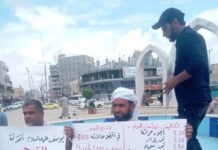
The same report pointed to an overlap between military activity and public mobilization in late March and early April, when protests in cities including Tafas, Nawa and Jasim reportedly moved closer to border friction zones near Quneitra and Rafid.
Researchers warned that the greatest risk may not be full-scale war but a steady increase in low-intensity confrontations, including ambushes, explosive devices and harassment attacks, alongside growing public anger.
Farmers Describe Mounting Economic and Environmental Losses
The effects have been especially severe for farmers in southern Syria, where access to land has become increasingly dangerous, according to reporting by Anadolu Agency. Residents said olive groves, vineyards and grazing land remain out of reach as military activity and patrol movements continue.
Muhammad Rahal, director of agriculture in Quneitra, said damage now extends beyond security operations to forests, crops and pastures. He said chemical spraying near the ceasefire line harmed winter crops and grazing fields, forcing some livestock breeders to sell their herds.
Local farmers echoed those concerns. Muhammad al-Hassan said many now view reaching their land as a daily risk because forces may enter at any time. Another farmer, Hussein Bakir, said he has been unable to access roughly 500 dunams of land and described the situation as “unbearable.”
Together, the UN resolutions, field reports and local testimonies point to a widening gap between diplomatic calls for withdrawal and the worsening realities facing civilians living near occupied Syrian land in the country’s south.