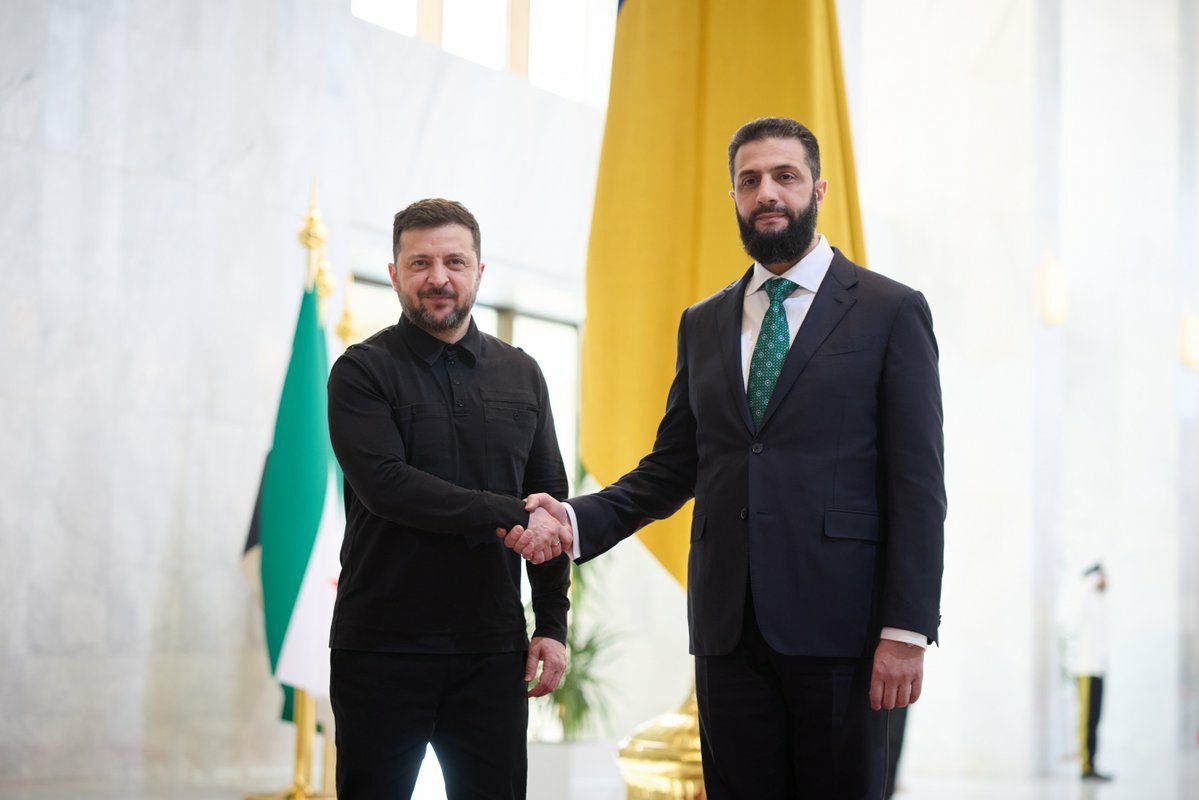
Ukrainian President Volodymyr Zelensky and Turkish Foreign Minister Hakan Fidan arrived in Damascus Sunday, April 5, for a trilateral meeting with Syrian President Ahmad al-Sharaa, opening a new diplomatic channel centered on security coordination, reconstruction and regional stability. Syrian Foreign Minister Asaad al-Shaibani received both officials at Damascus International Airport.
The meeting marks Zelensky’s first official visit to Syria and follows his stop in Turkey, where he met Turkish President Recep Erdogan on Saturday. Those talks focused on bilateral relations, efforts to end the Russia-Ukraine war and the wider fallout from the regional conflict reshaping security priorities across the Middle East.
Reconstruction and SDF Integration on Agenda
According to Turkish and Syrian sources, the Damascus talks are expected to focus heavily on Syria’s reconstruction needs and on support for state institutions rebuilding after years of conflict. Officials are also set to review progress on agreements signed Jan. 17, 2025, and Jan. 29, 2026, aimed at integrating northeastern Syria, including Syrian Democratic Forces-linked (SDF) administrative structures, into the central government.
Security threats facing Syria remain central to the discussions. Turkish diplomatic sources said the three sides would assess cross-border risks, internal instability and the effect of the wider Middle East war on Syrian territory, including spillover pressures linked to Lebanon and regional armed groups. Syrian officials familiar with the meeting also said defense cooperation is expected to feature prominently in the talks with Zelensky.
Regional Diplomacy Expands Beyond the War
The Damascus summit also reflects Zelensky’s diplomatic push across the Middle East. In recent days, he has visited Qatar, Saudi Arabia, Jordan and the UAE, seeking new partnerships in defense exports, energy cooperation and military technology. Ukrainian officials describe those efforts as part of a wider strategy building regional security partnerships beyond Europe.
For Syria, the meeting signals a continued realignment of foreign relations after the collapse of the Assad-era alliance structure. Turkish-Syrian coordination has accelerated over the past year, while Kyiv and Damascus have moved to restore ties following a joint statement signed during the UN General Assembly last September.
The trilateral format gives all three governments a platform to align on immediate security concerns while testing longer-term economic and political cooperation. With reconstruction, defense coordination and regional stabilization all on the table, the Damascus talks could shape a new phase of postwar diplomacy in the region.