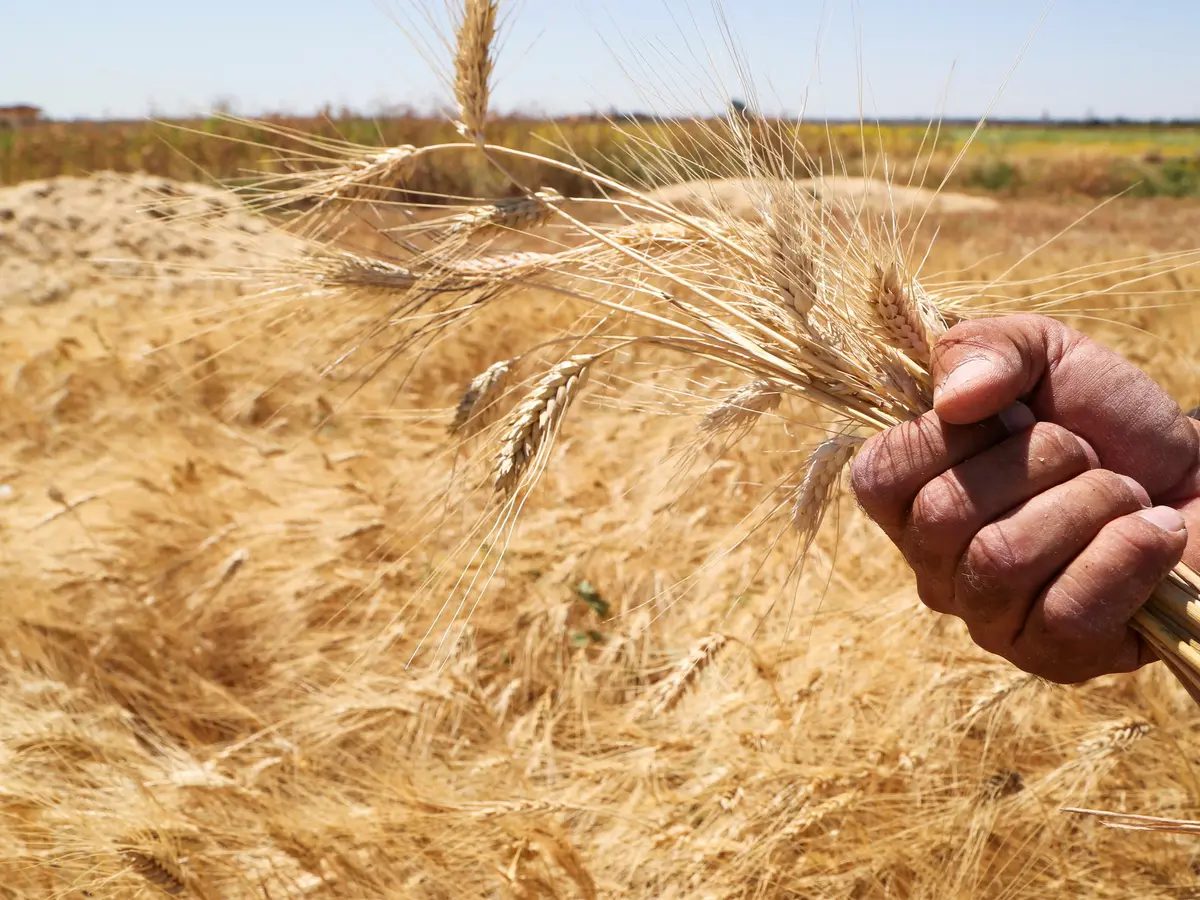
 Syria says it has secured enough wheat supplies to meet domestic needs until mid-2027, marking a significant development in the country’s food security efforts. As preparations continue for the upcoming harvest season, officials expect stronger local production and expanded storage capacity to reduce dependence on imports. For years, securing wheat supplies was a major challenge due to corruption, poor management, drought conditions and declining rainfall.
Rising import costs also placed pressure on foreign currency reserves, contributed to inflation and worsened living conditions across the country. This season, however, officials point to improved agricultural conditions and the return of the Jazeera region (Deir Ezzor, Raqqa and Hasakah) to government control as key factors behind more optimistic production forecasts.
Production Estimates Raise Expectations
Hassan al-Othman, director general of the Syrian Grain Corporation, told Al-Thawra Syria’s annual wheat requirement stands at approximately 2.5 million tons. Current reserves amount to nearly 1 million tons, leaving an estimated gap of 1.5 million tons expected to be covered through this year’s harvest.
According to Ministry of Agriculture estimates, total production could exceed 2.5 million tons this season. Even under lower projections, officials expect at least 1.5 million tons to be delivered to the Grain Corporation, enough to cover domestic needs until mid-2026 while supporting reserves for the following year.
The ministry initially targeted production of 2.8 million tons, though implementation rates for cultivation reached 86%. Planned cultivation covered 1.4 million hectares, while the actual cultivated area reached 1.2 million hectares. Preliminary estimates indicate that Hasakah province alone may produce as much as 1.3 million tons of wheat.
Expanded Storage and Infrastructure
Othman said authorities received assurances sufficient funding will be available to purchase the full wheat crop from farmers. He added storage infrastructure has improved considerably compared with last year after the rehabilitation of several silos using local expertise and labor.
The Syrian Grain Corporation currently operates 37 silos, 98 storage facilities, 14 warehouses and 27 threshing floors. Construction continues on about 15 additional sites in Rural Damascus, Raqqa, Hasakah, Deir Ezzor, Daraa and Aleppo.
Othman said wheat remains of a seasonal commodity requires proper storage and continuous management. He noted maintaining reserves capable of covering consumption from June 2026 through June 2027 represents an important indicator of food security stability.
Economic Impact of Lower Imports
Officials expect reduced wheat imports to ease pressure on the national economy. Wheat purchases from abroad have historically represented one of the country’s largest external expenditures, increasing demand for foreign currency and affecting exchange rate stability.
Greater reliance on domestic production is expected to support local farmers while stimulating economic activity in rural areas tied to the wheat supply chain. With improved rainfall, expanded cultivation and increased storage capacity, Syrian officials say the country is in a stronger position to maintain stable wheat supplies while reducing dependence on foreign markets.