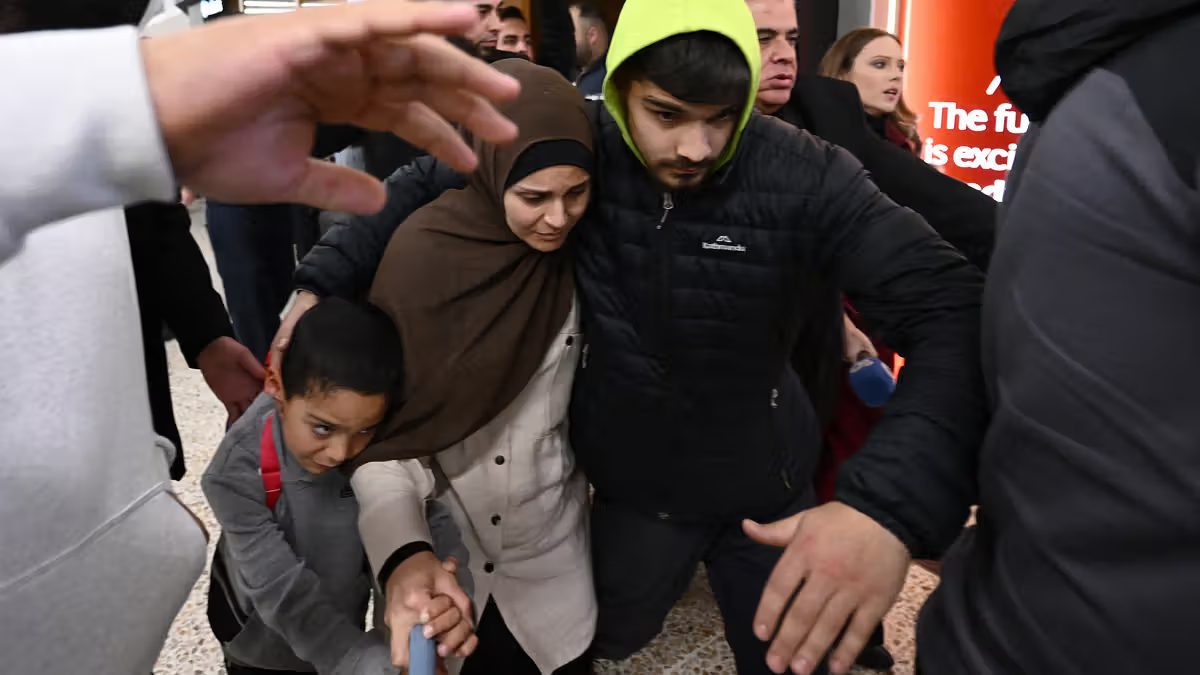
Australian authorities charged three women with terrorism and “slavery-related offenses” after they returned from detention camps in northeastern Syria alongside nine children, reigniting debate over repatriation policies and the treatment of families linked to ISIS.
Australian Federal Police said two Victorian women, Kawthar Ahmed, 54, and her daughter Zainab Ahmed, 31, face crimes against humanity charges tied to the alleged enslavement of a Yazidi woman in Syria. Authorities allege the pair traveled to Syria in 2014 and knowingly kept a female slave in their home after she was allegedly purchased for $10,000 USD.
The charges include enslavement, possessing a slave and using a slave under Australia’s Criminal Code. Each offense carries a maximum sentence of 25 years in prison. The women appeared briefly in Melbourne Magistrates Court on Friday, May 8, and remain in custody pending a May 11 hearing.
Australian Federal Police Assistant Commissioner for Counter Terrorism Stephen Nutt described the case as “an active investigation into very serious allegations” in a joint statement issued with Victoria Police and the Australian Security Intelligence Organization.
A third woman, Janai Safar, 32, appeared in a Sydney court after authorities arrested her at Sydney Airport on allegations she joined ISIS after traveling to Syria in 2015 to reunite with her husband. She faces terrorism-related charges that carry a maximum penalty of 10 years in prison.
A judge denied Safar bail after her lawyer argued she had endured traumatic conditions in Syria and likely suffered post-traumatic stress disorder. She remains in custody until her next court appearance in July.
Children Face Uncertain Reintegration
The women returned to Australia after spending more than seven years in camps run by the PKK-aligned Syrian Democratic Forces (SDF) in northeastern Syria. Human rights groups and aid agencies have long criticized conditions in camps such as Roj, citing shortages of food, clean water and medical care.
Australian Prime Minister Anthony Albanese defended the government’s response, saying Australian citizens retain the right to return home but would face prosecution where evidence supported criminal charges.
“Australian citizens have the right to Australian passports and come to their country, but what we have the right to do is punish them firmly, and that is exactly what we are doing,” Albanese told Nova Melbourne radio. He also described the children as “victims of decisions made by their parents.”
Officials provided few details about the welfare arrangements for the nine children, some of whom were reportedly separated from their mothers following the arrests. In a recent statement Human Rights Watch (HRW) warned such separations could deepen trauma for children already exposed to years of conflict, displacement and detention.
“The Australian government should provide the support needed to ensure that these children, who have suffered immensely, have a successful reintegration and receive comprehensive trauma care,” said Daniela Gavshon, Australia director at HRW.
HRW noted the children did not choose to live under ISIS rule and survived what it described as horrific conditions in the SDF-run camps. HRW also urged authorities to uphold due process protections for the accused women while supporting victims connected to the alleged crimes.
Debate Over Repatriation Intensifies
The case marks the first time Australian authorities brought crimes against humanity charges under legislation enacted in 2002 to prosecute serious international crimes. HRW said courts should consider the years the women spent detained without charge in SDF-run camps when determining any future sentences.
The organization also pointed to previous repatriations from Syria, noting that 31 women and children had already returned to Australia, with no public reports linking them to criminal activity after their return.
The latest arrivals initially appeared unlikely to receive official government assistance. In April, Australian officials publicly stated they would not facilitate the repatriation of citizens from Syria and warned that anyone returning independently could face criminal prosecution.
Reports from Australian media said the women and children left the Roj Camp with assistance from local actors before traveling to Damascus to arrange flights home. The return has also drawn political criticism inside Australia, where opponents of the government argue authorities failed to prevent the women from re-entering the country.
Government officials maintain there are legal limits on blocking Australian citizens from returning. As the legal proceedings move forward, the cases are expected to test Australia’s approach to balancing national security concerns, accountability for alleged ISIS-linked crimes and the long-term rehabilitation of children emerging from years of war and detention.