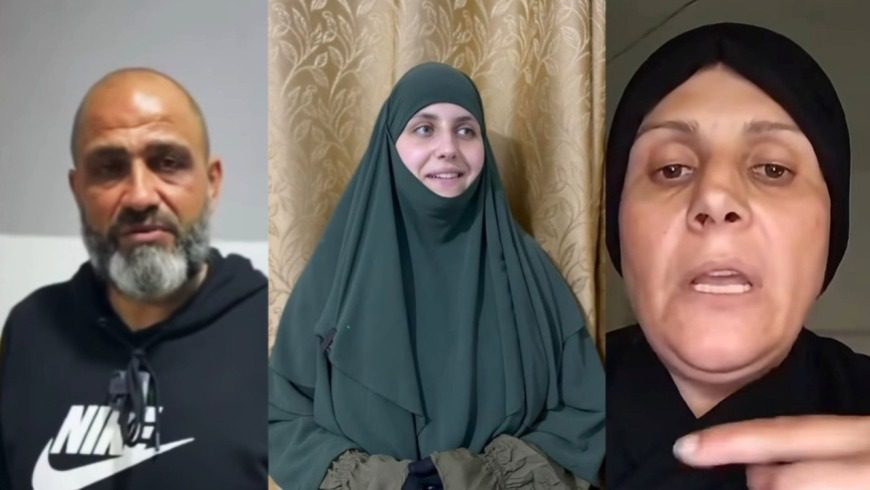
The case of Batoul Suleiman Alloush, a 21-year-old woman from an Alawite family in Tartous countryside who said she voluntarily converted to Sunni Islam and left her family home, sparked one of Syria’s most contentious public debates in recent weeks. The controversy expanded far beyond a private family dispute as competing narratives, sectarian rhetoric and online incitement campaigns spread across social media.
Alloush, a student at the Medical Technical Institute at Latakia University, last saw her family on April 29 while traveling from university housing in Latakia toward the Jableh bus station. Her family initially issued public appeals saying they feared she had been kidnapped.
The case quickly became a national flashpoint, with some activists and commentators alleging sectarian targeting and accusing authorities of failing to protect minority women. Others argued the issue had been manipulated by political actors seeking to deepen tensions in Syria’s coastal region.
Conflicting and Inconsistent Narrative
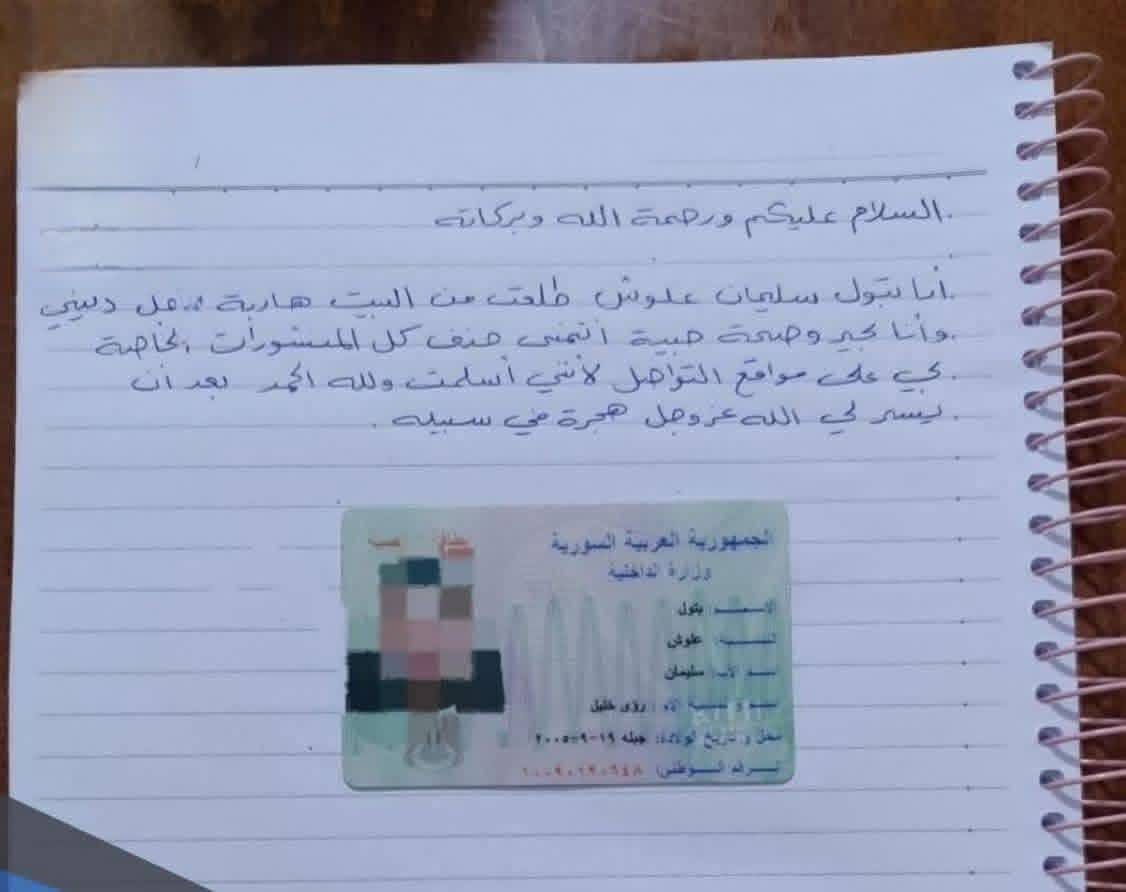
Days after her disappearance, Alloush appeared in a video wearing a hijab and declaring she had left voluntarily “for the sake of God.” She denied being kidnapped saying she had converted to Islam, leaving, after struggling with personal and religious pressures. The controversy intensified when her parents publicly challenged her statements, suggesting she had spoken under duress.
In later videos, her parents oscillated from begrudging acceptance to tacit denial. Her mother alleged that her daughter had been threatened and psychologically pressured. Her father initially acknowledged meeting his daughter in Jableh admitting she was safe, and not a hostage, before later reversing his position and once again claiming she had been abducted. Conflicting statements fueled confusion and deepened public suspicion online.
A ‘Midnight Meeting’
In a late-night meeting held at the Jableh District Administration, attended by local officials, journalists, community leaders and Alawite dignitaries, Alloush again denied claims she had been kidnapped. She said she was staying willingly with a female friend and intended to reconnect with her family once tensions eased.
“I left of my own free will, and thank God I’m fine,” she said during the meeting. “None of the rumors are true, that I was kidnapped, trafficked, or anything like that.” Participants at the gathering repeatedly emphasized that the purpose of the meeting was to affirm her safety and that she was acting voluntarily, not to debate her religion.
Despite that some still pressed her on religious grounds, with one attendee saying, “What will you say to your Lord for abandoning your family?” To which she replied, “And what business of yours is it between me and my Lord?”
Online Campaigns Escalate
While the Latakia Governorate Public Prosecutor issued a statement confirming that no kidnapping had occurred and Alloush had left voluntarily for “reasons related to her religious beliefs,” repeated denials of abduction, and online campaigns continued to intensify.
Several social media figures and religious personalities framed the incident as part of a broader campaign targeting Alawite women. One such individual is the Lebanon-based Syrian Alawite, Ghazwan Muhammad, a pro-Assad media activist known for his controversial rhetoric.
Muhammad shared a video on his Facebook attacking Alloush and her parents while comparing the case to that of Mira Jalal Thabet who similarly converted from the Alawite faith to Sunni Islam, fleeing her home and sparking outrage amidst rumors of abduction.
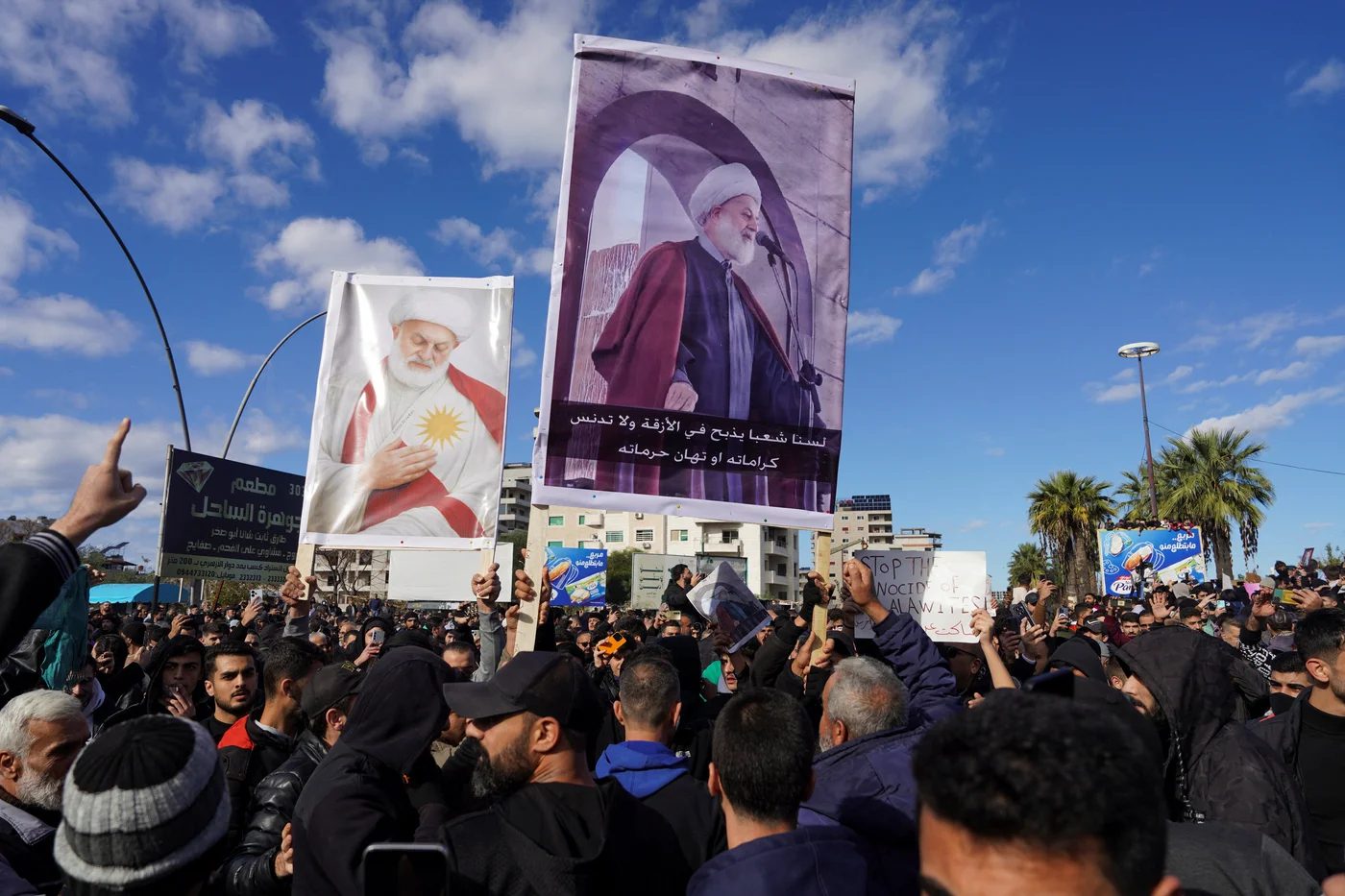
In a message to the Alloush family he said, “you mocked us and trivialized the issue of our kidnapped women, just like the family of Mira did!” Not only individual activists but influential members of the Alawite community commented. Sheikh Ghazal Ghazal, a self described Alawite spiritual authority, warned of demonstrations on the Syrian coast if Alloush did not return to her family.
In a video statement, Ghazal, described Alloush as “the daughter of the community and its honor” accusing authorities of attempting to divide the Alawite community from within. Alawite Sheikh Saleh Mansour also criticized the Syrian government calling for protest vigils demanding the return of “kidnapped Alawite women” and the release of detainees.
At the same time, other Alawite activists and platforms rejected calls for escalation. The Thiqa platform criticized what it described as inflammatory rhetoric by influencers living outside Syria, warning that emotional mobilization could push the community toward greater fear and instability.
“The Alawite people are innocent of this inflammatory rhetoric,” the platform said in a public statement, calling instead for “security, safety, stability, and a life that preserves people’s dignity.” Sunni commentators also weighed in heavily. Some defended Alloush’s right to choose her religion freely and accused pro-Assad figures of exploiting the case to provoke sectarian anger.
In a Facebook video, a Sunni media activist and commentator Muhammad Uthman accused several activists and former regime supporters of promoting “false narratives” after Alloush publicly denied being kidnapped. He claimed some of the figures leading the online campaigns had ties to former Assad militias and were attempting to destabilize society by reviving sectarian fears.
Others have criticized the case from ideological and religious perspectives, including objections to Alloush’s conversion and leaving her parents’ home. Alloush herself raises questions as to such concerns asking, “If a person wanted to become gay or transgender, would they get the same uproar that my case got?”
Concerns Over Civil Peace
The incident has renewed broader debate in Syria over reports of missing women and the role social media plays in amplifying rumors and sectarian tensions. Tartous Governorate also issued a public warning against unlicensed gatherings linked to the controversy, saying calls for protests represented attempts to “destabilize the country and serve suspicious agendas.”
Her case continues to generate intense debate across Syria, reflecting both the sensitivity of religious identity in the country and growing concern over how personal disputes can quickly evolve into broader political and sectarian battles online. For Alloush it remains a personal matter, one of family and faith, “I will eventually reconnect with my family,” she said. “I never disowned them.”