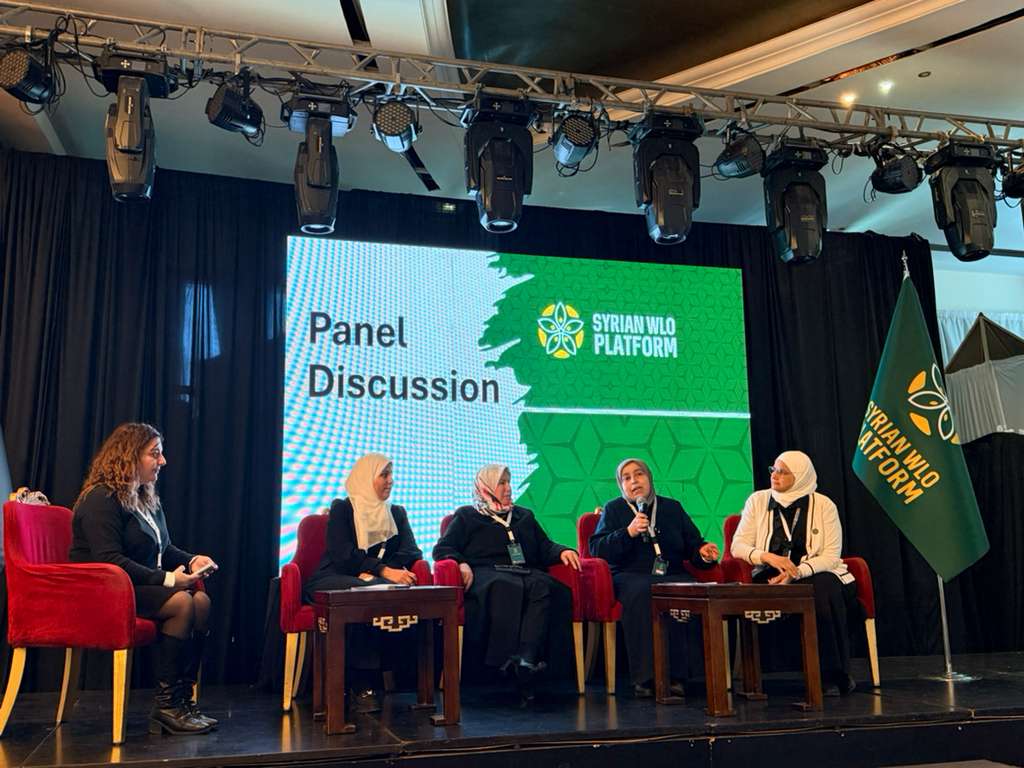
 The launch of the Women Led Organizations (WLO) platform in Damascus marked more than a routine civil society announcement. Attended by representatives from government bodies, UN agencies, international organizations and Syrian NGOs, the event reflected a shift in how Syrian women are positioned within the country’s emerging civil and administrative structures after Dec. 8, 2024.
The founding document defined its mission as strengthening women’s role in humanitarian and community work while expanding their presence in planning, coordination and decision-making. It signals a notable change in emphasis, transcending symbolic representation, moving toward direct participation in the mechanisms shaping public affairs. The issue is not visibility but whether actionable equality ensures women are structurally embedded in governance and policy.
From Exile to the Policy Sphere
Established abroad in 2023 by 10 women’s organizations, the platform has since relocated its operations to Damascus and now includes over 100 women, carrying both political and social significance. WLO coordinator Kinda Hourani said launching the initiative from within Syria facilitates supporting women working in civil society while directly contributing to government priorities.
She described WLO as bringing together women with deep professional expertise, including those shaped by displacement and those representing diverse parts of Syrian society. The transition from “external” to “internal” therefore reflects more than geography. It represents entry into the spaces where negotiation, planning and implementation take place.
Government Restructuring Opens New Space
The platform’s emergence also aligns with Syria’s changing political environment. Since late 2024, the relationship between state institutions and civil society has been gradually redefined. A key moment came March 29, 2025, when the new government was formed and Hind Qabawat was appointed minister of social affairs and labor, giving women’s issues direct cabinet-level representation.
Officials have increasingly linked women’s leadership to local governance and public administration. Statements from the Ministry of Social Affairs and Labor emphasized women’s participation in leadership roles, particularly in local councils and empowerment programs tied to the country’s transitional phase.
Transitional Justice as the Next Arena
That connection becomes especially important in light of Syria’s new institutional framework for accountability. The National Commission for Transitional Justice, established under Decree No. 20, created a formal mechanism for justice, redress and reconciliation.
Within that context, the women-led platform may evolve from a professional coordination network into a source of expertise for legislation, reparations and citizenship reform. Its role increasingly points toward practical involvement in rebuilding institutions rather than remaining confined to advocacy.
The international dimension reinforces that trajectory. UN Women officials noted that women-led organizations have long served as a cornerstone of Syria’s humanitarian response. As the country moves deeper into institutional reconstruction, that accumulated experience may now translate into a more direct role in shaping national policy.