 After years of limited official television production, the General Establishment for Television and Radio Production in Syria announced the start of filming for “The Way Back,” a seven-episode series centered on displacement and camp life during the Syrian revolution.
The production marks one of the first state-backed dramatic works to focus directly on the experiences of displaced Syrians. Written by Suleiman Abdulaziz and directed by Fadi Wafai, the series stars Firas Ibrahim, Rim Ali, Niwar Bulbul and Muhammad Hadaqi. According to the production team, the project aims to present a realistic and human-centered portrayal shaped by the collective memory of war and displacement.
Drama as Historical Testimony
The creators of the series say the project seeks to do over entertain audiences. Bulbul said Syrian drama has a responsibility to preserve collective memory after over 14 years of conflict and mass displacement.
The choice to focus on camp life reflects what many Syrians consider one of the war’s deepest social wounds. Millions of people experienced, and still endure, years of displacement, poverty and insecurity in camps across Syria and neighboring countries.
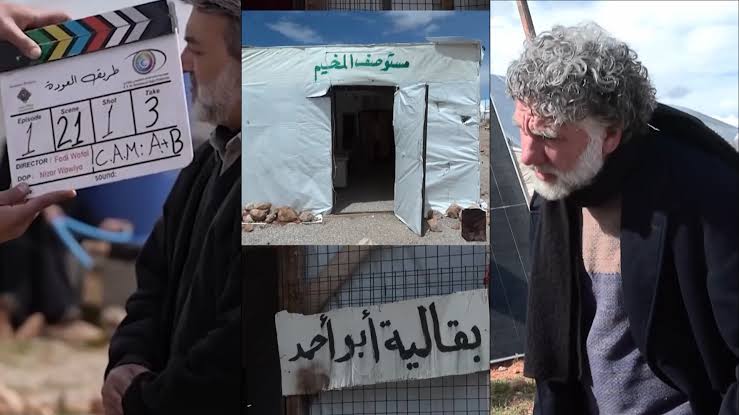
Rather than relying on a documentary style, the series focuses on personal stories and daily experiences inside the fictional “Camp of Hope.” The production attempts to depict the emotional and psychological effects of displacement while presenting the realities of camp life through dramatic storytelling.
Recreating the Conditions of Camp Life
Instead of filming in existing camps, the production team constructed a full camp set from the ground up to recreate the environment in detail. Project director Yusuf Idris said the process itself became emotionally difficult because it revived memories tied to the experiences of displaced Syrians.
The harsh filming conditions also affected the cast. Actor Firas Ibrahim said working in cold weather and difficult surroundings for a short period gave him a glimpse into the hardship refugees faced for years. Rim Ali described filming on the set as a psychologically exhausting experience forcing the cast to confront realities many Syrians continue to carry with them.
Actors Draw From Personal Experience
Several members of the cast and production team either experienced displacement themselves or lived close to those who did, adding a layer of realism to the project. Their connection to the subject shaped performances that actors described as emotionally demanding rather than purely theatrical.
Comments from the cast reflected personal reactions as much as professional observations. Some described moments of emotional strain during filming, underscoring how closely the series connects to lived experiences shared by many Syrians.
The project also reflects a broader role Syrian artists adopted during the years of conflict. Throughout the war, visual artists, filmmakers, theater performers and musicians increasingly used their work to document events, address displacement and communicate the human impact of violence and siege.
The Way Back continues that approach by using drama to revisit one of the conflict’s most enduring humanitarian issues. While the series does not attempt to provide solutions, it seeks to document a painful chapter in Syria’s modern history through storytelling grounded in personal and collective memory.