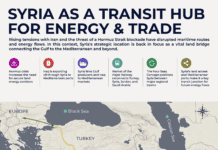
 A report by The New York Times (NYT) said growing regional instability and the closure of the Strait of Hormuz pushed Syria back into focus as a potential trade and energy corridor linking the Middle East to Europe. According to the report, disruptions affecting one of the world’s most important oil transit routes forced regional governments and companies to search for alternative shipping paths.
Syria, with its Mediterranean ports and borders connecting Turkey, Iraq, Jordan, and Lebanon, has emerged as a possible option despite years of conflict and economic isolation. The newspaper noted that Syria’s geographic position historically made it a major commercial crossroads along regional trade routes, including the Silk Road.
Oil Shipments Move Through Syria
Hazem al-Sabti, director of public relations at Syria’s General Authority for Free Zones, said the country has long served as an important route for regional trade. The report also quoted Mazen Alloush, director of local and international relations at the General Authority for Border Crossings and Customs, as saying neighboring countries approached Syria after shipping disruptions in the Gulf intensified. “After the closure of the Strait of Hormuz, nearly all neighboring countries knocked on our doors to access Syrian ports,” Alloush told the newspaper.
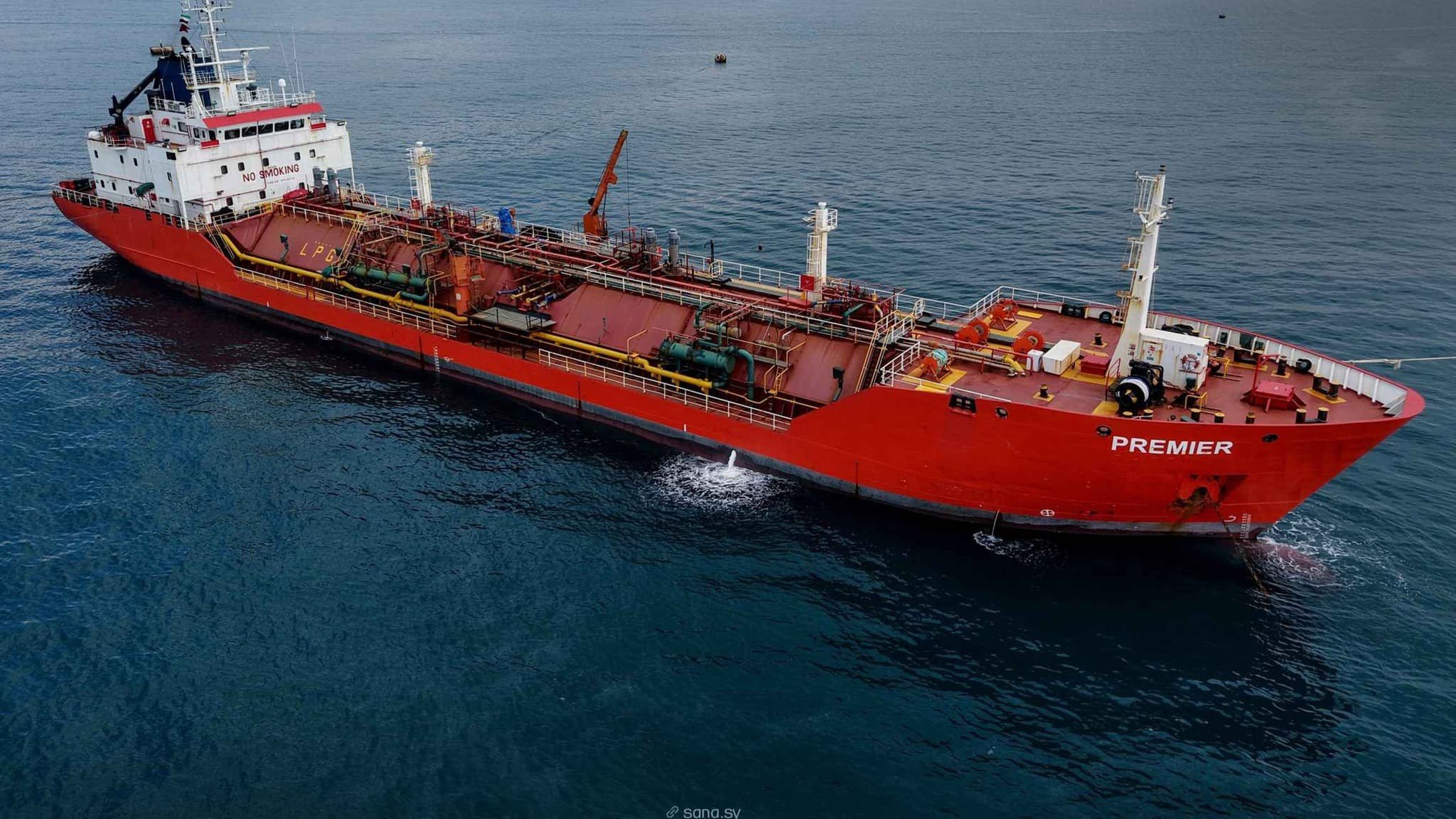
According to the report, Iraq and the UAE have already begun transporting some oil and goods overland through Syria for shipment from Mediterranean ports including Port of Baniyas and Port of Latakia. The newspaper reported that Iraq’s state oil marketing company requested permission from Damascus to move crude oil by truck to Baniyas after shipping disruptions caused storage pressures in Iraq.
Late March reportedly saw the first Iraqi oil shipments crossing into Syria, with over 400 tanker trucks entering daily at some points, each carrying up to 10,500 gallons of crude oil. The report added that foreign companies have shown interest in restoring the former oil pipeline linking Kirkuk in Iraq to Baniyas on Syria’s Mediterranean coast.
Infrastructure Remains a Major Challenge
Despite the renewed attention, NYT said Syria still faces major infrastructure obstacles limiting its ability to benefit from increased trade activity. Alloush told the NYT that rebuilding the Tanf Border Crossing could take several months and cost an estimated $25 million. Limited storage capacity at Baniyas port has also reduced the volume of oil shipments at times.
The report noted that opportunities extend beyond energy exports. Last month, a shipment of 200 cars from the UAE reportedly arrived in Syria through Jordan before being re-exported to Europe through Latakia.
Meanwhile, Emaar Properties is reportedly considering investments worth up to $7 billion along Syria’s coast and an additional $12 billion in Damascus. Economist Karam Shaar told the newspaper that Syria is experiencing “a very fortunate moment,” though reconstruction costs remain enormous. According to World Bank estimates cited in the report, rebuilding Syria could exceed $200 billion, including roughly $80 billion for infrastructure alone.
Damascus Promotes Syria as a Trade Corridor
President Ahmad al-Sharaa has sought to present Syria as a secure regional transit route capable of connecting Central Asia and the Gulf with European markets. During meetings with European and regional officials in Cyprus last month, Sharaa said Syria could serve as a “safe strategic corridor” for regional trade and energy projects. The government has also discussed reviving older regional infrastructure initiatives, including the Arab Gas Pipeline, as part of broader efforts to restore Syria’s economic role in the region.