
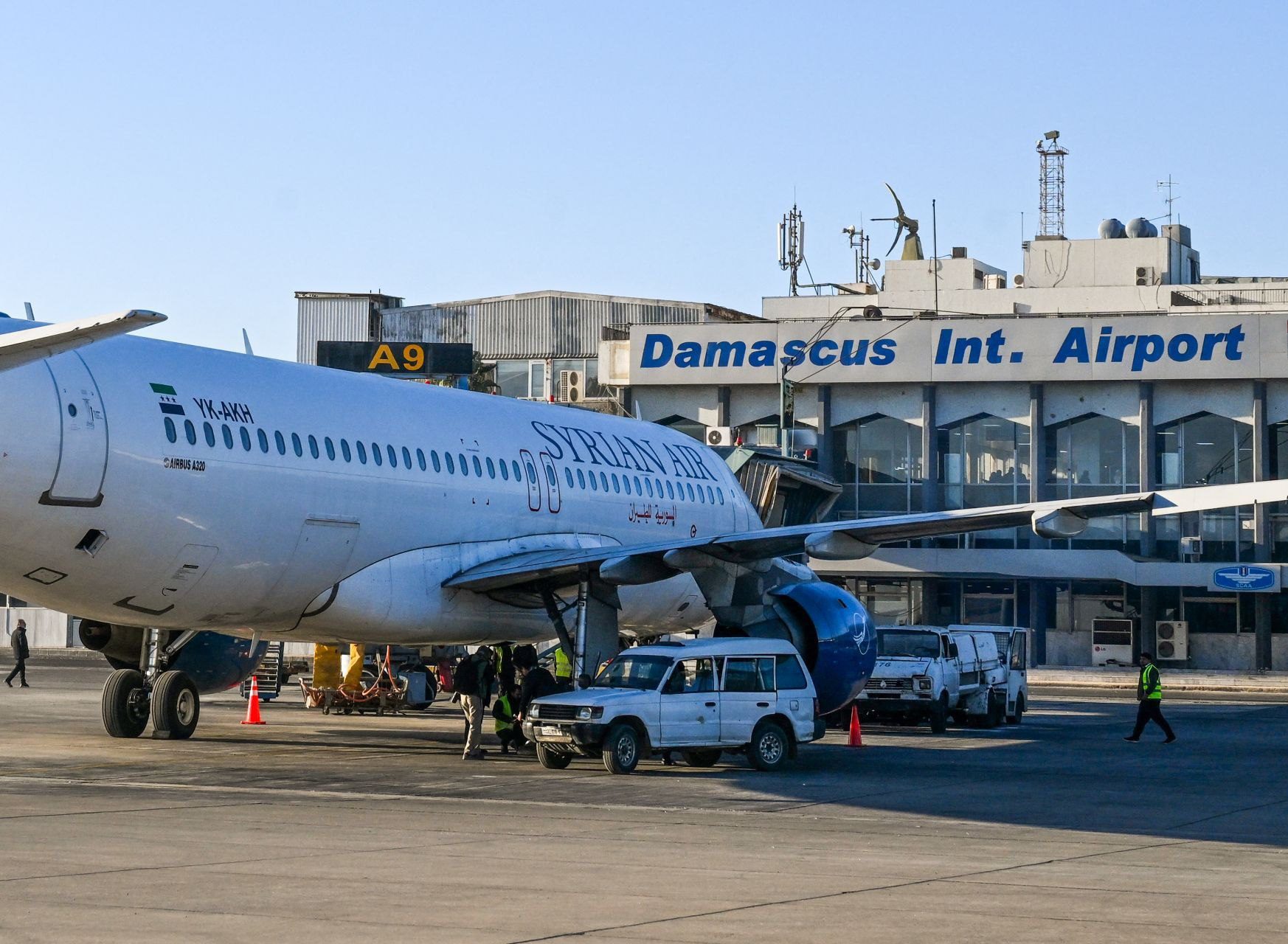
 Syria’s airspace has experienced a significant increase in international flight traffic, highlighting a shift in regional aviation routes amid ongoing instability elsewhere in the Middle East. According to statistics released by the Syrian Civil Aviation Authority, approximately 11,801 flights crossed Syrian airspace in May, more than double the 4,267 flights recorded in February
The increase comes as airlines continue adjusting routes to avoid complications caused by the Israel-Iran and US conflict across the region, bringing renewed attention to Syria’s geographic position as a key transit corridor between the Gulf and Europe.
Air Routes Shift Across the Region
For much of the past 14 years, Syria’s airspace saw limited use due to the country’s conflict and related security concerns. However, changing conditions in regional air traffic have prompted many international carriers to reconsider their flight paths.
Following the ceasefire and the reopening of Syrian airspace in April, a growing number of flights departing from major hubs such as Dubai and Doha and bound for Europe began crossing central Syria rather than flying over Iraq.
The revised routes have allowed airlines to reduce flight times and fuel consumption at a time when operating costs remain elevated. As carriers continue to seek efficient alternatives, Syria’s airspace has regained some of its former importance as a strategic link between the Gulf region and European destinations.
Increased Traffic Brings New Revenue
The rise in overflight activity has also generated additional income for Syrian authorities. Earlier this year, the government introduced updated fees for aircraft transiting Syrian airspace. Under the current structure, airlines pay a fixed charge of $499 per flight, consisting of $430 in basic fees and $69 in communications charges. Based on those rates, Reuters estimated that May’s air traffic generated roughly $5.9 million in revenue.
The current pricing system differs significantly from the structure used under the former Assad regime, when charges were calculated according to aircraft size and weight. Authorities have also introduced incentives, including a 50% discount for domestic flights and Syrian-registered aircraft, while exempting aircraft carrying heads of state and official delegations.
Obstacles Remain for Full Recovery
Despite the increase in traffic, aviation authorities still face significant challenges before Syrian airspace can fully recover its pre-war role. Turkey’s transport minister recently announced that Syria had received advanced radar and navigation equipment from Turkey and completed upgrades at Damascus International Airport. Officials hope the improvements will strengthen air traffic management and operational reliability.
However, industry assessments continue to highlight safety concerns. The aviation risk-monitoring organization OPS Group classifies Syrian airspace as high risk because of ongoing security challenges and limited surveillance capabilities. The organization notes that air traffic control relies primarily on procedural control, the most basic form of aircraft separation. As a result, the EU Aviation Safety Agency continues to advise operators to avoid Syrian airspace.
Many airlines from Asia and North America also continue to bypass the region, leaving traffic levels well below those recorded before the outbreak of the Syrian conflict. Nevertheless, Syrian Civil Aviation Authority Director Omar al-Husari described the recent increase in traffic as evidence of a growing shift in airline confidence. He pointed to updated flight routes and improvements in navigation and surveillance systems that he said align with standards established by the International Civil Aviation Organization (ICAO).