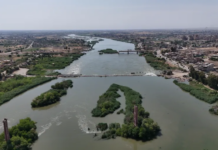
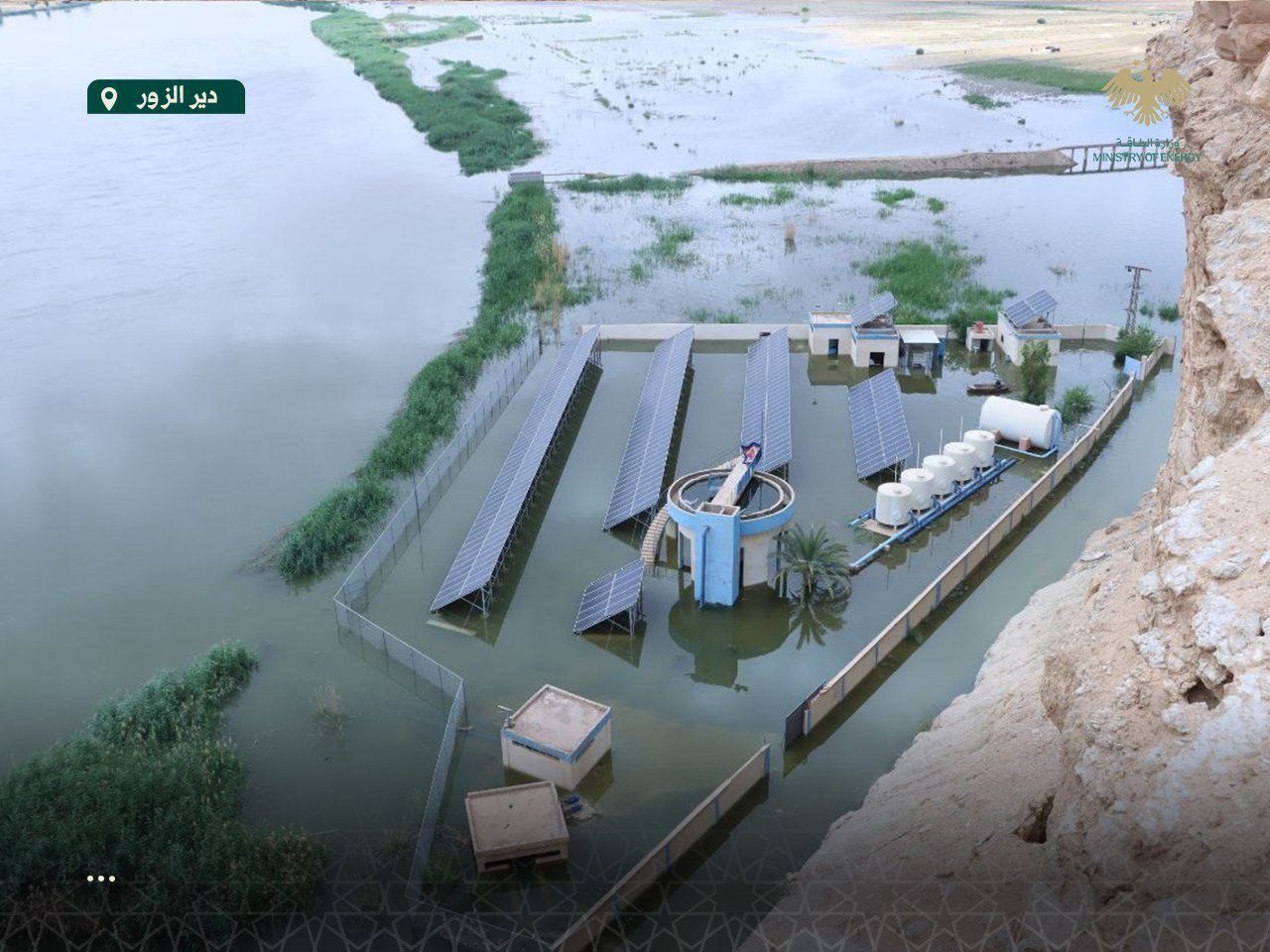
 Recent efforts to repair and protect critical water infrastructure have restored drinking water services across parts of Deir Ezzor province following flooding along the Euphrates River. According to the Ministry of Energy, the restoration of several key facilities improved water security for hundreds of thousands of residents and strengthened the reliability of supply networks across eastern Syria.
Major Station Returns to Full Production
The Deir Ezzor Drinking Water and Sanitation Company returned the Euphrates Giant Station to its full production capacity of 60,000 cubic meters per day after completing repairs to equipment damaged by rising river levels. The station had operated at reduced capacity in recent weeks due to the flooding.
With repairs now complete, officials say approximately 400,000 residents across Deir Ezzor province will benefit from a more stable and consistent supply of drinking water. The restoration marks a significant step in maintaining essential services in an area that has faced repeated infrastructure challenges in recent years.
Additional Facilities Resume Operations
Alongside the reopening of the main station, authorities restored operations at the Drenj and Jala water stations following technical maintenance and repair work. The Drenj station now provides water to roughly 24,000 residents, while the return of the Jala facility further strengthens service coverage in nearby communities.
Technical teams completed the work under difficult conditions as they sought to minimize disruptions and restore access as quickly as possible. Officials said the reopening of these facilities forms part of broader efforts to rehabilitate damaged infrastructure and maintain uninterrupted public services throughout the province.
Preparations Protect Baghouz Station
Preventive measures also helped avoid major damage at the Baghouz water station east of Albukamal when an exceptional flood surge submerged the site. Before floodwaters reached the facility, technical teams dismantled electrical and mechanical equipment and relocated key components to secure locations.
The precaution protected critical infrastructure from extensive damage and reduced the time required for future restoration. Authorities continue to monitor conditions at the station and are preparing to reinstall equipment once water levels return to normal.
Network Upgrades Underway in Subaykhan
At the same time, rehabilitation work is progressing at the Subaykhan-Khnayfis water station in Deir Ezzor’s eastern countryside through a partnership between the water company, UNICEF and local community initiatives.
Community groups launched the project, while UNICEF is supporting the remaining civil works and overseeing mechanical and electrical upgrades. Excavation has also begun for a new water network in Subaykhan city. The project includes the installation of 7,555 meters of pipeline with diameters ranging from 110 millimeters to 200 millimeters.
Work is expected to continue over the next six months. A joint field visit by representatives from the water company and UNICEF recently reviewed progress and assessed compliance with technical standards. The ongoing restoration and rehabilitation efforts aim to strengthen long-term water access and improve service reliability for communities across the region.