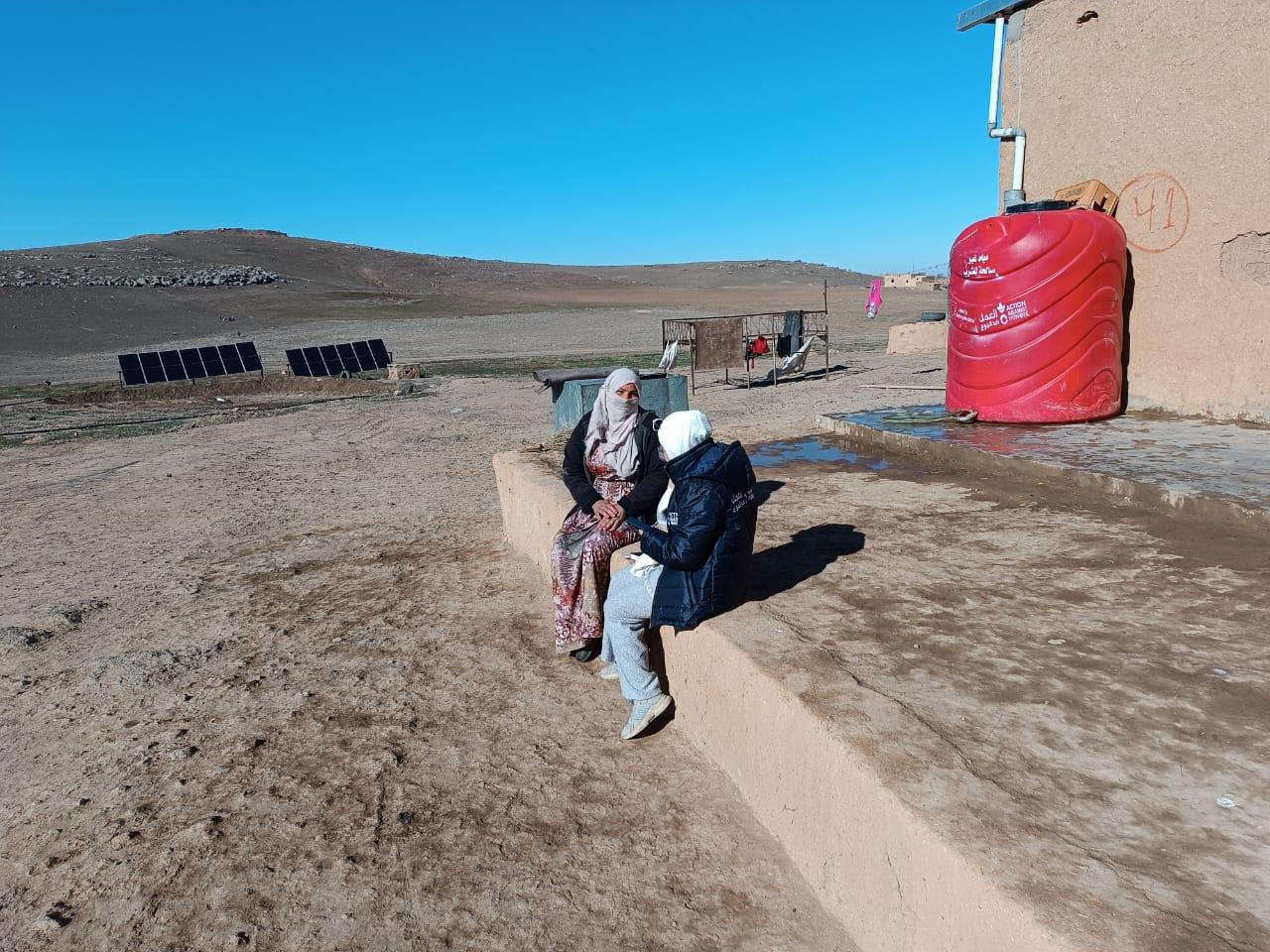
 As part of ongoing efforts to combat desertification, the Syrian government, in cooperation with international organizations, is implementing projects focused on water harvesting and the rehabilitation of degraded land. These initiatives aim to strengthen the sustainability of natural resources while reducing the effects of climate change and drought, challenges that have increasingly affected Syria and the wider region in recent years.
Muhammad al-Zoubi, director of Natural Resources Research Management at the General Commission for Scientific Agricultural Research, told SANA the commission spent years developing, studying, and implementing water-harvesting techniques and surface runoff dams. The projects seek to reduce soil degradation, increase agricultural productivity, and rehabilitate rangelands.
According to Zoubi, field studies and practical experiments demonstrated the effectiveness of these methods in securing water supplies for crops and improving vegetation cover in arid and semi-arid areas. He added that researchers have shared the results through development initiatives and applied projects, helping expand their use across the country.
Zoubi also highlighted several projects carried out in cooperation with the International Center for Agricultural Research in the Dry Areas (ICARDA) and the Arab Center for the Studies of Arid Zones and Dry Lands (ACSAD). These efforts have focused on improving water management and restoring vulnerable ecosystems in multiple Syrian provinces.
Growing Environmental Pressures Across the Region
Akram al-Balkhi, deputy director of Land Management and Water Use at ACSAD, described desertification, drought, and climate change as among the most serious environmental and development challenges facing the Arab region. He noted that arid lands account for roughly 70% of the Arab world’s total area, with large portions currently vulnerable to degradation and desertification.
Balkhi said the world loses about 10 million hectares of land each year, while annual losses in the Arab region range from 60,000 to 80,000 hectares. He warned that this degradation directly affects food security, water resources, and the livelihoods of local communities.
He pointed to several major ACSAD initiatives, including rehabilitation projects in the Mount Bishri area of the Syrian Badia and the Thulaythawat project, which ACSAD implements in cooperation with the United Nations Development Preprogram.
He also highlighted sand dune stabilization and sand encroachment control efforts at Harisha and Kabajib in Deir Ezzor Province, projects which have helped protect approximately 2,000 hectares of land.
In addition, ACSAD completed a natural resource survey covering nearly 3 million hectares in the Syrian Badia and is currently implementing a desertification control project across 1,500 hectares in the al-Batmiyat area.
Improving Water and Food Security
Balkhi said these initiatives significantly improved vegetation cover and grazing lands while protecting agricultural areas and infrastructure from sand encroachment and dust storms. He added the projects strengthened water and food security through improved water management practices, the adoption of modern irrigation techniques, and the development of crop varieties better suited to drought conditions.
The World Day to Combat Desertification and Drought is observed annually on June 17. This year’s theme, “Rangelands: Recognize. Respect. Restore,” highlights the importance of rangelands in maintaining ecological balance and supporting food and water security. The observance also emphasizes the role of healthy rangelands in strengthening climate resilience, preserving biodiversity, and sustaining the cultural heritage of pastoral and indigenous communities worldwide.