 Cooperation between the Syrian government and the UN Relief and Works Agency for Palestine Refugees in the Near East (UNRWA) has become a key factor in maintaining humanitarian services for Palestine refugees in Syria despite ongoing economic and financial challenges.
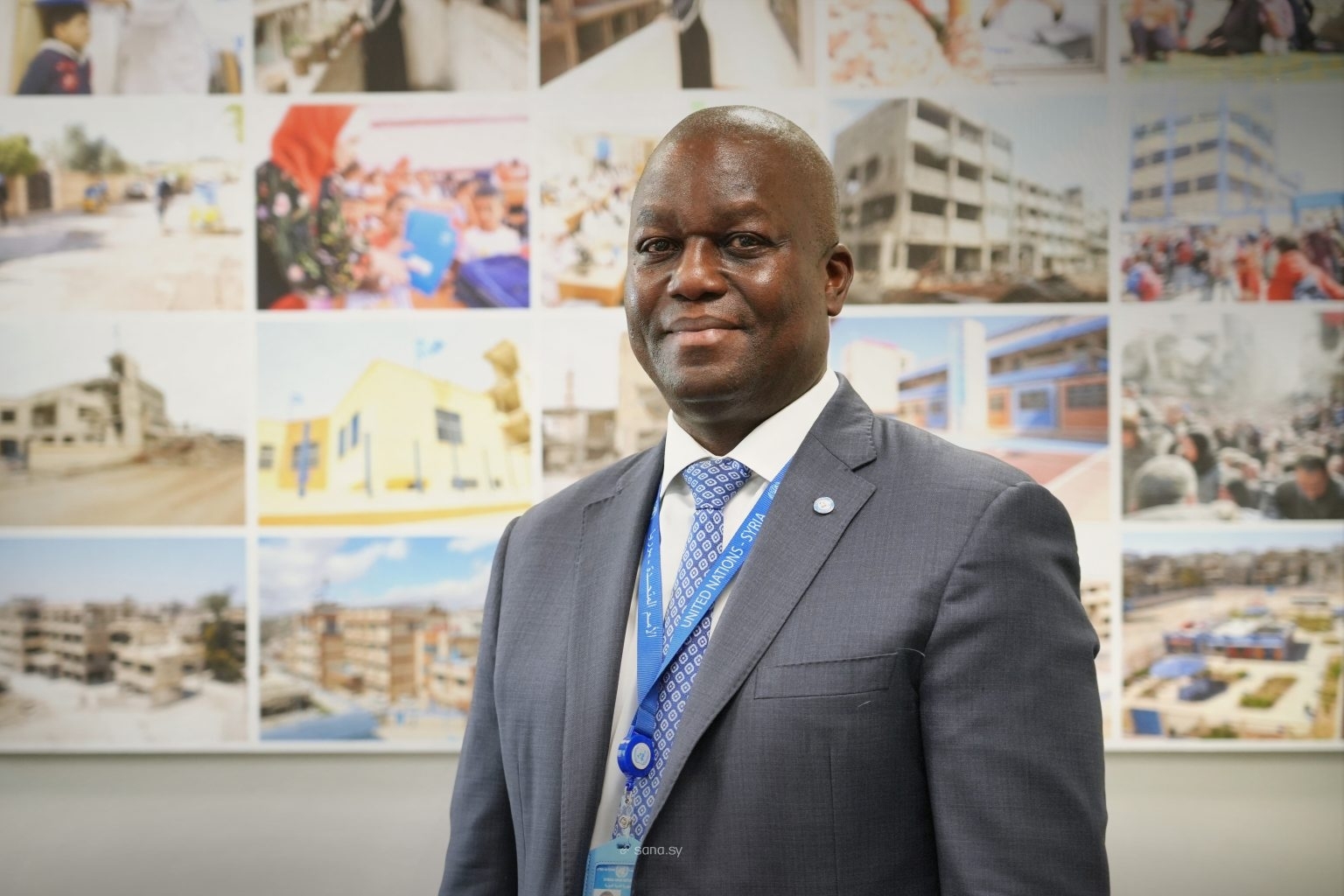
Speaking to SANA, UNRWA Director of Affairs in Syria Amaniya Michael Ebye said cooperation with the Syrian government, together with support from the UN, international donors, and development partners, has helped preserve essential services while advancing efforts to rehabilitate refugee camps and encourage displaced families to return to their communities.
Government Support Expands Humanitarian Access
Ebye said the Syrian government has introduced several measures since taking office that have strengthened UNRWA’s operations across the country and helped ensure the uninterrupted delivery of humanitarian services.
Among the measures, the government granted UNRWA access to about 40 public schools for afternoon classes, allowed the agency to use public health facilities, provided school textbooks at subsidized prices, ensured the availability of vaccines, and expanded coordination with local authorities on security, infrastructure rehabilitation, and the restoration of essential public services.
According to Ebye, these steps enable UNRWA to continue providing education, healthcare, and relief programs despite mounting economic pressures, helping meet the needs of thousands of Palestinian families who depend on the agency’s services throughout Syria.
Improved Security Drives Refugee Returns
Ebye said improvements in Syria’s security situation and increasing stability have encouraged more Palestine refugees to return to their camps. He noted that the proportion of internally displaced Palestine refugees has fallen from 60% in 2017 to about 30% today.
He said Yarmouk Camp in Damascus recorded the return of about 45,000 residents during 2025 and 2026, increasing its population to nearly 60,000 from approximately 15,000 a year earlier. Before 2011, the camp was home to about 160,000 people. He added that gradual returns have also taken place in Ein al-Tal Camp in Aleppo, Daraa Camp, and several other refugee camps.
Alongside those returns, the Syrian government is rehabilitating water and sewage networks, while UNRWA, in cooperation with UN partners, is working to restore electricity services. The agency has also helped over 2,000 families repair damaged homes and supported the reopening of schools, health centers, and community development facilities.
Funding Gap Remains a Major Challenge
Despite maintaining its operations, Ebye said UNRWA faces a funding shortfall of about $100 million across its areas of operation, affecting food assistance and cash support programs. Even so, the agency continues to operate over 25 health centers providing roughly one million medical consultations each year. It also educates over 50,000 students in more than 100 schools while providing vocational training for about 1,300 students.
Ebye concluded by thanking the Syrian people for hosting Palestine refugees for over 78 years. He also praised the resilience and solidarity shown by both Syrians and Palestinians in difficult circumstances and called on international donors to continue supporting UNRWA so it can sustain essential education, healthcare, and protection services while contributing to recovery efforts and improving living conditions for Palestine refugees in Syria.