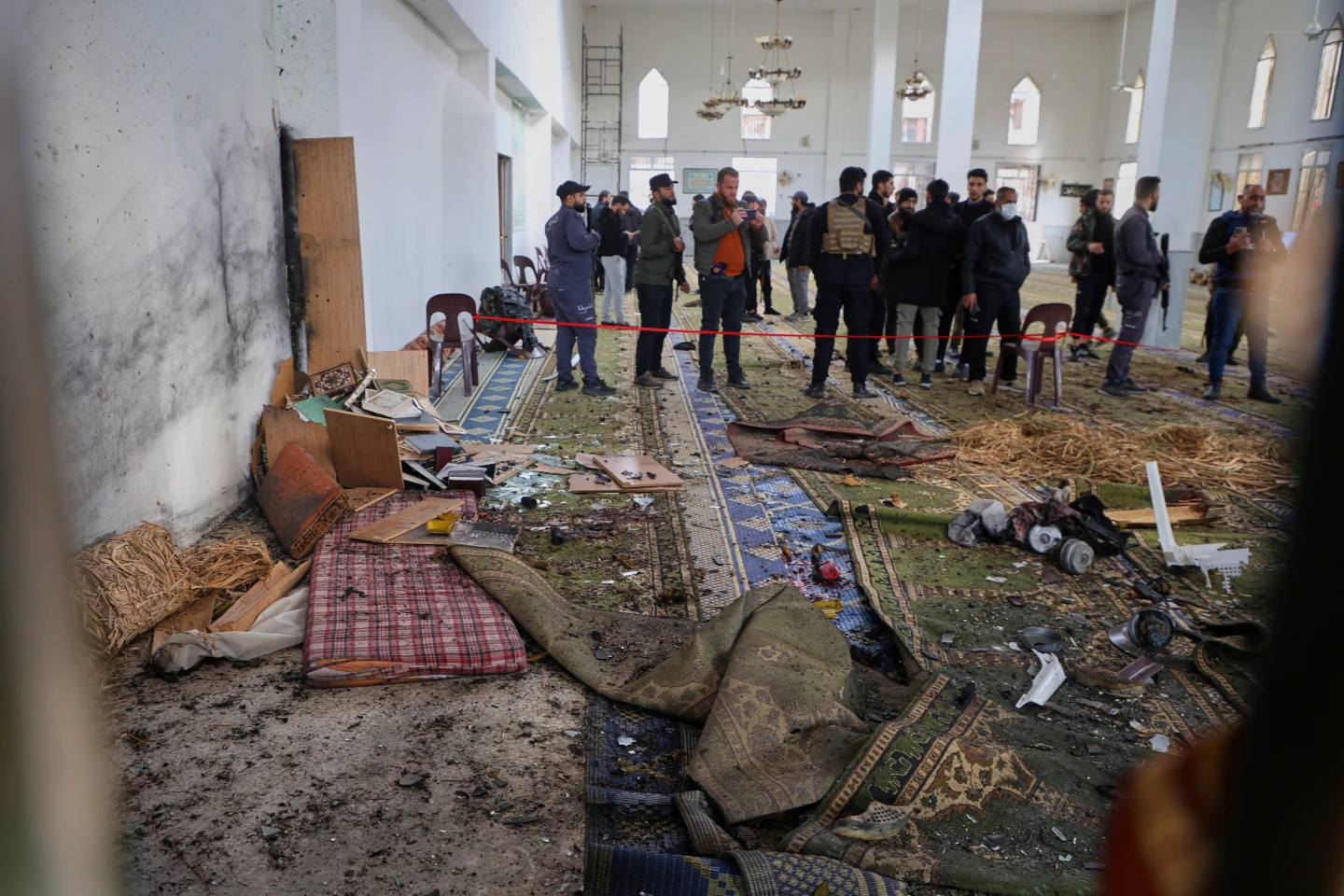
Eight people were killed and at least 18 others wounded Friday, December 26, when explosive devices detonated inside the Imam Ali bin Abi Talib Mosque in the Wadi al-Dahab neighborhood of Homs. The explosion occurred during congregational Friday prayers in the predominantly Alawite area, causing panic and chaos among worshippers.
Najib al-Naasan, director of the Referral, Ambulance and Emergency Directorate at the Ministry of Health, told SANA the toll stood at eight dead and 18 injured in a preliminary count. The wounded were transferred to Karam al-Luz Hospital for treatment.
A security source said initial investigations indicated explosive devices had been planted inside the mosque. Photographs published by SANA showed damage to an interior wall, blackened by smoke, with carpets and books scattered across the floor.
An eyewitness from the neighborhood told local media that a loud blast was followed by fear and confusion in surrounding streets. Internal security forces quickly sealed off the area as investigators collected evidence.
Claim of Responsibility and Official Response
A little-known group calling itself “Saraya Ansar al-Sunna” claimed responsibility for the attack in a statement, saying the bombing involved multiple explosive devices and warning of further assaults. The group previously claimed a June attack on the Mar Elias Church in Damascus killing over 25 people.
The Interior Ministry described the Homs explosion as a terrorist act and said security units moved immediately to secure the site. Syrian Foreign Ministry officials condemned the bombing as a “cowardly criminal act” and said it would not deter the state from continuing efforts to combat terrorism and protect civilians.
Ahmad Zaidan, media adviser to President Ahmad al-Sharaa, called the bombing “cowardly and despicable” in a post on X and pledged those responsible would be pursued. Information Minister Hamza al-Mustafa said the attack aimed to undermine civil peace and destabilize the country, urging Syrians to reject sectarian violence.
Crackdown on ISIS Cells
The bombing came amid intensified security operations against ISIS cells in and around Damascus. On Thursday, the Interior Ministry announced the arrest of Taha al-Zoubi, known as Abu Omar Tabia, identified as ISIS’ “governor for Damascus.” Brig. Gen. Ahmad al-Dalati said the arrest followed “meticulous follow-up operations and intensive intelligence monitoring” in the city of Muadhamiya, conducted in coordination with the General Intelligence Service and the international coalition. Authorities seized an explosive belt and a military weapon during the raid.
Syrian forces have also reported recent arrests linked to weapons smuggling and ISIS cells in Qudsaya, Zabadani and border areas, alongside US-led coalition strikes targeting ISIS positions after a December attack near Palmyra that killed three Americans.
Regional and International Condemnation
Arab and international reactions swiftly followed the Homs attack. Jordan, Qatar, Saudi Arabia, Turkey, Iraq and the Gulf Cooperation Council alongside the Muslim World League, and the President of the Muslim Scholars Council all condemned the bombing and expressed solidarity with Syria.
Lebanese President Joseph Aoun warned that hate speech and sectarian incitement posed a grave danger to societies emerging from war. The Palestinian Presidency rejected all forms of violence and terrorism, offering condolences to victims’ families.
As investigations continue, Syrian authorities urged the public to rely on official information and avoid spreading rumors, while security operations against militant networks remain ongoing.