In the heart of Berlin, the Berlin-Hohenschönhausen Memorial has become the setting for a new exhibition connecting two histories of political repression. Titled “Sednaya Prison: The Architecture of Repression and Murder in Syria,” the installation examines alleged abuses linked to the Assad regime. The museum, once a detention site in East Germany, now serves as a space for reflecting on past and present systems of control.
Design as a Tool of Control
Located north of Damascus, Sednaya Prison opened in the late 1980s as a military facility. After 2011, it became widely associated with enforced disappearances and detention. According to exhibition organizers, the project focuses on how the prison’s physical design shaped detainees’ experiences. Architectural plans and reconstructions show how corridors, cells and interrogation spaces were arranged to maximize isolation and control.
Rather than relying only on narrative accounts, the exhibition presents the site as a structured environment where design played a central role. Curators say this approach helps frame the prison not only as a place of detention but also as a system, where physical space contributed to alleged patterns of abuse.
Shared Histories of Oppression
The choice of venue adds another layer of meaning. The Berlin-Hohenschönhausen site operated as a prison under Soviet and East German authorities from 1945 to 1989. It later reopened as a memorial documenting political imprisonment during that period. By placing the Sednaya exhibition in this setting, organizers invite visitors to compare different historical contexts.
The parallel highlights how state-controlled detention systems, though separated by time and geography, can rely on similar structures and methods. Visitors move through a space tied to Germany’s own Stasi and Nazi era past, before encountering the Syrian case, creating a direct contrast between two experiences of state repression.
Documenting Evidence and Testimony
The exhibition draws on extensive documentation collected after access to the prison became possible. Teams used 360-degree cameras and drones to capture the site’s layout, aiming to preserve details before any changes occurred.
Researchers also conducted interviews with former detainees inside the prison itself. Organizers say this setting adds context to the testimonies by linking personal accounts directly to physical spaces. Additional materials include administrative records and personal items left behind, such as letters and handmade objects. Together, these elements form a record combing spatial analysis with individual experiences.
Immersive Technology and Public Engagement
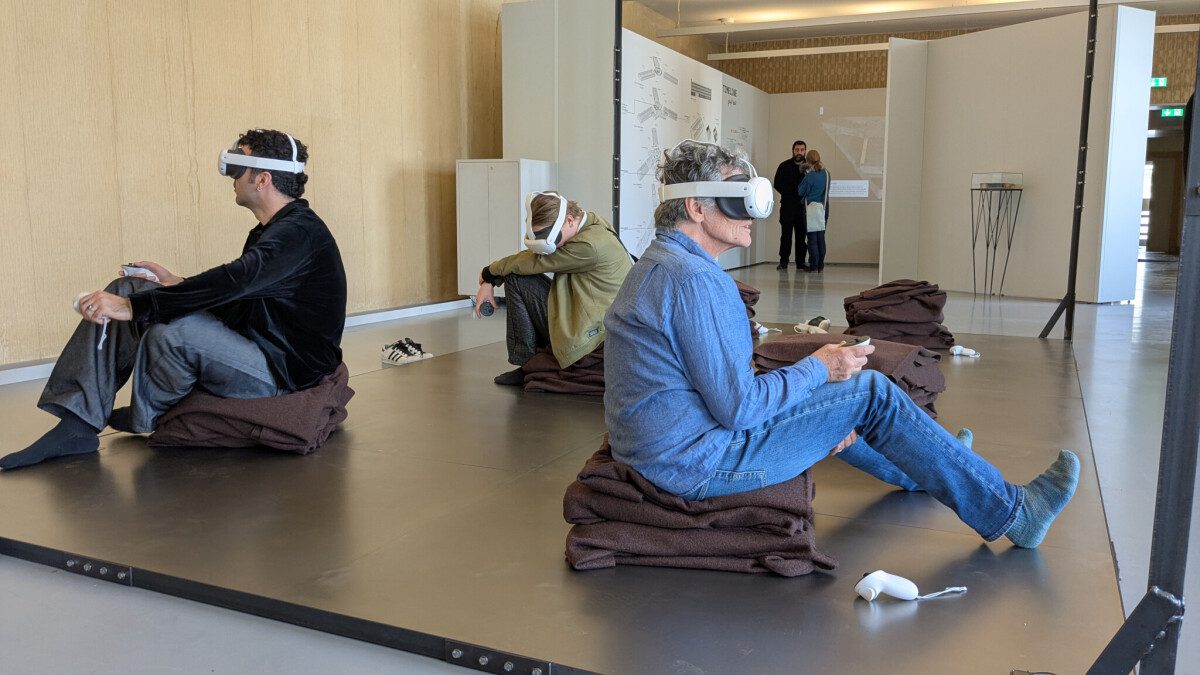
Virtual reality features allow visitors to navigate reconstructed sections of the prison. This interactive approach aims to give a clearer sense of scale and confinement. Some visitors have described the experience as disorienting, reflecting the conditions reported inside detention facilities.
The exhibition runs in Berlin through late September 2026. Organizers say the project is part of a broader effort to document detention sites across Syria and preserve records for future reference. Plans include expanding the exhibition into a traveling format and eventually establishing a permanent archive in Syria.