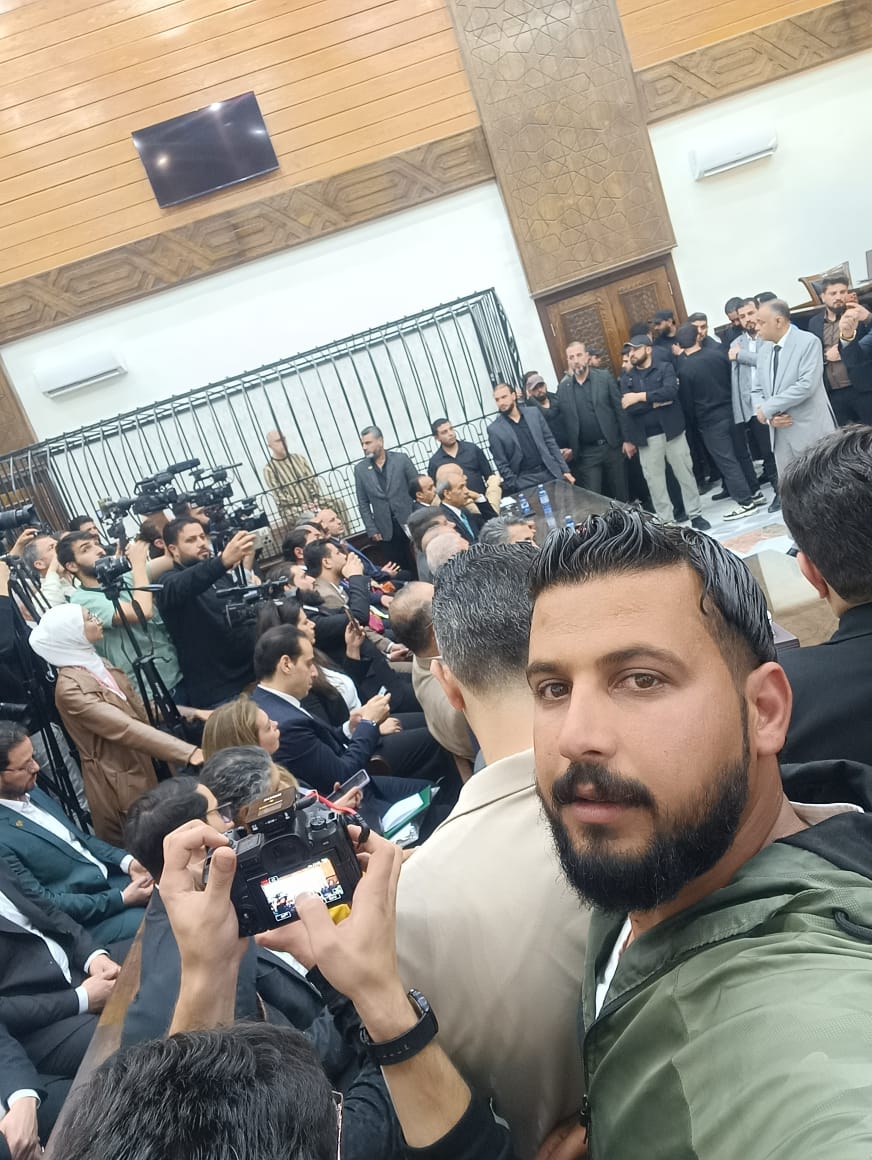
The first public trial of an official accused of crimes tied to Bashar al-Assad’s regime began April 26 at the Palace of Justice in Damascus, marking a significant step in Syria’s long and uncertain path toward transitional justice.
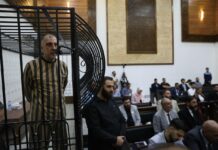
The court convened hearing the case against Brig. Gen. Atef Najib, former head of Political Security in Daraa province. Najib is widely associated with the crackdown following the arrest of teenagers in March 2011, an episode that helped ignite nationwide protests.
The session drew a large audience including survivors, families of victims, activists and international observers. For many in attendance, the sight of a former regime figure in the defendant’s dock carried symbolic weight beyond the legal proceedings themselves.
Fadel Abdulghani, head of the Syrian Network for Human Rights (SNHR), told Levant24 the trial represents “a crucial moment for victims, even before any final verdict.” He said the public nature of the proceedings has given them local legitimacy, while the presence of diplomats and media underscores international interest.
Still, Abdulghani cautioned that the trial is only an initial step. Syrian law does not explicitly define war crimes or crimes against humanity, meaning prosecutors must rely on existing legal frameworks to pursue accountability.
Hundreds Detained as Authorities Pursue Accountability
Najib’s case comes amid ongoing efforts by Syrian authorities to detain individuals accused of abuses during the conflict. Officials say hundreds of former regime members were arrested in recent security campaigns targeting those suspected of involvement in war crimes, human rights violations and mass atrocities.
The scale of detentions reflects both the depth of grievances and the challenges ahead. Legal experts note building credible cases will require documentation, witness testimony and judicial independence in a system long shaped by political influence.
Despite these hurdles, Sunday’s hearing offered a visible shift. For the first time, victims and their families were able to watch proceedings unfold in a public courtroom rather than behind closed doors or in distant jurisdictions.
Survivors Confront Past in Courtroom Setting
Among those present was Muawiya al-Sayasneh, who was arrested at age 16 after writing anti-government slogans on a school wall in Daraa. His detention, along with that of other teenagers, became a flashpoint in the early days of the uprising.
Speaking to Levant24, Sayasneh recalled enduring weeks of torture including beatings, electric shocks and suspension by his arms. He said he filed a complaint against Najib and attended the trial as a witness. “I am overwhelmed with happiness,” he said, describing the moment he saw Najib in court. “He will receive the punishment he deserves.”
His testimony highlights the personal stakes of the proceedings. For survivors, the trial is not only about legal accountability but also recognition of suffering that often went undocumented or denied. Mazen Darwish, a lawyer and human rights advocate now based in Paris, shared a similar perspective. He told Levant24 seeing Najib prosecuted brought “a measure of justice,” rooted in his own past encounters with the accused.
Darwish said Najib oversaw actions leading to his arrest, interrogation and eventual ban from practicing law. While he welcomed the trial, he emphasized Syrians “deserve a more comprehensive transitional justice process,” one addressing systemic abuses rather than isolated cases.
Families of Victims Seek Broader Justice
For relatives of those killed, the trial carries both hope and unresolved demands. Faisal al-Jawabrah, speaking on behalf of his family, traveled from Daraa to attend the hearing. His relative, Mahmoud al-Jawabrah, was among the first protesters killed in Daraa. “This trial is not merely a legal procedure,” he told Levant24. “It is a victory for human rights which were buried for years under fear and injustice.”
Jawabrah described the proceedings as a step toward restoring dignity and honoring those who died. At the same time, he stressed that justice remains incomplete without accountability for others accused of major crimes, including those like Amjad Yusuf linked to the infamous Tadamon massacre. He also called for the extradition and trial of Bashar al-Assad and other senior figures, arguing that a full reckoning requires addressing responsibility at all levels.
Transitional Justice and the Path Forward
The opening of Najib’s trial highlights the continuing challenge of transitional justice in post-conflict societies. Experts describe such processes as essential for rebuilding trust, acknowledging harm and preventing future abuses.
In Syria, that path is complicated by legal gaps, political divisions and the sheer scale of alleged crimes. Yet the public nature of the proceedings signals an attempt to create a forum where victims can be heard and evidence can be examined openly.
Abdulghani noted that while the legal framework remains limited, the act of holding trials can still contribute to national healing. “This is about more than one person or one case,” he said. “It is about establishing a precedent.”
For those who filled the courtroom Sunday, the day carried a mix of relief and expectation. The trial did not resolve years of loss, but it offered a moment where stories long suppressed entered the public record. As proceedings continue, many Syrians will be watching closely to see whether this first step leads to a fruitful efforts confronting the past while defining a more accountable future.