
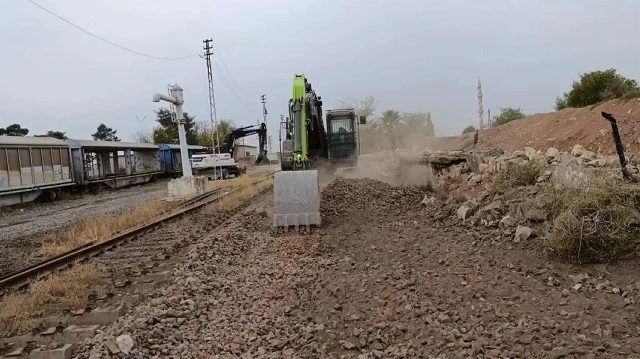
 Turkey reopened a strategic 350-kilometer railway corridor along its border with Syria after completing a broad rehabilitation project aimed at strengthening transportation and logistics capacity across the region. Transport and Infrastructure Minister Abdulkadir Uraloglu said the work covered the 325-kilometer Kilis-Nusaybin line and the 25-kilometer Shenyurt-Mardin line. The full route returned to service March 31, restoring a key rail connection which faced years of wear, disruption and incomplete repairs.
Comprehensive Renovations
Rather than limiting the effort to standard maintenance, Turkish authorities carried out a full renewal of both the infrastructure and superstructure. The project focused on repairing long-standing damage, improving the line’s resilience and preparing it for sustained future use.
Crews upgraded stations, renewed track sections and repaired damage caused by natural events, including flooding. They also reinforced soil conditions along vulnerable areas and improved drainage systems to reduce the risk of future disruptions.
Uraloglu said the work also completed repair and maintenance efforts which remained unfinished between 2011 and 2024, bringing the entire 350-kilometer route up to operational standard. The broader aim, he said, was not only to restore service on the Syrian border route but to ensure the line now operates with stronger, longer-lasting infrastructure.
Regional Rail Plans Gain Momentum
The reopening also aligns with regional efforts reviving cross-border rail transport. On April 7, Syria, Jordan and Turkey signed a trilateral memorandum of understanding to deepen cooperation in the transportation sector, with a particular focus on railway connectivity.
The agreement is designed to move beyond strategic planning and into project implementation. Syrian Transport Minister Yarab Badr said the memorandum creates a pathway for major initiatives, including the possible revival of the historic Hijaz railway line, which once linked parts of the Levant and the Arabian Peninsula.
Uraloglu said the activation of what officials describe as the Middle East Corridor could strengthen regional trade flows while increasing transit revenues for participating countries. The renewed Turkish border line is expected to serve as an important component in that larger framework.
Syria’s Transit Role Draws Renewed Attention
At the same time, regional transport dynamics are shifting beyond rail. Iraq began exporting crude oil overland through Syrian territory in early April, a move widely seen as an attempt to bypass disruptions affecting traditional maritime trade routes.
That development renewed attention on Syria’s geographic role as a transit hub linking energy, trade and transportation routes across the region. Analysts say the parallel revival of rail and overland energy corridors points to developing efforts by neighboring countries to diversify logistics networks and reduce dependence on chokepoints elsewhere.
Together, these developments suggest the railway reopening is more than a domestic infrastructure milestone. It may also mark an early step in reshaping regional transport links across the Middle East.