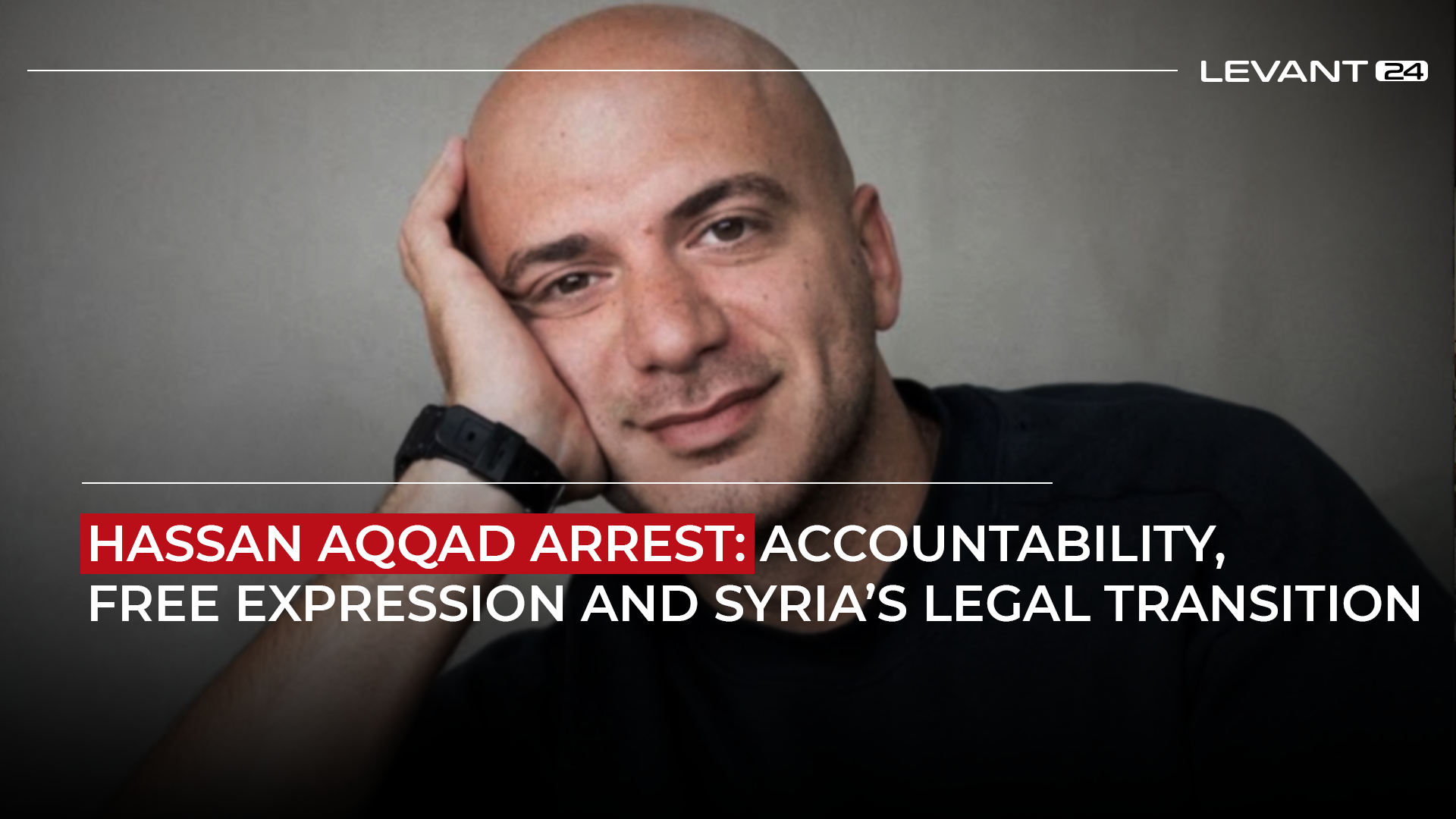
The atmosphere was relaxed inside a café in Damascus’ upscale Malki neighborhood on the evening of June 17. Friends had gathered to watch a World Cup match when several men entered the restaurant and approached a waiter.
“Within minutes, it became clear that they were attempting to take Hassan into custody,” Syrian activist Celine Kasem later wrote using her social media account on X. According to Kasem, the men identified themselves as officers from the Cybercrime Directorate and told Syrian activist and content creator Hassan Aqqad to accompany them. She said when those present requested identification or an arrest warrant, “nothing was presented.”
Within hours, news of Aqqad’s detention spread across Syrian social media, igniting a debate over transparency, freedom of expression and the continued use of legal frameworks inherited from the Assad regime.
At the center of the dispute is Syria’s Cybercrime Law No. 20 of 2022, an Assad-era law criminalizing a range of online activities including “defamation, slander and insult,” with penalties ranging from fines to prison terms, which critics argue contains vague provisions which can be used to restrict legitimate criticism and public debate.
From Fundraising Watchdog to Legal Dispute
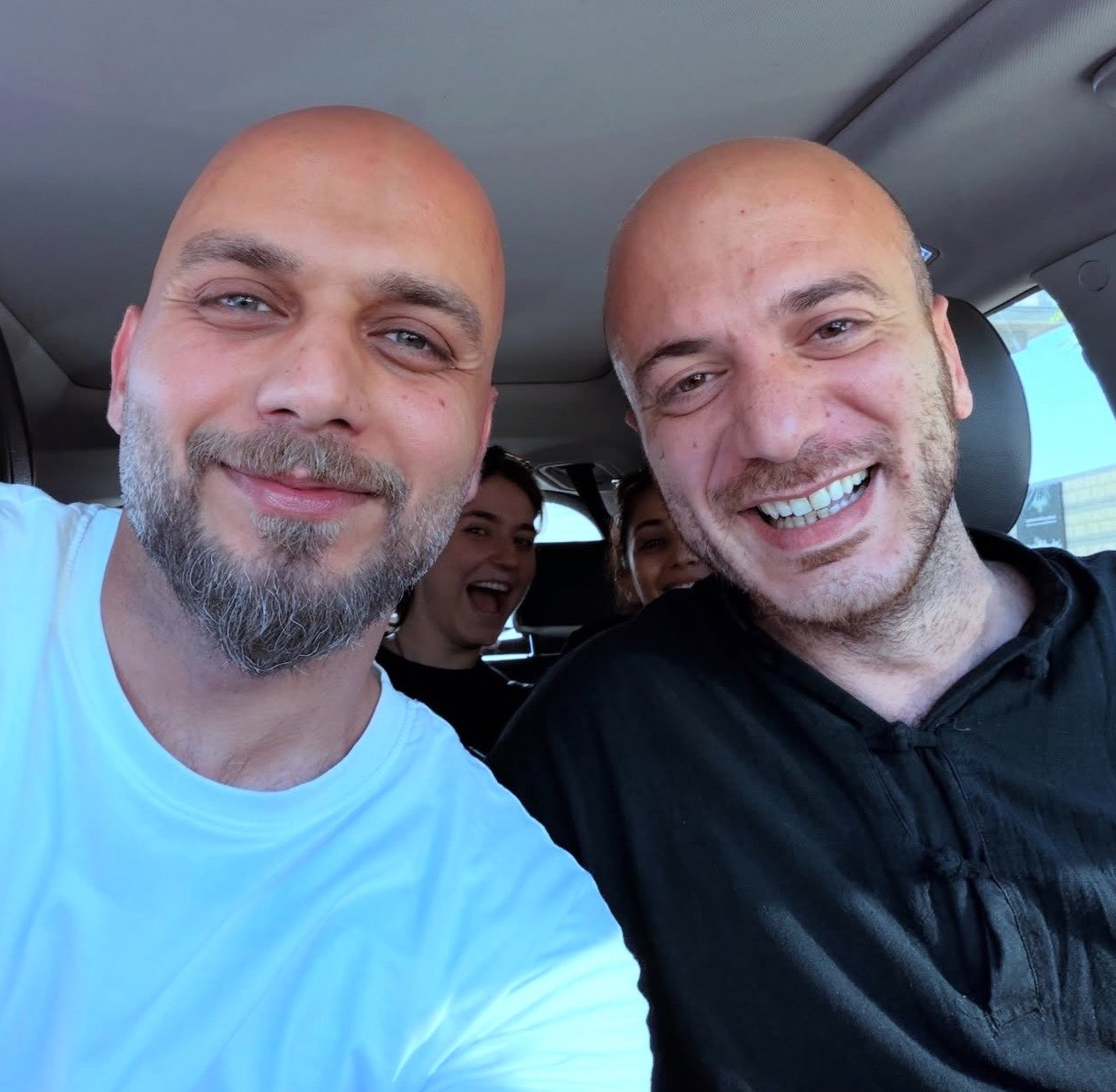
Aqqad, a British-Syrian activist, filmmaker and former refugee, became one of the most visible figures in a growing campaign known as “Give Us the Money That You Owe.” The campaign sought to track financial pledges announced during nationwide fundraising drives intended to support reconstruction and recovery efforts across Syria.
Through social media posts and satire, Aqqad called on donors to disclose whether pledges were fulfilled. The campaign resonated with Syrians seeking greater transparency over reconstruction fundraising.
Others criticized the initiative, arguing it risked making accusations against individuals without sufficient evidence or established legal processes. Tensions escalated after Aqqad publicly questioned whether several prominent figures had fulfilled announced pledges. Among them was journalist Musa al-Omar.
On June 3, according to Damascus Attorney General Hussam Khattab, Omar filed a complaint accusing Aqqad of defamation, slander and libel via the internet. Khattab said the complaint was reviewed by prosecutors specializing in cybercrime and referred to the Cybercrime Branch for investigation.
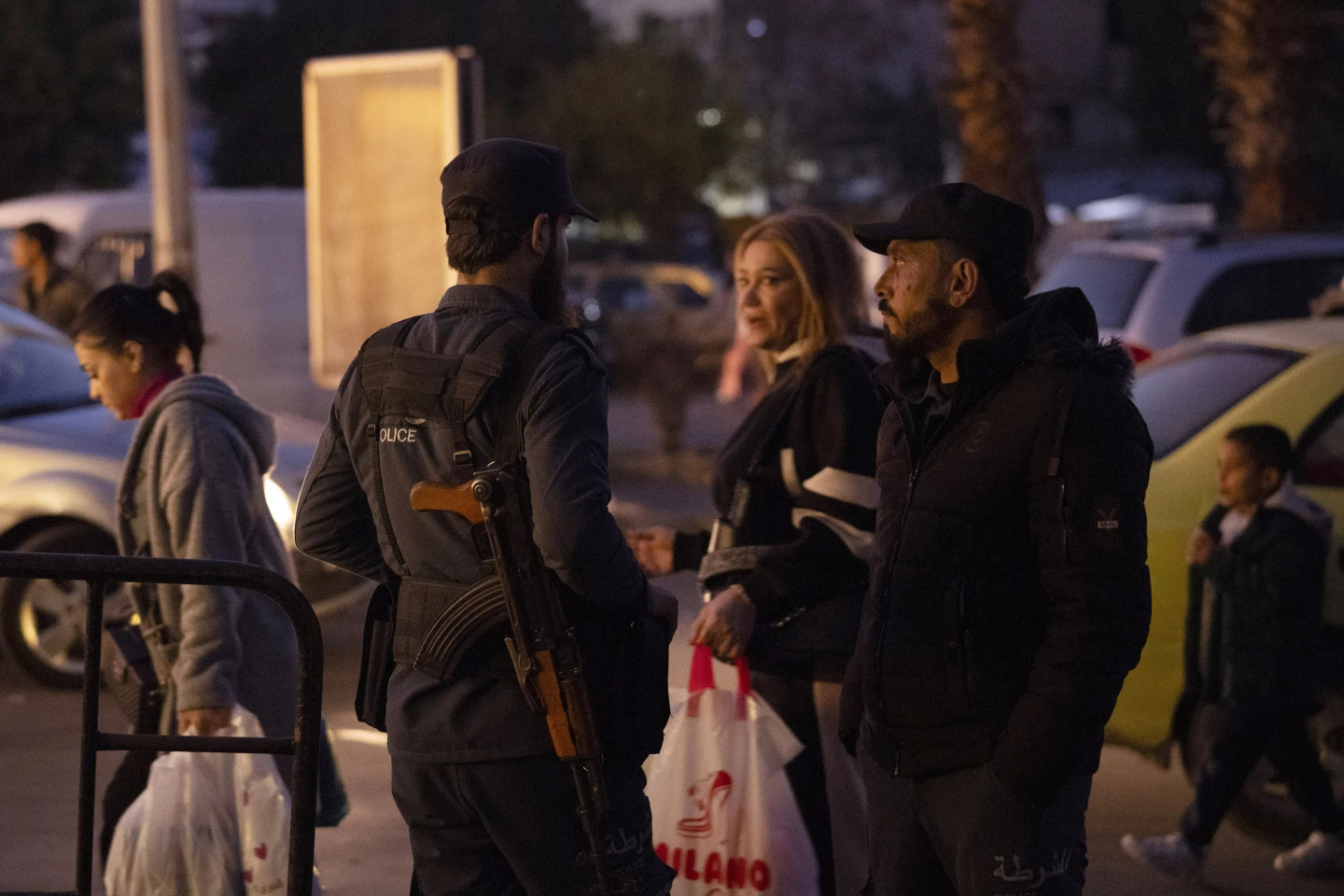
Days before his arrest, Aqqad received a summons from the Cybercrime Branch, an invitation from the Ministry of Information and online death threats. He announced he was temporarily suspending online activities amidst legal discussions.
At the time, the Ministry of Information stated it was attempting to facilitate dialogue between the parties and encourage a resolution before the matter proceeded through the courts. Omar later confirmed he filed the complaint. He argued that Aqqad’s comments caused reputational harm and amounted to defamation. He maintained he fulfilled the financial pledges questioned by Aqqad, listing nearly a quarter of a million dollars in donations he paid to four reconstruction initiatives.
Following Aqqad’s arrest and publicity surrounding the case, Omar announced the morning of June 21 that he released a statement. “This morning, my legal representative dropped the claim against Brother Hassan,” it says. “I have forgiven him for the sake of Allah. I am saddened by the situation he has created for himself. I wish him success in his social media endeavors and will always support him.”
Competing Accounts of the Arrest
The circumstances surrounding Aqqad’s arrest remain one of the most contested aspects of the case. In a video statement released by the Ministry of Justice, Khattab said authorities followed legal procedures. According to Khattab, investigators repeatedly notified Aqqad to appear before the Cybercrime Branch which he failed to do. A search warrant was subsequently issued on June 9, and officers detained him on June 17 after locating him in Damascus.
Khattab further stated investigators discovered additional complaints related to alleged online defamation and libel filed by other individuals. He said Aqqad was taken to the Criminal Investigation Department, where his statement was recorded before the case was referred to the judiciary.
Lawyers, activists and rights advocates challenge both the necessity and proportionality of those actions. Damascus-based lawyer and human rights activist Abdurahman Abdullah told Levant24 the case relied upon Syria’s Assad-era Cybercrime Law.
“Mr. Hassan Aqqad was accused of the crimes of defamation, slander, and insult via the internet, and these offenses do not warrant detention, arrest, or referral to the judiciary,” Abdullah said. He argued the Constitutional Declaration protects freedom of expression and prohibits arrest without judicial authorization, adding that “what happened to Hassan Aqqad violates the provisions of the Constitutional Declaration.”
Others focused less on the legality of the complaint and more on the methods used to enforce it. “The main problem in this case is how the law handles this type of non-violent crime,” digital communications specialist Hadi told Levant24. “In a country emerging from war and home to tens of thousands of war criminals, it is essential not to waste resources on arresting individuals involved in civil cases which can be resolved in court without pretrial detention.”
While Omar’s withdrawal of the complaint may affect one aspect of the case, legal experts and observers note that the controversy has evolved beyond a dispute between two individuals. The broader debate centers on how Syrian authorities apply Assad-era laws and whether such legal frameworks remain compatible with the principles of accountability and transparency many Syrians expect during the country’s transition.
Assad-Era Laws in a New Political Environment
The controversy revived debate over the future of Assad-era legislation and the broader legal framework inherited from the Assad era. The Syrian Network for Human Rights (SNHR) called for a comprehensive review of the law. In comments to Levant24, SNHR Director Fadel Abdulghani said the case raises concerns about “the boundaries between information crimes affecting systems, data, and digital security” and “expressions of opinion, peaceful criticism, and information sharing.”
The organization argues several provisions contain “vague language” that may allow “broad interpretations” creating a chilling effect on public expression. Abdulghani stressed preventive detention should remain an exceptional measure and restrictions on speech must meet standards of legality, necessity and proportionality.
Similar concerns were voiced by journalists and legal observers. Journalist and researcher Ahmad Abazid wrote cases such as Aqqad’s raise broader concerns regarding “the casual deprivation of liberty” in a country whose revolution was built around demands for freedom and dignity. He argued protecting individuals from unnecessary detention is not simply a legal issue but one touching the core values of Syria’s transition.
Accountability, Reconstruction and Public Trust
The case has become inseparable from wider debates surrounding reconstruction, transparency and accountability. Aqqad’s campaign emerged amid growing scrutiny of fundraising initiatives and the role of wealthy businessmen linked to the Assad era.
Among the names frequently discussed online was businessman Muhammad Hamsho, who remains under international sanctions. Reporting by the Organized Crime and Corruption Reporting Project (OCCRP) highlighted concerns about the return of regime-linked business figures and the opaque handling of economic restructuring during Syria’s transition.
Although authorities and some prominent figures reject attempts to connect Aqqad’s arrest directly to his criticism of Hamsho, the overlap between these debates fueled speculation across social media.
Hadi noted multiple interpretations quickly emerged, with some viewing the case as a personal legal dispute, others as an abuse of influence or a broader test of freedom of expression. “What all interpretations in the Syrian mainstream have in common is that they’re always incomplete and focused solely on one aspect,” he said.
Political researcher Bassam al-Suleiman argued the controversy resonates because many Syrians are already debating questions of justice and priorities during the transitional period. “It’s not acceptable to use connections to settle scores,” Suleiman told Levant24. “Some government officials need to be wiser and more discerning and not make the fledgling state institutions appear to be a party to disputes between activists and media figures.”
A Test of Syria’s Transition
What remains undisputed is that this case evolved into a controversy far larger than the original complaint initiating it. Although Omar has withdrawn his case, the questions raised by Aqqad’s detention remain unresolved. The government maintains legal procedures were followed, while lawyers and rights advocates continue to question whether such procedures are appropriate. Activists remain divided over both Aqqad’s methods and the response to them.
As a result, the controversy now serves as a test of how Syria’s emerging institutions will balance competing priorities, including combating cybercrime, protecting free expression, enforcing the law, maintaining public trust and pursuing accountability without deepening political polarization.
For many observers, the challenge facing Syria’s transitional authorities is demonstrating that justice is transparent, proportionate and consistent. At a moment when Syrians are demanding answers about reconstruction, corruption and the legacy of Assad, clarity from institutions and restraint from public actors may prove just as important as the outcome of any single case.