
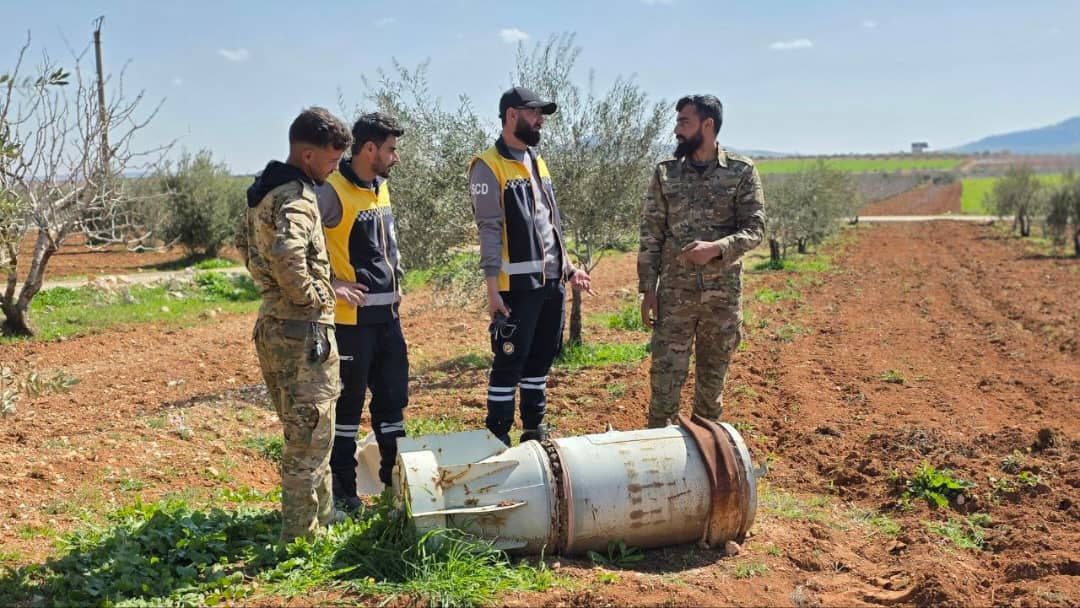
 In a stark reminder of war’s lingering toll, unexploded ordnance continues to pose a deadly threat across Syria. Hidden in fields, roads and homes, munitions left behind from years of conflict keep claiming lives and injuring civilians, turning routine activities into dangerous risks, particularly for children.
The Syrian Ministry of Emergency and Disaster Management said remnants of war have killed or injured more than 1,800 people nationwide over the past two years. Since Dec. 8, 2024, the ministry has recorded 1,039 explosive ordnance incidents linked to munitions left by the Assad regime. Such incidents resulted in 1,865 casualties, including deaths and injuries, with children accounting for a significant share.
The figures highlight how deeply the threat has penetrated everyday life. Civilians face danger while farming, traveling or moving through residential neighborhoods, where unexploded devices remain scattered and often difficult to detect.
Eastern and Northern Provinces Hit Hardest
According to ministry data, 688 people have been killed and 1,177 injured. The provinces of Deir Ezzor, Aleppo and Idlib remain the most heavily affected, due to the high concentration of war remnants and the continued shortage of comprehensive clearance operations. Officials said the scale of the casualties reinforces the urgency of treating explosive-remnant removal as both a humanitarian and security priority.
In addition to the direct human toll, the contamination of farmland, roads and residential zones continues to hinder local stability and broader recovery efforts. The ministry also stressed the need to expand community awareness campaigns aimed at reducing risks, especially among children and families who are most vulnerable to accidental detonations.
National Strategy Seeks Stronger Coordination
Against that backdrop, the The National Mine Action Center (NMAC) recently convened a stakeholder workshop focused on Syria’s national mine action strategy. Organized in cooperation with the Geneva International Center for Humanitarian Demining, the event brought together representatives from government agencies, international organizations, UN bodies and local groups.
The workshop aimed to define the sector’s long-term strategic direction by strengthening partnerships and improving coordination among key actors. It also focused on building a shared understanding of the operational challenges surrounding mine action, supporting risk-reduction efforts and accelerating recovery while improving civilian protection.
Clearance Efforts Show Progress
Earlier this month, on April 4, the Syrian Civil Defense, widely known as the White Helmets, said its teams had removed over 29,000 unexploded munitions since the start of operations, including more than 24,000 cluster bombs.
The organization said war remnants remain one of the most serious long-term threats facing civilians in Syria. Beyond the immediate danger to life, unexploded munitions continue to disrupt education, agriculture, recovery efforts and safe resettlement, while casting a long shadow over the well-being of the country’s future generations.