 A January 2026 incident exposed the troubling detention practices under the Syrian Democratic Forces (SDF), raising broader questions about accountability during a period of political transition. According to a Syrian Network for Human Rights (SNHR) report, 21 prisoners were killed between Jan. 19 and 22 at a detention center near Ain al-Arab (Kobani.) SNHR said the killings followed protests inside the facility over what detainees described as unequal implementation of an amnesty decision.
The report states that hundreds of prisoners escaped during the unrest. Some were later pursued and killed. Video footage analyzed by the group showed bodies with gunshot wounds to the head at close range, as well as victims with bound hands. The findings, supported by witness testimony and open-source verification, indicate that the killings were carried out after detainees were no longer able to defend themselves.
The SDF acknowledged the authenticity of at least one video but claimed those killed were government fighters. However, SNHR disputes that account, concluding the victims were civilians subjected to extrajudicial execution.
Legal Concerns and War Crime Allegations
SNHR said the incident constitutes a violation of international humanitarian law, including the Geneva Conventions, which protects detainees during armed conflict. The report found evidence of unlawful lethal force, as well as prior abuse, including beatings, threats and arbitrary detention. “These acts may constitute war crimes,” the report stated, citing the execution of detainees and the failure of the controlling authority to ensure protection.
The report documents difficulties to its investigation, including limited field access and incomplete identification of victims. Despite constraints, it said findings are based on a multi-source methodology including video analysis and interviews conducted under strict protection protocols.
Death in Custody Highlights Broader Pattern
Separate SNHR findings indicate to a wider pattern of abuse within SDF detention facilities. SNHR reports at least 123 detainees died due to SDF torture, including five children and four women. Among them was Alaa al-Amin, a Syrian citizen with Swedish nationality, arrested in October 2025 in Qamishli. According to the report, he was held for months without charge or contact with his family.
March 8, 2026 his relatives were notified they could retrieve his body from a hospital in Hasakah. They reported visible signs of torture, including skull fractures, broken ribs and extensive bruising. A forensic assessment cited in the report indicated he likely died in January. The case drew attention to concerns over due process and transparency in detention practices, particularly in facilities where records and legal documentation are often incomplete or inaccessible.
Prisoner Releases Amid Political Transition
Meanwhile, prisoner releases and exchanges between the SDF and the Syrian government have accelerated in recent months. An exchange Hasakah province, saw about 490 detainees released as part of a January agreement. Officials described exchanges as confidence-building measures aimed at resolving the issue of detainees held by both sides.
Local authorities have also overseen additional releases, including over 80 detainees from Aqtan prison in Raqqa following judicial reviews of their cases. However, officials acknowledged challenges in verifying detainee identities and charges due to missing or destroyed records. Such gaps slow legal proceedings while complicating efforts to ensure fair trials.
Families Demand Answers on Missing Detainees
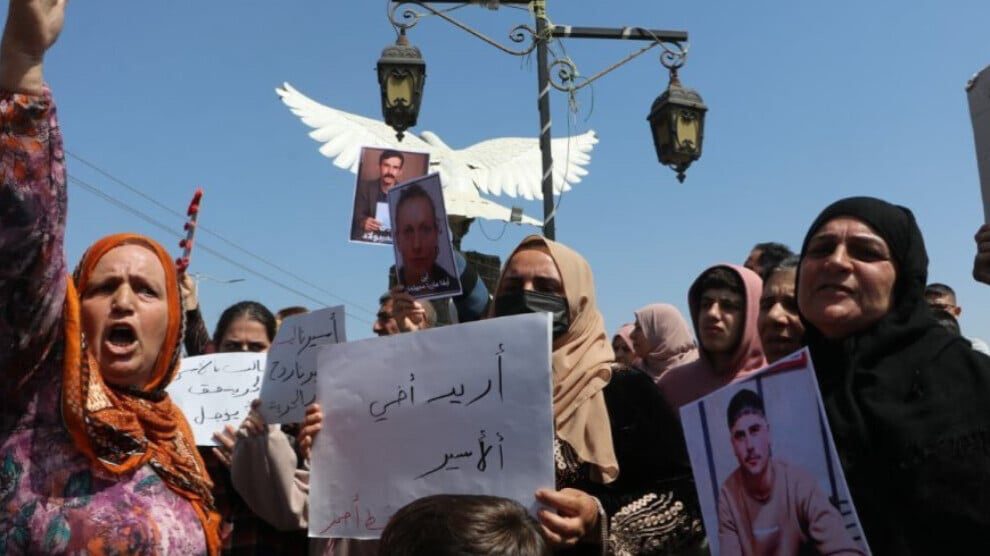
Despite releases, families of missing detainees continue to demand information about the fate of their relatives. Protests in Qamishli are indicative of what participants describe as a lack of transparency from both the SDF and Syrian government.
Demonstrators carried photos of missing family members calling for disclosure of detainee lists and locations. “We only want reassurance, to see our sons return safe and sound,” one participant told local media. Protests reflect growing public frustration as hundreds of cases remain unresolved. Families say the absence of official information deepens uncertainty while prolonging suffering.
Uncertain Path Toward Accountability
The legacy of SDF-run detention centers remains unclear as governance structures in northeastern Syria undergo integration into state institutions. Officials in Hasakah said efforts to resolve the detainee file and merge administrative systems continue, though no detailed timeline has been confirmed.
Human rights groups call for independent investigations into alleged abuses and for greater access to detention facilities. They also urge all parties to preserve evidence and ensure accountability for violations. As Syria navigates a complex transition, the legacy of its detention system continues to shape both public trust and the prospects for long-term stability.