
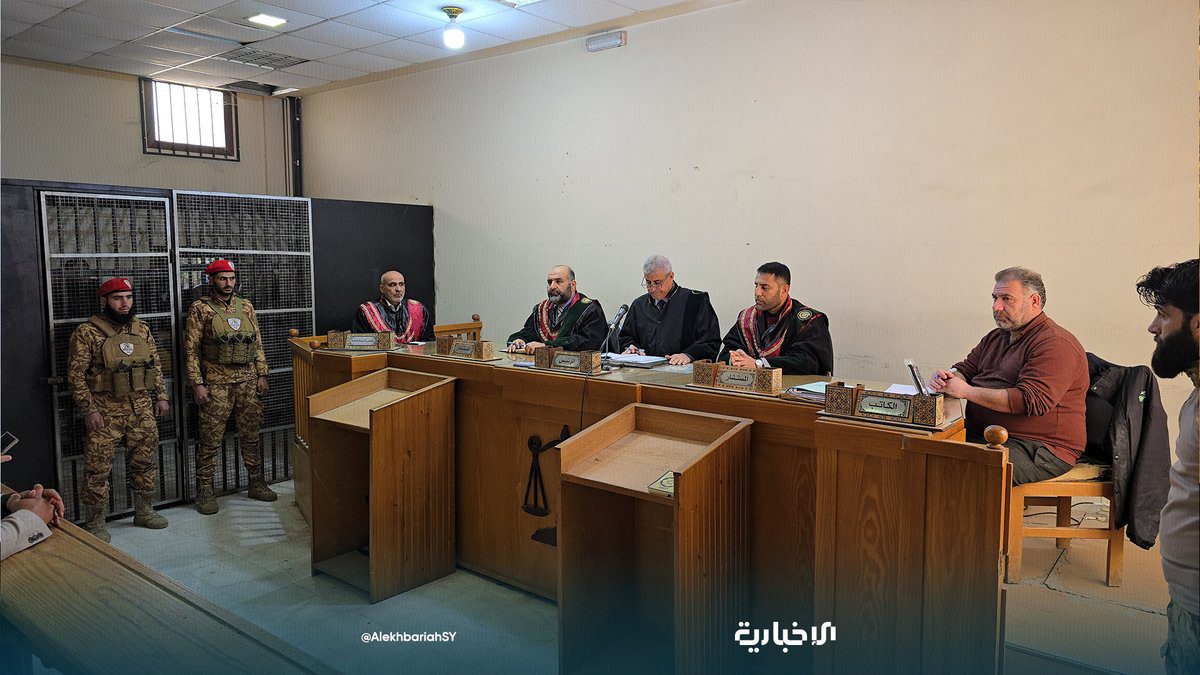
The military court in Aleppo continues to examine one of the most violent episodes of Syria’s recent transition, as legal proceedings move into a critical phase nearly a year after clashes on the Syrian coast left over 1,400 people dead.
The trials, which began Nov. 18, 2025, focus on attacks that occurred between March 7 and 9, 2025, in Latakia, Tartus, Homs and Hama. According to the Independent International Commission of Inquiry on Syria, most of the victims were Alawite civilians, and about 100 women were among those killed.
The commission warned in a March 12 report that the violence deepened insecurity, prompting thousands to consider leaving the country. April 2, 2026, the court held its fourth session. Proceedings were partially broadcast on the Syrian Ministry of Justice’s official Facebook page, while observers, followed developments from abroad.
Defendants From Both Sides Face Charges
The case involves 14 defendants divided into two groups. One group includes individuals linked to institutions under former Assad regime, while the second includes members linked to the current government’s security forces.
Prosecutors brought charges that include murder, armed attacks, looting and destruction of civilian property. In some cases, they also allege incitement to sectarian violence. The decision to try both groups together reflects an effort by transitional authorities to demonstrate equal application of justice.
However, observers note inconsistencies in how the defendants are presented. Official statements refer to former regime suspects as “remnants,” while avoiding specific affiliations for current security personnel. Mutasim al-Kilani, a human rights expert and founder of the My Right Foundation, told Justice Info the distinction raises “concerns about transparency.”
Digital Evidence Takes Center Stage
During the April 2 session, the court focused on digital evidence, including videos collected from mobile phones and open sources. Military prosecutor Alauddin Latif told the court, “Some of the videos were found through open-source analysis or directly on the defendants’ phones.”
Footage was displayed in court supporting questioning while assessing inconsistencies in testimony. Defense lawyers challenged the material, arguing that some recordings predate the coastal violence or may have been manipulated. Technical experts are expected to review the evidence and submit findings in upcoming sessions.
Observers say this phase marks a shift in the trial’s trajectory. Early hearings focused on gathering testimonies, while recent sessions have moved toward evaluating evidence and identifying patterns of responsibility. Kilani described the change, saying, “You get the feeling that the trial is no longer in the listening phase but in the evaluation phase.”
Concerns Over Due Process Persist
Despite procedural progress, human rights organizations continue to raise concerns about detention practices linked to the case. The UN commission reported some detainees were held without warrants, legal representation or access to a judge, and in some instances in “unofficial facilities.”
Several defendants have alleged torture during detention. The court stated it will consider these claims when assessing the validity of confessions. Such concerns highlight broader challenges facing Syria’s judicial system, which the commission described as weakened and in need of reform to ensure independence and professionalism.
Symbolic Trial With Wider Implications
The Aleppo proceedings carry significance beyond the immediate case. In November 2025, authorities referred 563 suspects to the judiciary in connection with the coastal violence, according to the investigative committee.
Officials say the trials aim to break cycles of impunity and establish accountability. Jumaa al-Anzi, head of the national fact-finding commission, said earlier hearings reflected a commitment to “open public trials” designed to protect the rights of all parties.
For many observers, the outcome will test whether Syria can build a legal framework capable of addressing past abuses. The proceedings held their fifth session April 16, with a verdict expected April 23, the trial stands as a measure of the country’s efforts to balance justice, transparency and institutional reform.