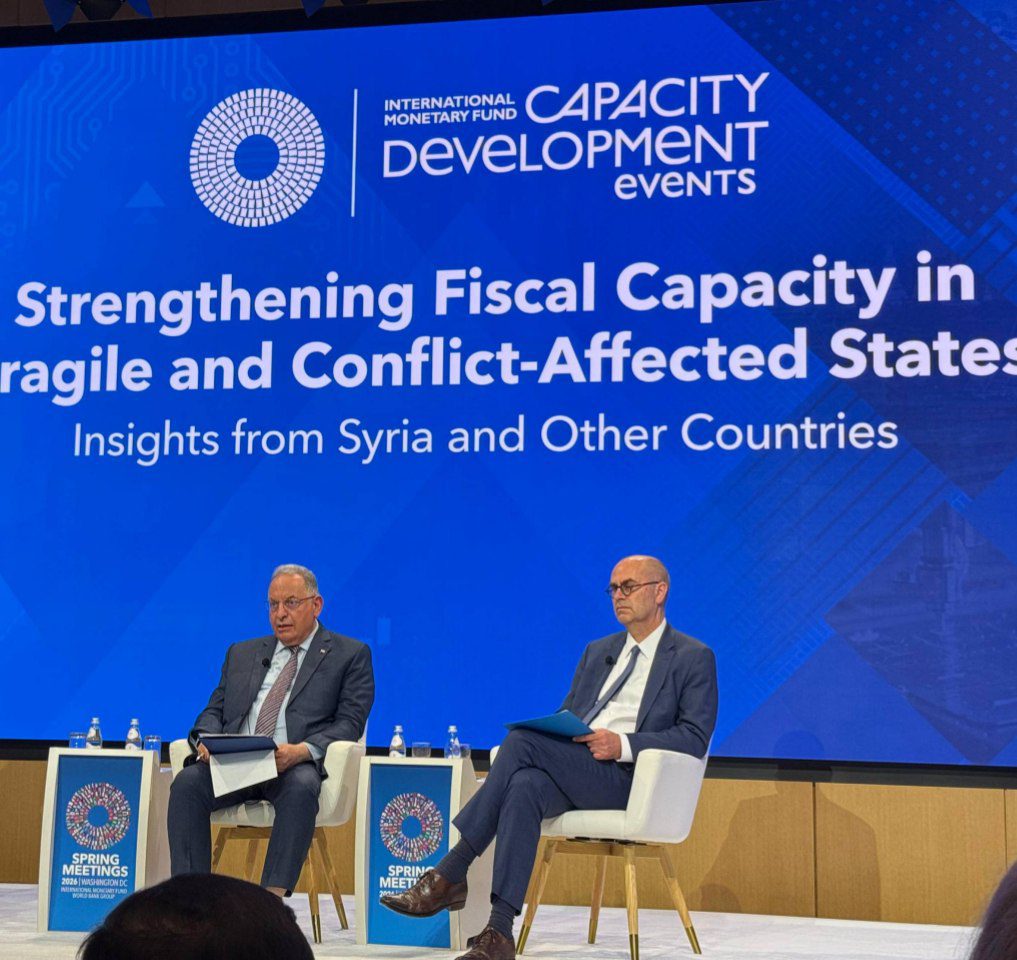
In a move signaling a shift in economic policy, Syria requested to accelerate Article IV consultations with the International Monetary Fund (IMF). Finance Minister Muhammad Barnieh said Damascus expects the first IMF mission since 2010 to arrive in the second half of this year.
The request does not aim to secure loans. Instead, officials say the government seeks technical advice supporting economic reforms. Barnieh made the remarks during meetings in Washington, describing the step as part of a gradual effort rebuilding institutional ties after years of limited engagement.
Donor Support and Alternative Financing Plans
At the same time, Syria is pursuing funding through channels designed to avoid conventional borrowing. Officials discussed plans for an international donor conference backed by the US, Europe and Gulf countries, with Saudi Arabia expected to play a leading role.
The OPEC Fund for International Development is also preparing a financing program estimated at about $500 million. The initiative would target energy, infrastructure and social services, with repayment periods ranging from 15 to 25 years on concessional terms.
These efforts reflect the scale of Syria’s reconstruction needs, which analysts estimate between $200 and $250 billion. Officials argue relying on traditional loans alone would place unsustainable pressure on public finances.
Shifting Deficit Strategy Toward Domestic Tools
The government set its budget deficit at roughly $1.8 billion and pledged to avoid monetary financing through the central bank. Officials say the goal is to limit inflation and stabilize the Syrian pound. Instead, authorities plan to rely on domestic borrowing through bonds and sukuk, an Islamic financial certificate, similar to a bond in Western finance, with only limited use of foreign currency debt.
The strategy includes anticipated contributions from a sovereign wealth fund remaining under development. If implemented effectively, the approach would mark a departure from past policies relying heavily on monetary expansion to cover fiscal gaps.
Tax Changes Aim to Broaden Revenue Base
Alongside financing adjustments, the government plans to introduce a simplified tax system in the coming weeks. The proposal caps income tax at 15% and sets sales tax at 5%, with a transition to a value-added tax at the same rate.
Officials say the reform focuses on expanding the tax base and improving compliance rather than increasing pressure on existing taxpayers. Basic goods and low-income groups would receive exemptions. Barnieh noted that Syria’s tax revenues rank among the lowest in the region, underscoring the need for reform.
Balancing Reform With Economic Pressures
Despite these plans, the government faces significant challenges. Rising prices and declining purchasing power continue to strain households, while the effects of war, sanctions and displacement persist. Authorities say they are preparing targeted support measures for vulnerable groups as part of a broader anti-poverty strategy.
The central question remains whether Syria can maintain fiscal discipline while easing the burden on citizens. The outcome of this balance will likely shape the country’s economic trajectory in the years ahead.