An Interview with Dr. Zahra al-Barazi, Transitional Justice Advisor at the Syrian Foreign Ministry
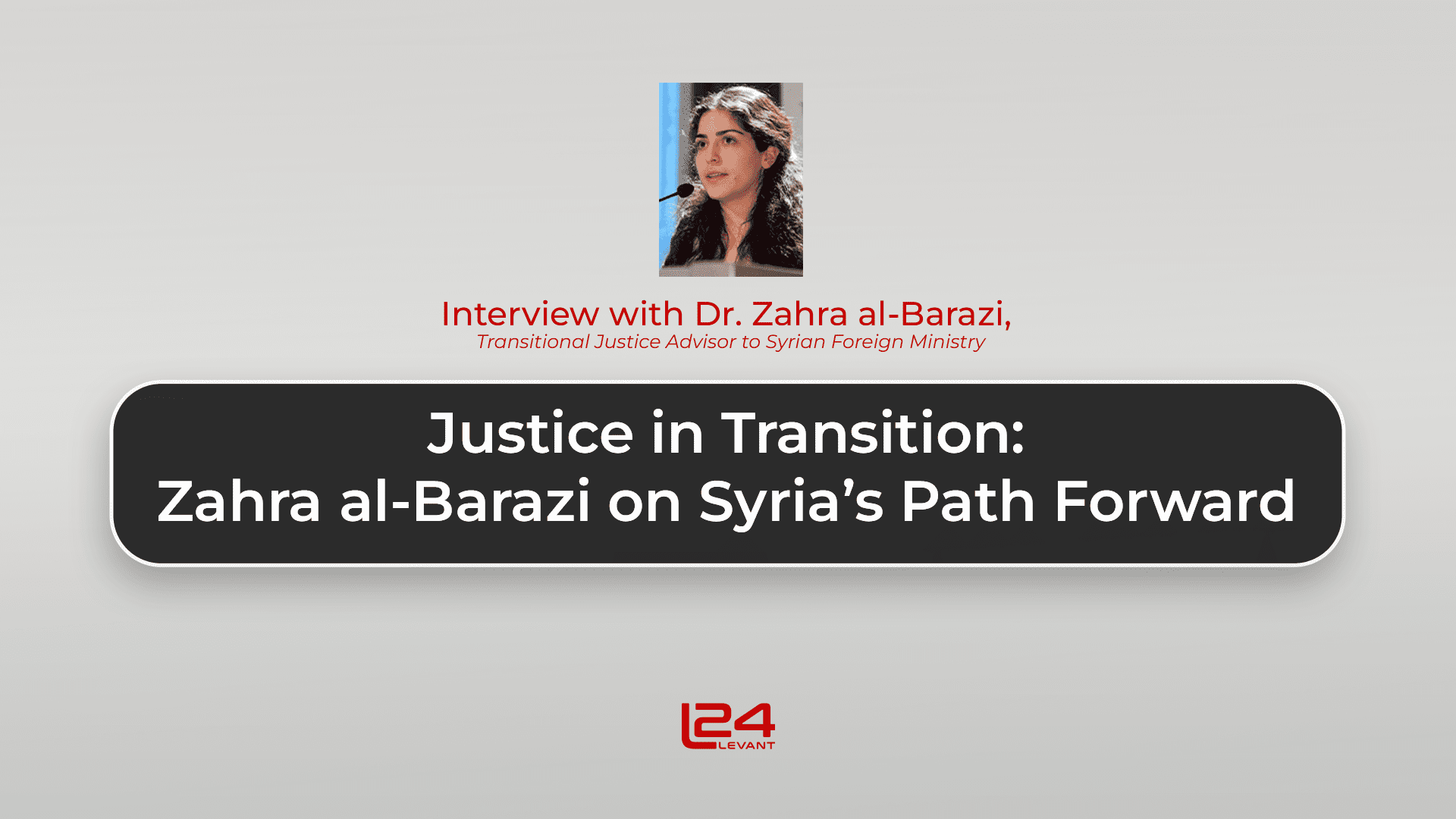
Levant24 spoke with Zahra al-Barazi, Syrian-Kurdish lawyer with a Master’s in Law from the University of Leeds and a PhD in International Law from Tilburg University. A specialist in human rights and refugee law, Barazi has extensive experience with international organizations on issues of forced displacement, citizenship, and statelessness. She is Syria’s Foreign Ministry Transitional Justice Advisor.
In this interview, Barazi discusses legal framework surrounding recent high-profile arrests, including Amjad Yusuf, explaining how Syria’s transitional justice system is being built in real time. She addresses public concerns over transparency and delays, outlines efforts to involve victims and survivors more directly, and highlights the critical role of international cooperation, particularly in securing accountability for perpetrators still outside the country.
___________
Levant24: As you know, Amjad Yusuf was arrested and others have been arrested before him. What legal procedures are currently being followed to bring them to justice?
Zahra al-Barazi: “Thank you very much, and thank you for shedding light on this issue. As you mentioned, there have been, I think, thousands of people arrested in the field of transitional justice in Syria.
“There’s a lot of attention being focused on Amjad Yusuf due to the fact that he’s very high-profile and that the documentation of the Tadamon massacre has been truly startling. The joy that we’ve seen on the streets today has been very moving.
“As for the process, he has been arrested by the Ministry of Interior, so the initial investigation will be carried out by them. Then they will transfer him to what we now have as a specialized transitional justice process and specialized courts, and he will go through the system there.
“He will start with the investigative judge who will conduct investigations, he will go through several stages until he is convicted in this specialized transitional justice court. The process takes time because he is known for the Tadamon massacre, but of course that wasn’t the only violation he committed.
“He committed many different types of war crimes and crimes against humanity, so there is a great deal of documentation and many investigative procedures to go through. So the process will take time.
“What we, as the National Commission for Transitional Justice, hope to do as soon as possible is begin engaging with the families, victims, and survivors of the massacre, and his other violations, to ensure that the process is clear to them, while also ensuring there are strong witness protection procedures they can benefit from. We also want to explain how they can get involved, if they choose to, whether through giving statements or simply understanding the process better.
“To date, the processes haven’t been as clear as they should have been to the population and the public, which is for various reasons, the main one being that transitional justice is still a mechanism being built in the country. It is a new mechanism.
“It is also hopefully a temporary mechanism, so while we were building the processes, establishing the National Transitional Justice Commission, and introducing a new law, we were ultimately focused on building the infrastructure. Now we are in a position where we can make the processes clearer and improve communication with the public and with survivors who want to be involved.”
Levant24: Some people say transitional justice is taking too long. The public often does not know what happens afterward. How would you respond to these concerns?
Zahra al-Barazi: “Transitional justice is a long process regardless of the country. We have been in the process of building the infrastructure of what transitional justice should look like in Syria.
“The National Commission on Transitional Justice, the Ministry of Justice, and the Ministry of Interior have been involved in this. So, it is true that the processes haven’t been clear to the public so far, and that is very much our responsibility.
“Our aim, especially now with this particular arrest and all future arrests, is to make the process much more collaborative and to have the victims and survivors much more involved, and we promise to do that as the commission going forward.”
Levant24: Are any international organizations assisting the Syrian government with transitional justice and if so what kind of support are they providing?
Zahra al-Barazi: “All of the processes of accountability before the fall of the regime took place outside Syria, so international organizations played a major role. They were the ones working with Syrian survivors and Syrian organizations to put cases together.
“They have a lot of the documentation and much of the information available regarding the grave crimes committed in Syria. So they are involved in sharing this information and in capacity building.
“One thing there needs to be more of going forward is sustained collaboration between Syrian-led processes, because transitional justice in Syria is very much something the public wants to take part in.
“Syria and international organizations need to cooperate and, moreover, push for action in terms of extradition. Amjad Yusuf is the most high-profile perpetrator, because the vast majority of high-profile arrests that need to take place involve those who are outside the country. Yusuf didn’t commit this crime on his own. There was a chain of command.
And the majority of people in that chain of command are outside the country. So, we need more international support bringing them back to the country so that accountability can take place for the victim survivors and the general population.”