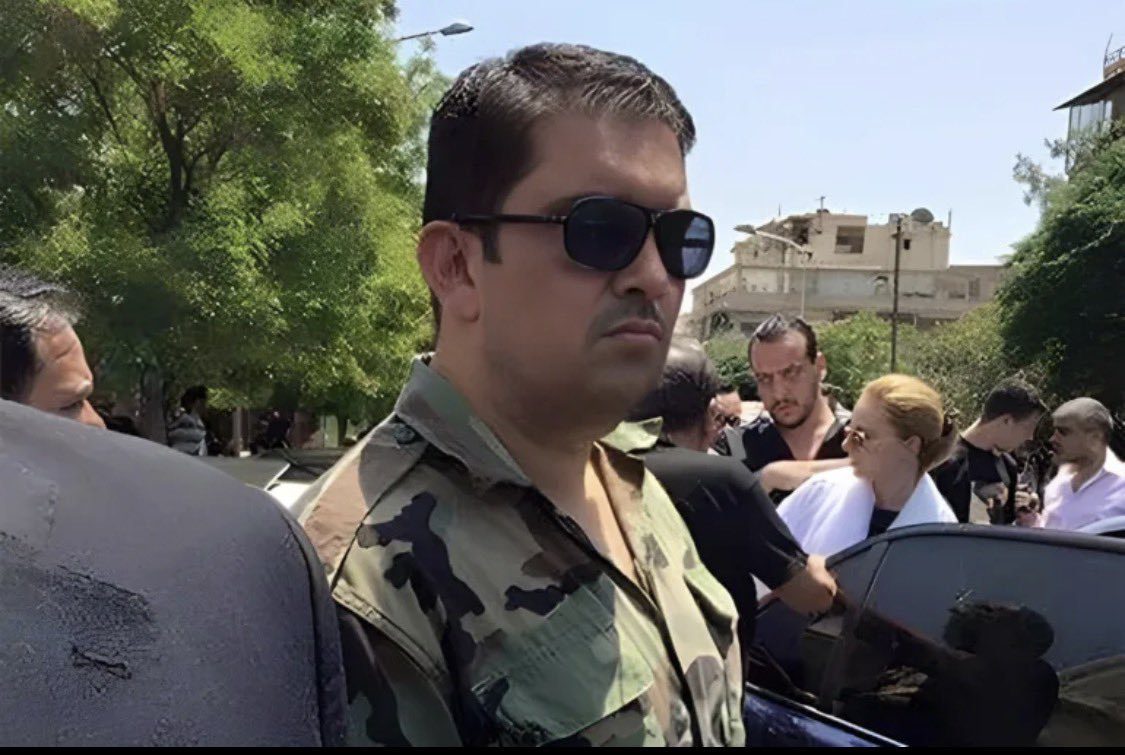
 According to the Guardian, Syrian authorities and a transitional justice body are preparing a legal case against former militia commander Fadi Saqr, amid mounting accusations he played a role in war crimes during the country’s civil conflict.
Saqr, who led the National Defense Forces (NDF) in Damascus, faces allegations of involvement in mass killings, enforced disappearances and other violations, particularly in the Tadamon neighborhood of the capital. The Guardian, cited by multiple regional outlets, writes a Syrian committee is compiling evidence which could lead to his prosecution on charges of crimes against humanity.
Human rights groups and activists have long accused Saqr of overseeing or enabling abuses carried out by forces under his command. These claims rely in part on leaked videos documenting the execution of hundreds of civilians in 2013. The footage shows blindfolded detainees being shot and burned, scenes that witnesses and researchers say reflect a broader pattern rather than an isolated incident.
Disputed Timeline and Public Denials
Saqr has denied responsibility for the Tadamon killings. In statements to The Guardian, he said he “only learned of the massacre through the media” and argued that the events captured in the videos occurred before he assumed command in June 2013.
He also addressed his limited public response to the accusations, stating that his silence was intended to avoid influencing ongoing investigations. “Anyone found to be involved in crimes against humanity must be punished,” he said, adding that he has “complete confidence in the judicial process.”
However, additional video material cited by investigators reportedly documents killings later in 2013, after Saqr took leadership of the militia. Researchers and activists argue that this undermines his claims and raises questions about his role within the chain of command.
Professor Ugur Umit Ungur, one of the academics who helped analyze the footage, told The Guardian that the Tadamon killings were part of a sustained campaign. “What is now often described as the ‘Tadamon massacre’ was not a single event, but a mass killing that continued throughout 2013 and in the years that followed,” he said, adding that Saqr was “part of the chain of command.”
Victims Push for Accountability
Survivors and activists from Tadamon have called for Saqr’s arrest, especially following the recent detention of Amjad Yusuf, a former intelligence officer identified as a key perpetrator in the massacre.
Ahmad al-Homsi, an activist with the Solidarity Coordination Committee, told The Guardian responsibility extended beyond individual actors. “Amjad was just a small element compared to Fadi Saqr,” he said. “Nothing happened without orders from Fadi Saqr.”
Other witnesses expressed frustration with the government’s previous cooperation with Saqr after Assad’s fall. Some residents argue such arrangements delayed justice for victims. Maher Rahima, a Tadamon resident told the paper, the trauma of the events linger and criticized those who shielded figures accused of involvement. His account reflects widespread anger among communities that experienced violence during the conflict.
Transitional Justice Faces Key Test
The National Transitional Justice Commission (NTJC), an independent body working with the Syrian government, is leading efforts to build a case. Zahra al-Barazi said the commission is gathering testimony and documentation with support from human rights organizations. “There is certainly enough evidence against Saqr,” she said, according to The Guardian. “No one is above the law.”
The commission plans to submit its findings to the judiciary, which will decide whether to issue an arrest warrant. Syrian authorities have also urged witnesses to come forward, promising protections as part of the legal process.
Political researcher Muhammad Suleiman told Syria TV any past cooperation between Saqr and current authorities does not negate the allegations against him. He said the case will face scrutiny from both domestic and international observers, emphasizing the need for transparency.
Suleiman added transitional justice in Syria must address not only direct perpetrators but those in leadership positions. He warned mishandling evidence, including the public circulation of graphic videos, could undermine judicial proceedings.
As Syria seeks to rebuild after years of war, the case against Saqr may serve as a critical measure of its ability to pursue accountability. Observers say the outcome will signal whether the country’s justice system can address crimes at higher levels of command while maintaining credibility and fairness.