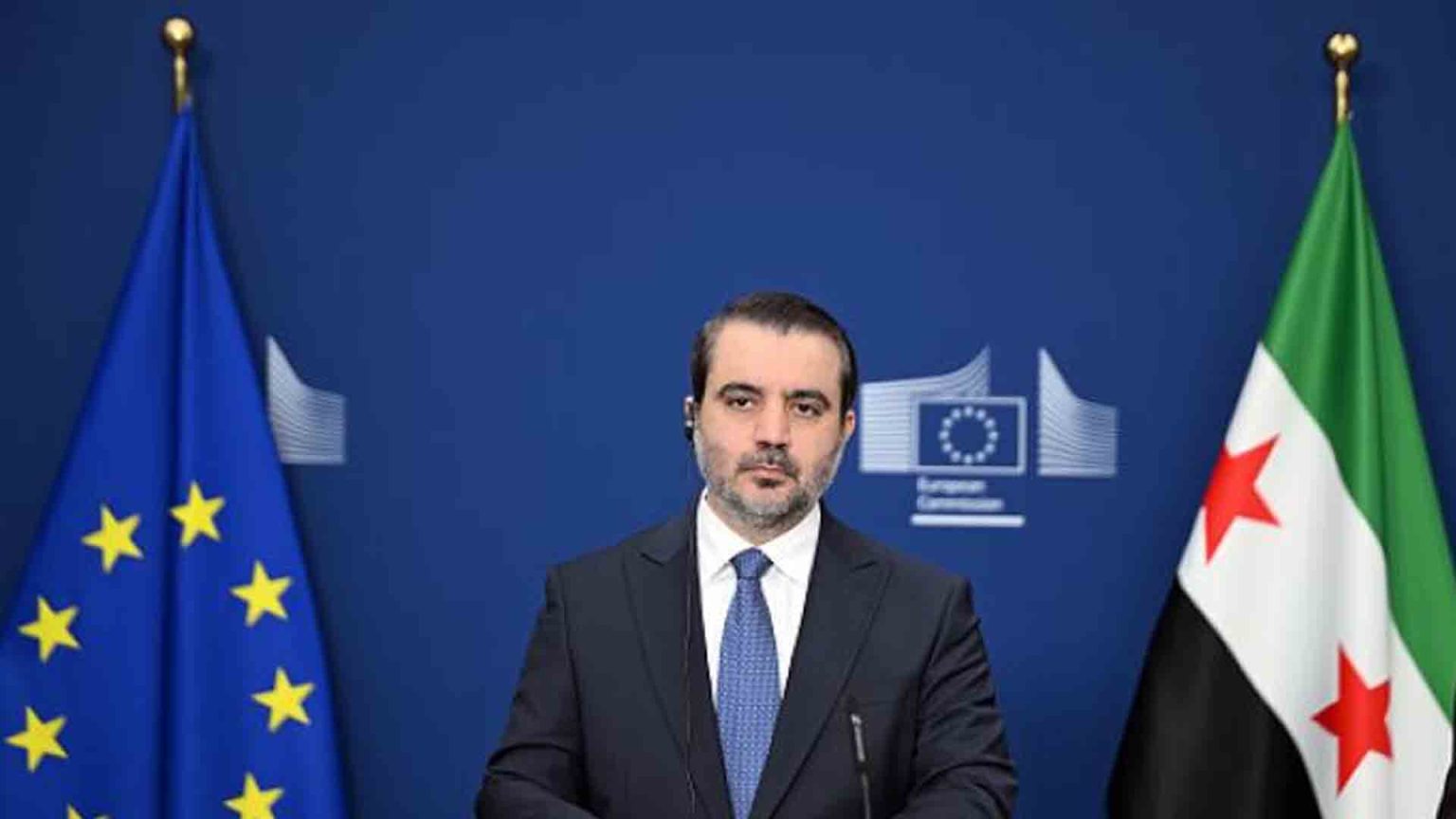
 Syrian Foreign Minister Asaad al-Shaibani denied reports of a formal agreement with Germany or other European countries for the immediate return of large numbers of Syrian refugees, warning that forced returns could destabilize Syria.
Speaking to Euronews during the EU-Syria Partnership Coordination Forum in Brussels, Shaibani said discussions with European officials focused only on establishing an organized mechanism for voluntary return that would not hinder reconstruction efforts.
Shaibani stressed that Damascus does not support rapid or unregulated returns. He said Syrians can only return sustainably when adequate economic, living and security conditions are in place. “We have warned that forcing the involuntary and undignified return of Syrians will lead to chaos,” Shaibani told Euronews.
He added that Syria requires international support, particularly from the EU, to create conditions suitable for returnees and reconstruction. The minister also said there is no agreement regarding the number of Syrians expected to return from Europe. According to Shaibani, the Syrian government does not encourage “hasty” or “unorganized” repatriation efforts.
Debate Over Syria’s Security Situation
Shaibani rejected claims that Syria remains unsafe for return. He argued that the suspension of asylum acceptance for many Syrians in Europe indicates that European governments now view conditions in Syria as more stable than in previous years. At the same time, he cautioned that involuntary returns without preparation or support could worsen humanitarian conditions inside the country.
He warned that refugees returning under pressure could become internally displaced within Syria if housing, services and employment opportunities remain insufficient. The comments come as several European governments continue debating policies related to Syrian asylum seekers and refugee status reviews.
Economic Recovery Remains Fragile
During the interview, Shaibani also addressed broader regional developments and their potential impact on Syria’s economy. He warned that any military confrontation between Iran and the United States could significantly affect Syria’s fragile recovery process.
“Now we are in the process of rebuilding Syria’s economy and rebuilding economic partnerships across the region,” he said. “Any war or conflict in the region of this magnitude also has a major economic impact on us.” Shaibani said the Syrian government is pursuing a policy aimed at distancing the country from regional conflicts in order to maintain stability and support reconstruction efforts.
Syria Seeks Stability Through Diplomacy
The foreign minister also confirmed that Syria seeks a security agreement with Israel based on sovereignty and regional stability, while rejecting what he described as normalization imposed through military or political pressure.
Shaibani accused Israel of undermining Syrian stability since December 2024 through strikes targeting infrastructure. He reiterated calls for Israel to withdraw from territories occupied since 2024 and revealed that Damascus has participated in negotiations mediated by the US.
The interview followed a high-level EU-Syria meeting in Brussels, where the European Council announced the restoration of the full implementation of the EU-Syria cooperation agreement, paving the way for expanded bilateral trade and cooperation.