The collapse of Bashar al-Assad’s regime exposed large-scale Captagon production networks across Syria, but the southern province of Suwayda emerged as a notable exception. While former intelligence compounds and drug facilities elsewhere were raided or dismantled, trafficking operations in Suwayda largely remained intact under the control of local Druze militias, according to an investigative report published by Suwayda 24.
The report described how armed factions that dominated the province before Assad’s downfall retained their influence afterward, preserving what investigators called the “legacy” of manufacturing and smuggling operations once linked to Assad intelligence services. Rather than dismantling stockpiles inherited from the former regime and displaced tribal traffickers, local groups allegedly stored and redistributed narcotics and raw production materials.
Among the groups repeatedly referenced in the investigation was the Israeli-backed National Guard, founded by Druze cleric Hikmat al-Hijri, which has become a powerful armed actor in the province. Jordanian officials and Syrian security sources have increasingly accused factions operating in Suwayda of facilitating narcotics trafficking and weapons smuggling across southern Syria.
Factories Move Into Residential Areas
Field sources cited by Suwayda 24 estimated that between 12 and 15 Captagon manufacturing facilities previously operated across the province, ranging from permanent sites to mobile presses hidden inside trucks. The report alleged that newer production methods increasingly rely on embedding facilities within civilian areas to avoid detection.
One recently established factory was reportedly located inside a densely populated neighborhood in Suwayda city and operated under the protection of the National Guard. Investigators said the arrangement effectively used nearby residents as human shields against potential airstrikes.
Private farms and civilian buildings also allegedly became production hubs. Suwayda 24 identified individuals accused of overseeing production and logistics networks linked to Captagon manufacturing in the northwestern countryside and the Majdal area. The report further alleged that some production expertise originated from specialists affiliated with Hezbollah, who allegedly trained local operators in pill manufacturing and packaging before Assad’s fall.
Drug Flooding Sparks Social Concerns
Jordan’s intensified border enforcement and airstrikes against trafficking infrastructure appear to have disrupted export routes, causing large quantities of narcotics to accumulate inside Suwayda. According to the report, the oversupply sharply reduced local prices for Captagon pills, contributing to wider consumption inside the province.
A single pill reportedly now sells for less than a dollar, roughly 4,000 Syrian pounds. Investigators said usage has spread among armed faction members stationed along front lines and checkpoints, where stimulants are allegedly used to maintain alertness.
The report also raised alarm about rising addiction among minors. Suwayda 24 documented 24 cases involving children younger than 13 and alleged that traffickers distributed drugs for free at youth gatherings to create dependency and recruit future distributors.
At the same time, cannabis cultivation reportedly expanded in northern parts of the province, particularly around Shahba, as traffickers searched for alternative revenue streams amid mounting pressure on Captagon exports.
Smuggling Routes Shift Toward New Technology
As Jordan increased aerial surveillance and border operations, traffickers reportedly adapted by changing both routes and methods. Suwayda 24 detailed the growing use of helium-powered balloons equipped with primitive remote-control technology to transport narcotics across difficult terrain.
The report stated that specialized smuggling networks now coordinate the acquisition of helium cylinders through desert routes connecting Suwayda, Daraa and remote tribal areas. Trafficking routes also reportedly shifted eastward into rural Daraa, where smugglers use rugged terrain and weak security oversight to bypass checkpoints.
Investigators described a broader cross-provincial network stretching into the Damascus and Homs countrysides, areas that provide quick access to the Syrian desert and the Lebanese border. The desert’s sparse security presence has allowed traffickers to evade raids and move shipments through isolated corridors, according to the report.
Weapons Smuggling Adds New Security Threat
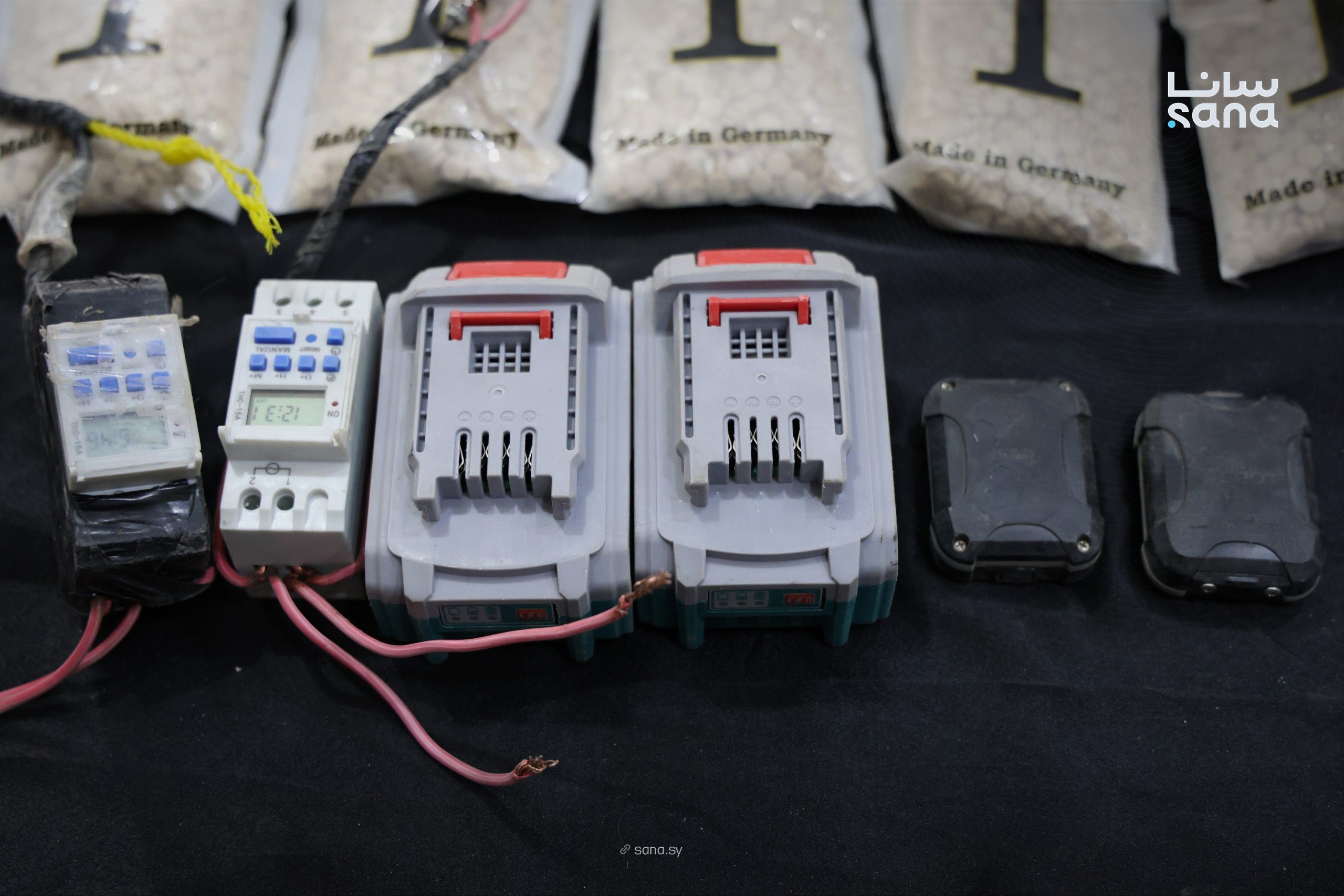
Alongside narcotics trafficking, Syrian authorities say weapons smuggling operations have intensified in Suwayda. According to Syria TV, Internal Security Forces recently intercepted a shipment concealed inside a truck carrying electrical equipment at the Matouna checkpoint in northern Suwayda.
Security officials said the shipment included drones, Starlink communication devices and surveillance equipment intended for smuggling operations. Authorities also reported seizing stolen vehicles and arresting over 15 suspects allegedly linked to armed groups, including individuals associated with the National Guard.
Regional Pressure Builds
Jordan has increasingly portrayed trafficking networks in southern Syria as a direct national security threat. Reports cited by Suwayda 24 suggested coordination between Jordanian and Syrian authorities could eventually expand beyond airstrikes into limited ground operations targeting drug production and storage facilities inside Suwayda.
As regional pressure mounts, Suwayda has become both a strategic hub and a symbol of how armed factions adapted after Assad’s collapse, transforming inherited smuggling infrastructure into a resilient underground economy with growing regional consequences.