Syrian authorities announced their readiness to cooperate with Sweden and other European countries investigating war crimes and human rights violations committed during Assad’s rule. Officials said Syria is prepared to provide documents, testimony, and other evidence supporting prosecutions against individuals accused of involvement in those crimes.
European Efforts Under Universal Jurisdiction
The announcement comes as several European countries, including Sweden, continue investigations into crimes perpetrated by the Assad regime. These cases rely on the principle of universal jurisdiction, which allows courts to prosecute serious international crimes regardless of where they occurred.
Nouruddin al-Baba, spokesperson for the Syrian Ministry of Interior, told Sweden’s official radio station Syrian authorities are ready to facilitate access for European investigators seeking evidence inside Syria.
He said Damascus is prepared to provide access to documents, witnesses, crime scenes, and other information which could assist investigations into alleged violations committed during the Syrian revolution.
Security Archives Could Aid Investigations
Baba said a substantial portion of the former regime’s military and security archives remains intact. He also stated authorities will soon publish a list of approximately 1,000 wanted individuals, including former officers and officials from institutions linked to the fallen regime.
The preserved archives could prove valuable to investigators and human rights organizations. They contain records, orders, and documentation that may help verify reported violations and establish individual or institutional responsibility.
Access to these files could mark an important step in Syria’s transitional justice efforts. International investigators faced significant obstacles under the Assad regime, including limited access to official records and locations connected to alleged crimes.
Sweden Pursues Accountability
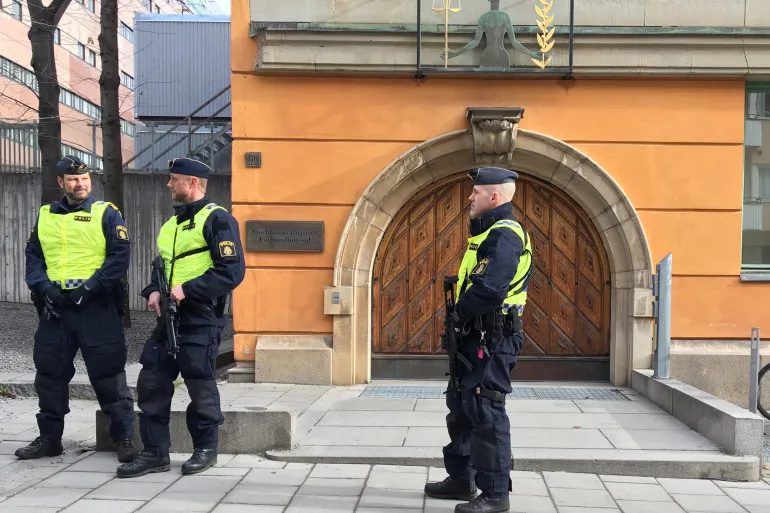
Several Swedish media reports indicate several former Assad regime military and security apparatus associates currently reside in Sweden. According to Sweden’s official radio station, investigative reporting found at least 15 individuals who served within the regime’s military or security institutions are now in the country.
Swedish authorities collected evidence related to crimes committed in Syria for years as part of broader European efforts to hold perpetrators of war crimes and crimes against humanity accountable. Rena Devgun, a Swedish prosecutor specializing in war crimes, said certain offenses are so serious that authorities must prosecute them regardless of where they were committed.
She said these prosecutions aim to ensure that European countries do not become safe havens for individuals accused of grave violations while also protecting victims and survivors who fled conflict zones.
Cooperation Seen as Step Toward Justice
War crimes and crimes against humanity have become a major focus for European judicial authorities in recent years. Germany, France, and Sweden all conducted trials involving individuals accused of crimes against Syrians during the revolution.
Human rights advocates, as cited by Sweden’s official radio station, hope cooperation between Syrian authorities and European governments will accelerate investigations and improve access to evidence and witnesses. They argue greater cooperation could strengthen efforts to establish the facts and support justice for victims.
Observers also view the initiative as a sign that Syria’s leadership intends to engage with international efforts to document violations and pursue accountability. The move forms part of broader attempts to address the legacy of the conflict while strengthening the foundations of justice and the rule of law in the country.