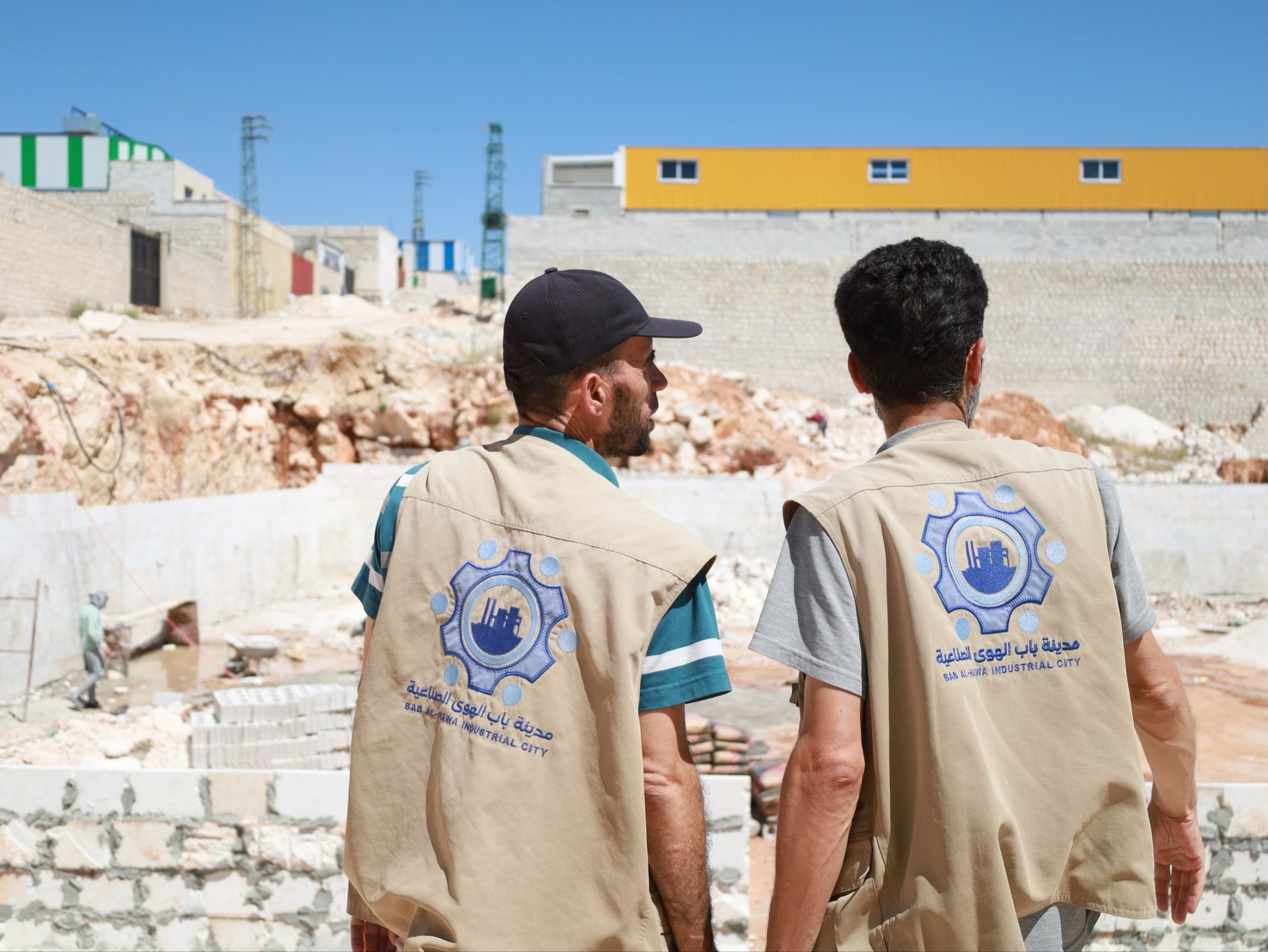
 Bab al-Hawa Industrial City, located in the Sarmada area of Idlib countryside, witnessed rapid growth in industrial and investment activity in recent years. The launch of new facilities and rising demand for industrial plots have made it one of the leading centers of economic activity in northern Syria. This expansion reflects increased production capacity, growing employment opportunities, and stronger activity in both local and cross-border markets.
Fadi al-Khatib, director general of Bab al-Hawa Industrial City, said the city continues to attract growing interest from industrial investors, prompting the administration to launch expansion projects to meet rising demand. He said the city covers 52 hectares including 286 industrial plots, all of which are fully occupied. It is home to about 160 investment facilities, with 87 already in production while the remaining facilities are under construction, preparation, or licensing.
The city’s growth was supported by improvements to infrastructure, including roads, water services, telecommunications, and fiber-optic connectivity. These upgrades have improved shipping and production while increasing investor confidence and encouraging businesses to relocate their operations. The administration aims to strengthen Bab al-Hawa’s position as an industrial hub by continuing to improve services and provide a stable investment environment.
Diverse Industries Strengthen Trade
Bab al-Hawa Industrial City hosts a wide range of productive sectors, including food processing, chemicals, engineering industries, construction materials, packaging and printing, and pharmaceuticals. Together, these industries supply a significant share of local market demand.
The engineering and construction materials sector has continued to expand with factories producing metal equipment, production lines, and metal doors, as well as an iron smelting plant supporting construction and heavy industry. The city also includes a pharmaceutical factory which contributes to local production reducing reliance on imported medicines.
Its location near the Bab al-Hawa border crossing with Turkey has further strengthened trade activity. Some factories begun exporting part of their production to regional and neighboring markets, contributing to higher exports while reducing imports of several finished products.
Expansion Brings Jobs and New Challenges
The industrial city has created between 4,000 and 5,000 direct and indirect jobs across manufacturing, transportation, and service sectors. Officials expect that number to exceed 15,000 after planned expansion projects are completed. Industrial activity has also supported transport services, customs clearance, cold storage facilities, and nearby commercial markets.
Despite this progress, the city continues to face challenges, including customs procedures at border crossings, transit difficulties to regional and Gulf markets, shortages of skilled technical workers, and land ownership issues. In response, the administration has introduced a one-stop shop system, streamlined licensing procedures, installment payment options for industrial plots, and proposals for protective tariffs on imported goods alongside exemptions for some raw materials and machinery.
With additional land being prepared to accommodate at least 100 new factories, Bab al-Hawa Industrial City is positioned for continued growth as it seeks to expand industrial production, strengthen the local economy, and increase its role in regional markets.