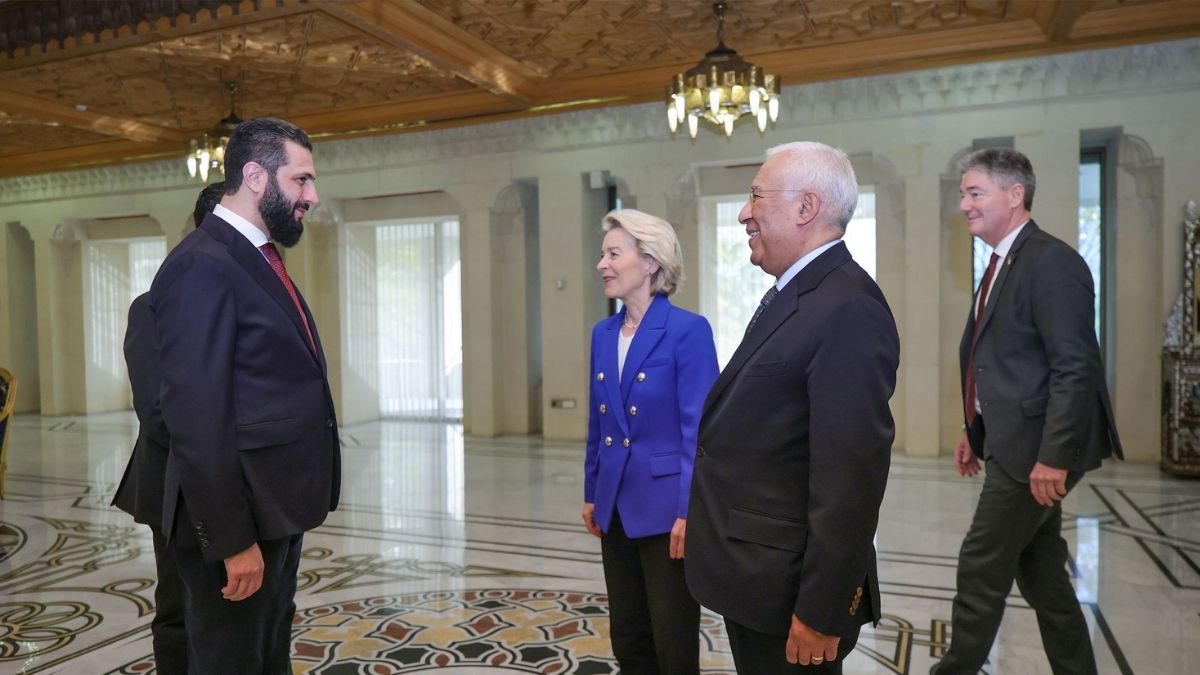
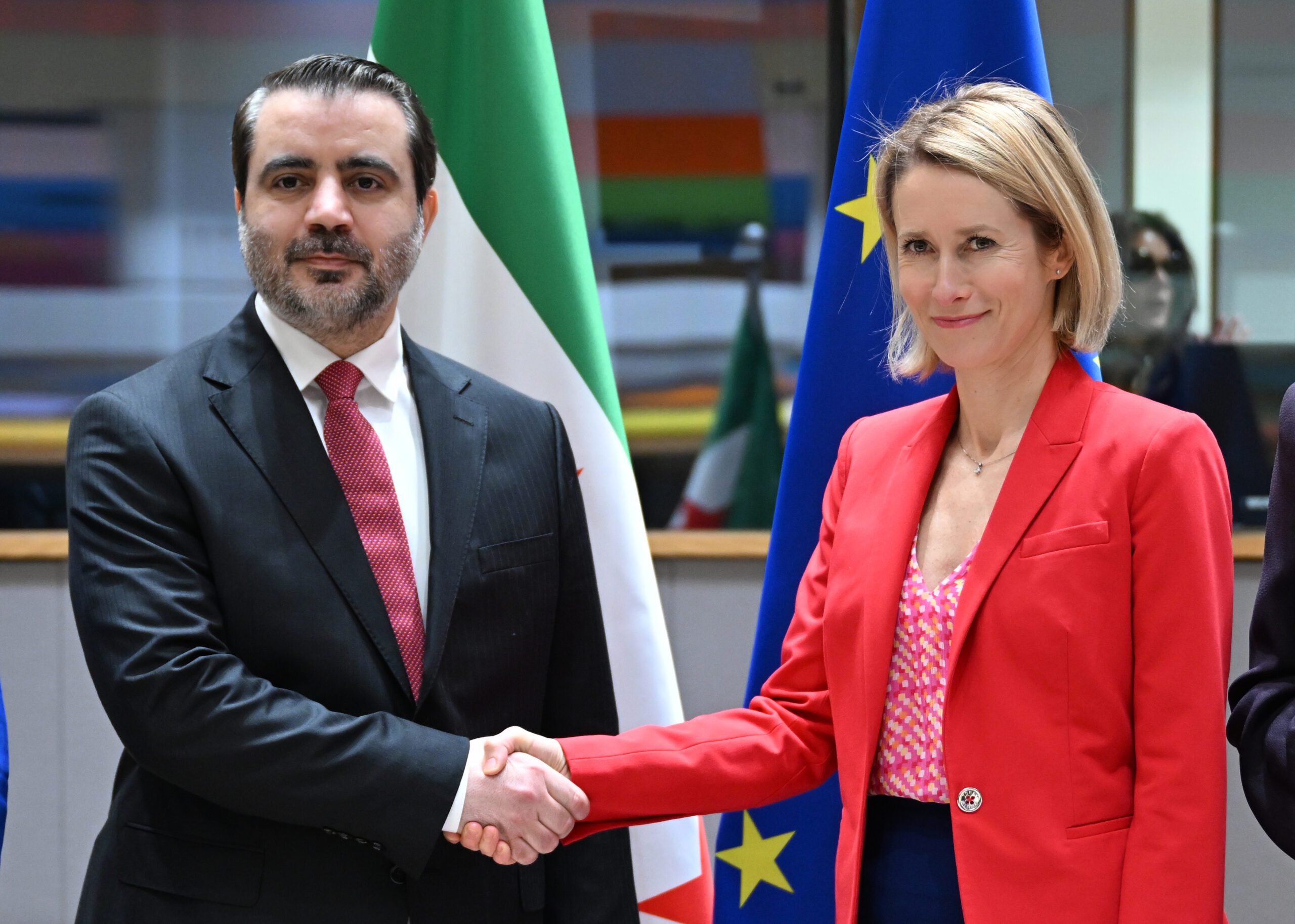
 The cameras captured the handshake between Syrian Foreign Minister Asaad al-Shaibani and European officials in Brussels May 11, symbolizing the historic reestablishment of EU-Syrian relations after over a decade of fragmented engagement. Europe was signaling it no longer viewed Damascus solely through the lens of sanctions and isolation, but increasingly as a strategic necessity tied to migration, regional stability and economic connectivity.
The EU formally moved to fully restore the EU-Syria Cooperation Agreement first signed in 1977, while lifting sanctions on several Syrian entities, including the Ministries of Interior and Defense. The decision followed months of gradual normalization after the Assad regime’s fall, reflecting Europe’s calculation that disengagement from Syria carried greater risks than cautious reengagement.
European officials framed the move as support for Syria’s transition and reconstruction. Yet beneath the language of stabilization lies a more immediate set of European priorities: refugee returns, counterterrorism cooperation and limiting possible exploitation by rival powers in a power vacuum.
“Syria is a key country at the heart of the Mediterranean and there is a strong European interest in developing a close partnership and supporting the country’s stability,” Julien Barnes-Dacey, director of the Middle East and North Africa program at the European Council on Foreign Relations, told Levant24.
“Europe would like to see a stable, prosperous and independent Syria that meets the needs of its population and acts as an anchor of regional stability and economic connectivity rather than being a source of destabilizing outflows as was the case under the former regime,” he said.
Refugees and Security Drive Syria Policy
While Brussels publicly emphasizes reconstruction and political transition, the refugee issue has become one of the strongest forces behind Europe’s renewed outreach. Over 1.5 million Syrians remain in Europe, according to estimates cited in regional reporting, with Germany hosting roughly half that number.
After years of political pressure surrounding migration, several European governments view Syrian stabilization as necessary to reducing asylum flows and facilitating returns. “The EU has gradually reengaged with Syria over the past year, developing diplomatic relations and lifting most of its sanctions,” Marie Forestier, senior adviser at the European Institute of Peace, told Levant24.
“This engagement is strategic for the EU as Syria’s stability is important to EU’s security.” Forestier said stabilization remains Europe’s “main priority for security reasons and because it is a necessary condition for refugees to be able to return.”
The refugee question resurfaced prominently during Syrian President Ahmad al-Sharaa’s March Berlin visit, where migration reportedly dominated discussions with German officials. Yet Damascus has resisted European pressure for rapid large-scale returns.
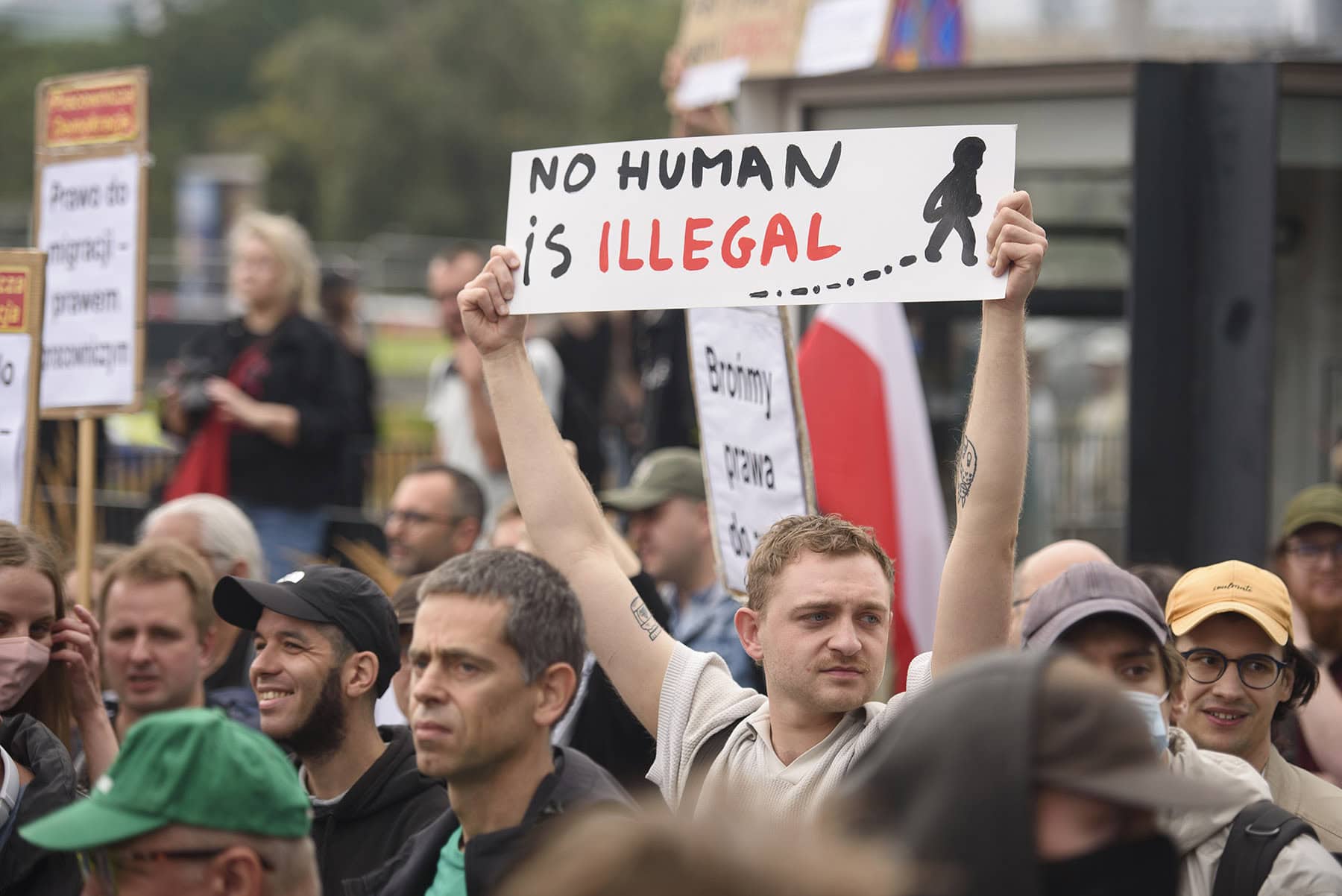
Shaibani rejected claims Syria reached agreements with European governments regarding mass refugee returns, arguing premature repatriation could destabilize the country further. He warned forcing Syrians back before reconstruction advances could transform returning refugees into internally displaced people.
Instead, Damascus seeks financial support to rebuild infrastructure, housing, and public services before encouraging returns. Muhammad al-Sukari, a researcher at the Arab Center for Contemporary Syrian Studies, argued Europe’s priorities remain overwhelmingly focused on migration management.
“The European focus regarding Syria is on the issue of the return of refugees from Europe,” he told The New Arab. “The EU wants to return the largest possible number of them to their countries now that the conditions leading them to seek refuge no longer exist.”
Economic Openings and Strategic Corridors
Beyond migration concerns, Europe also sees Syria as increasingly important within emerging regional trade and energy networks reshaped by years of conflict across the Middle East. The reactivation of the cooperation agreement could reopen trade channels suspended since 2011, including tariff relief on certain Syrian exports.
Brussels also announced financial packages totaling €355 million aimed at supporting reconstruction and economic recovery. Barnes-Dacey said the renewed partnership could eventually connect Syria to broader European initiatives such as the Global Gateway program and European Investment Bank financing.
“These tools could, for instance, allow Europeans to offer increased support for key infrastructure projects that are urgently needed to underpin wider reconstruction efforts,” he said. European policymakers increasingly view Syria not only as a postwar recovery case, but also as a geographic bridge linking the Mediterranean, Gulf and wider regional markets.
“Syria is also now being talked about as a possible central hub within a new picture of regional economic connectivity,” Barnes-Dacey said. “There seems to be a strong shared regional-European interest in supporting Syria’s emergence as a new land bridge between the two regions.”
The geopolitical dimension also remains central. Syria’s new leadership has distanced itself from the Iranian-Russian axis that dominated under Assad, a shift many European capitals see as strategically advantageous.
“The government has committed to an inclusive transition that guarantees the rights of all Syrians and has reorientated itself away from the Iranian-Russian axis,” Barnes-Dacey said. “This is a trajectory that very much aligns with where Europeans hope the country will go.”
Cautious Optimism Meets Lingering Doubts
Despite the diplomatic momentum, significant skepticism persists on both sides. European governments remain divided over how quickly normalization should proceed. Some member states continue adopting what Forestier described as a “wait and see” approach while assessing Syria’s political transition and governance reforms.
Human rights concerns also continue shaping EU policy. Although Brussels lifted many economic restrictions, sanctions remain in place against 318 individuals and 51 entities linked to the former Assad regime.
Forestier noted that EU cooperation agreements contain human rights clauses allowing engagement to be suspended if severe abuses occur again. Former Syrian Ambassador to Sweden Bassam al-Amadi questioned whether Damascus could realistically satisfy European demands regarding governance and political inclusion.
He told The New Arab, “Any agreement a country enters into with the EU for cooperation includes political conditions such as good governance, the peaceful transfer of power, and respect for the rights of minorities and women.”
Amadi argued that European engagement would likely remain selective and conditional rather than fully open-ended. “They choose what suits them for joint cooperation with Syria, such as oil and the like,” he said. “As for investments, they will only come in words and promises.”
At the same time, Syrian officials increasingly express frustration with what they see as Europe’s slow and cautious bureaucracy. Damascus has pushed for faster economic engagement while insisting that Syria seeks “a strategic partnership based on equality and mutual commitments,” as Shaibani stated in Brussels.
For now, both sides appear willing to tolerate those tensions as alternatives seem less attractive. Europe fears renewed instability on its southern flank, while Syria urgently needs investment, reconstruction and international reintegration after 14 years of war.
Whether pragmatic cooperation can ultimately overcome years of isolation remains uncertain. But after over a decade of frozen relations, both Brussels and Damascus increasingly appear convinced they can no longer afford continued estrangement.