 For the second straight year, an official Syrian delegation has taken part in the Spring Meetings of the International Monetary Fund (IMF) and the World Bank Group in Washington, DC, indicating Damascus’s effort to strengthen its role in global financial discussions while presenting its priorities for the next phase of recovery.
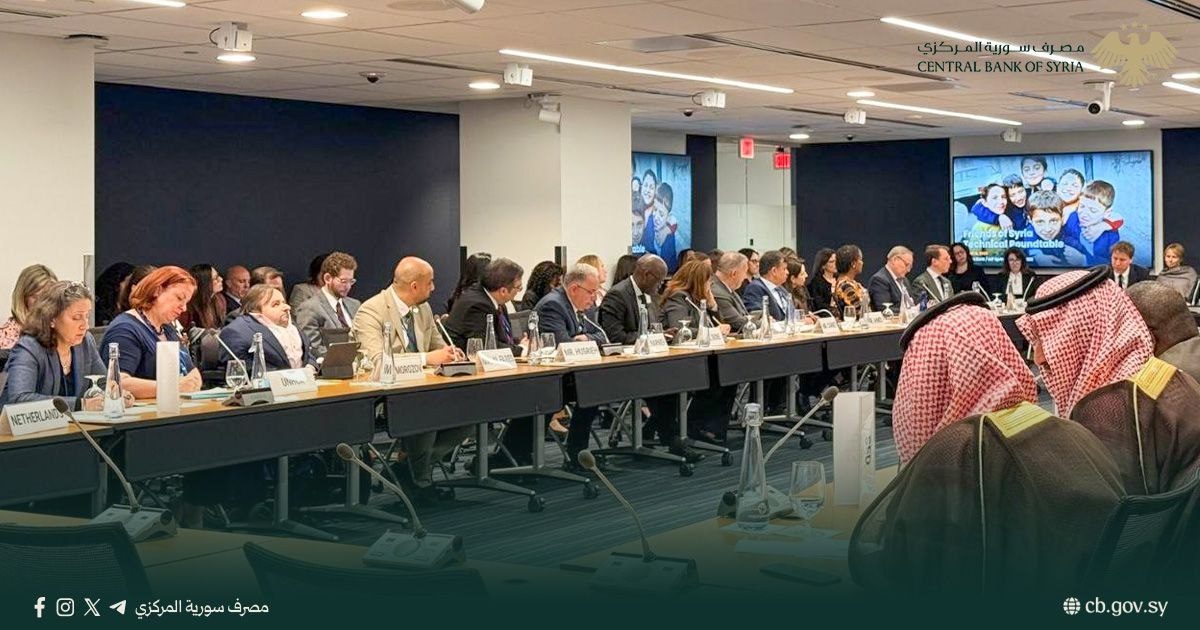
On the sidelines of the meetings, Finance Minister Muhammad Barnieh chaired a technical roundtable for the Friends of Syria Group alongside World Bank Vice President Ousmane Diagana. The session also included Central Bank of Syria Governor and representatives from the Ministry of Foreign Affairs and Expatriates.
During the talks, the Syrian delegation outlined national recovery priorities and discussed practical steps needed to move from economic stabilization toward sustainable growth. Officials also presented an assessment of the structural and financial challenges still facing the Syrian economy.
International Backing Expands
The discussions highlighted growing international support for Syria’s state-led recovery programs. Saudi Arabia stressed the need for risk-sharing instruments and guarantees to help unlock private investment. France said it is prepared to engage in World Bank and IMF projects inside Syria.
The US signaled possible support for capacity building in financial integrity, revenue collection and banking sector reform. US officials also proposed that the World Bank draft a concept note to coordinate donor-backed technical assistance.
At the same time, representatives from the Saudi Development Fund, the Islamic Development Bank, the UN Development Program (UNDP) and the European Commission reaffirmed financial and technical commitments. Those efforts include launching banking partnerships and supporting the Syria Without Camps initiative, which aims to improve livelihoods and housing conditions.
Focus Shifts to Financing and Reform
In his closing remarks, Barnieh set out three priorities for the coming phase: strengthening institutional capacity and debt management, securing additional grants and concessional financing while encouraging private investment, and establishing a multilateral donor trust fund to channel recovery resources more effectively.
He also welcomed a proposal to convene a major international reconstruction conference for Syria. Such a gathering would allow the government to present its reform commitments, institutional readiness and ability to manage incoming investment, while international partners could announce specific financial pledges supporting long-term recovery planning.
Regional Reconnection Gains Momentum
In a parallel diplomatic effort, Barnieh met with Abdulaziz al-Mulla, executive director of the Arab Group at the World Bank, to discuss Syria’s expected return to the Arab Group in October and ways to strengthen the presence of Syrian professionals within the institution.
The meetings marked an important stage in Syria’s renewed engagement with international financial and development institutions. Such discussions signaled an effort by Damascus to frame recovery around institutional reform, external partnerships and measurable economic outcomes.