Israeli military operations in southern Syria have intensified in recent weeks, with repeated incursions, raids and the expansion of military positions in Quneitra province, according to local reports and official data. Residents describe a growing security presence which continues disrupting daily life, raising concerns about long-term stability.
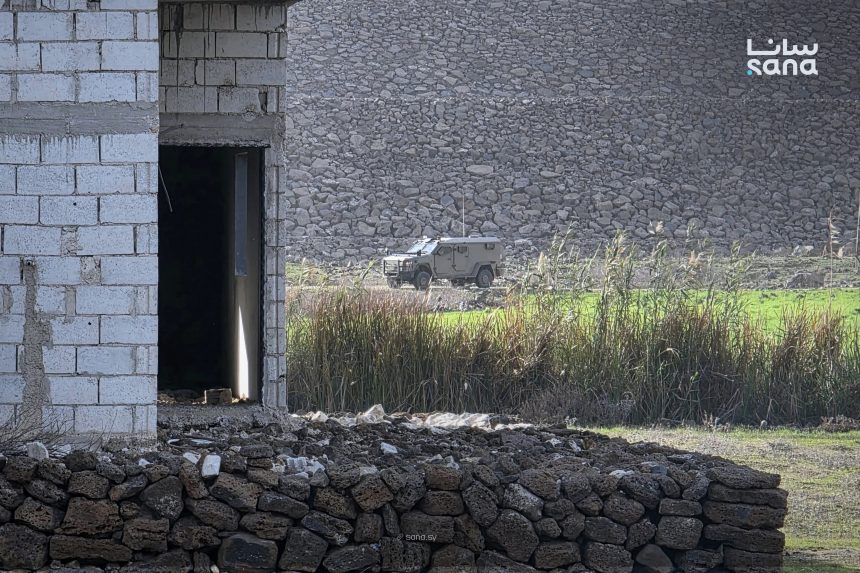
Local media reported Israeli forces entered several villages, including Jabata al-Khashab, Samdaniyah and Umm al-Azam, raiding houses and, in some cases, detaining civilians. In one incident reported by SANA, forces using multiple vehicles raided homes in Umm al-Azam and detained a resident, taking him to an undisclosed location.
These operations often coincide with aerial surveillance. Syria TV reported that reconnaissance aircraft flew over parts of Quneitra during ground incursions, while checkpoints were set up on roads linking villages, restricting civilian movement.
Documented Violations Show Escalating Pattern
A recent report documented 897 violations attributed to Israeli forces in southern Syria. The report recorded 123 incidents in March 2026, compared with 91 in January and 97 in February, indicating a steady increase.
Israeli forces have also expanded their presence by constructing new sites. Local sources told Syria TV that bulldozers and trucks transported prefabricated structures to Tel al-Ahmar in southern Quneitra, fueling concerns about illegal occupation. Reports indicate that at least nine Israeli military bases now operate across southern Syria, used as launch points for patrols and raids.
Civilians Report Fear and Economic Loss
Residents in Quneitra describe a worsening humanitarian situation as military activity increases. Abdurazaq al-Kafri told The New Arab gunfire frequently targets shepherds near the border fence, preventing access to agricultural land. “Farmers are being pushed away from their property,” he said, noting significant financial losses.
Others describe a climate of fear. Nour al-Hassan said residents worry about arrests at checkpoints and avoid moving at night. “People today live in genuine fear,” he told The New Arab, adding that children are increasingly anxious.
The economic impact has grown alongside security concerns. Farmers with land near the fence are unable to tend their crops with repeated losses each season. Many families face the fact they may have to abandon agriculture if conditions persist. Families in the area also report psychological strain. Residents said Israeli vehicles patrol daily and a tank overlooks nearby areas, creating constant pressure and fear on families.
Calls for International Response Intensify
Syrian President Ahmad al-Sharaa recently urged the EU to take a stronger stance against what he described as Israeli violations of Syrian territory. Speaking in Nicosia, he said such actions undermine stability and reconstruction efforts. Meanwhile, the UN Disengagement Observer Force (UNDOF) increased patrols along the ceasefire line following appeals from residents for greater protection.
As military activity continues, the situation in Quneitra reflects broader tensions in southern Syria. Ongoing incursions and the expansion of military positions have left civilians facing both immediate security risks and longer-term economic uncertainty, with no clear resolution in sight.