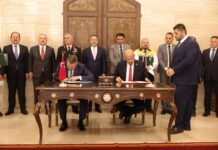
According to the Syrian Ministry of Defense, Chief of the General Staff Maj. Gen. Ali al-Naasan arrived in Turkey May 20 with a delegation of officers to observe and follow the multinational exercises taking place in Izmir province. During the visit, Naasan met Turkish Chief of Staff Gen. Selçuk Bayraktar Oglu on the sidelines of the drills.
The exercises, organized by the Turkish Armed Forces every two years, began April 16 and conclude this week. Turkish state media reported participation from 52 countries, while Anadolu Agency said over 10,000 personnel from roughly 50 nations joined the maneuvers.
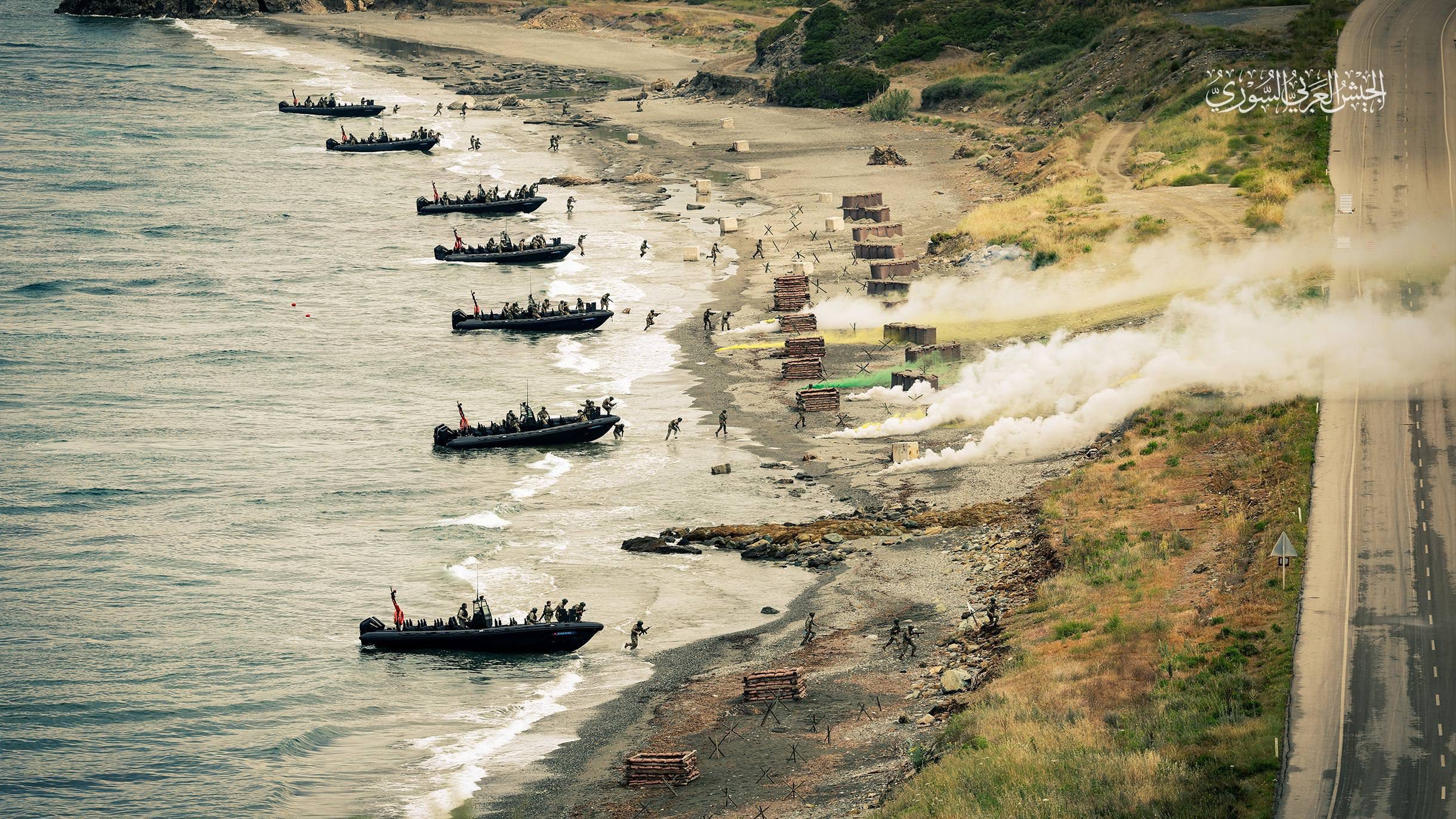
SANA reported participation comes within the framework of the Ministry of Defense’s “openness to foreign military experiences” and efforts to benefit from joint operational training, military coordination and exposure to modern equipment and tactics not currently available domestically. The drills involve land, naval and air units and focus on interoperability, live-fire exercises and multinational operational coordination in complex combat environments.
Expanding Coordination Between Ankara and Damascus
Syrian participation marks another sign of deepening military coordination between Ankara and Damascus following months of diplomatic and security engagement between the two governments. The Turkish Ministry of Defense said Syria joined the exercises with a “core unit” as part of Turkish efforts to support Syria’s reconstruction and military restructuring process.
Turkish Defense Ministry spokesperson Zeki Aktürk described the deployment as the Syrian Army’s “first participation outside Syrian territory.” Aktürk said Turkish support and training programs would continue in the coming period. He added the exercises aim to improve “operational interoperability with friendly and allied countries” while strengthening regional security coordination.
The maneuvers consist of two phases. The first involves command center simulations using computerized systems, while the second includes live-fire exercises conducted in the Gulf of Izmir and the Doğanbey training range under the command of Turkey’s Aegean Army.
The military cooperation also follows a high-level meeting in Damascus this week between Syrian President Ahmad al-Sharaa and Turkish intelligence chief Ibrahim Kalin. Syria’s presidency said the talks focused on regional developments and expanding bilateral coordination between the two countries.
Syria Among Earliest Arab Participants in NATO Events
Although Syria is not a NATO member and remains outside the alliance’s formal structures, its participation in exercises involving NATO countries places Damascus among the first Arab states to engage in military events connected to alliance partners after years of isolation. Turkey, a NATO member since 1952, has increasingly framed the “Efes” exercises as a platform for international military cooperation among allied and partner nations.
Anadolu Agency described the maneuvers as demonstrating the Turkish Armed Forces’ ability to adapt to modern warfare environments and advanced battlefield technologies. Turkish officials also portrayed the drills as part of Ankara’s broader security strategy emphasizing stability and international cooperation.
Syrian deployment represents a notable shift from the country’s previous military posture, which remained largely confined within its borders throughout over a decade of conflict. Syrian officials said the experience allows personnel to observe foreign military organization, command structures and modern combat coordination methods firsthand.
Regional Signals Beyond the Battlefield
The exercises also carried broader political symbolism. Libya joined the drills with a unified contingent of forces from eastern and western Libya operating together under one national flag for the first time outside the country, according to the Turkish Ministry of Defense.
Turkish officials said the multinational nature of the exercises reflects Ankara’s efforts to build regional security partnerships while supporting military institution-building in neighboring states. For Syria, participation signals efforts to reintroduce its armed forces into international military settings following years of diplomatic and operational isolation.
The move also highlights Turkey’s growing role in shaping postwar security arrangements and military cooperation with Damascus. While Syrian officials framed the participation as a technical and professional opportunity, analysts are likely to view the development as part of a wider regional realignment taking shape between Turkey and Syria.