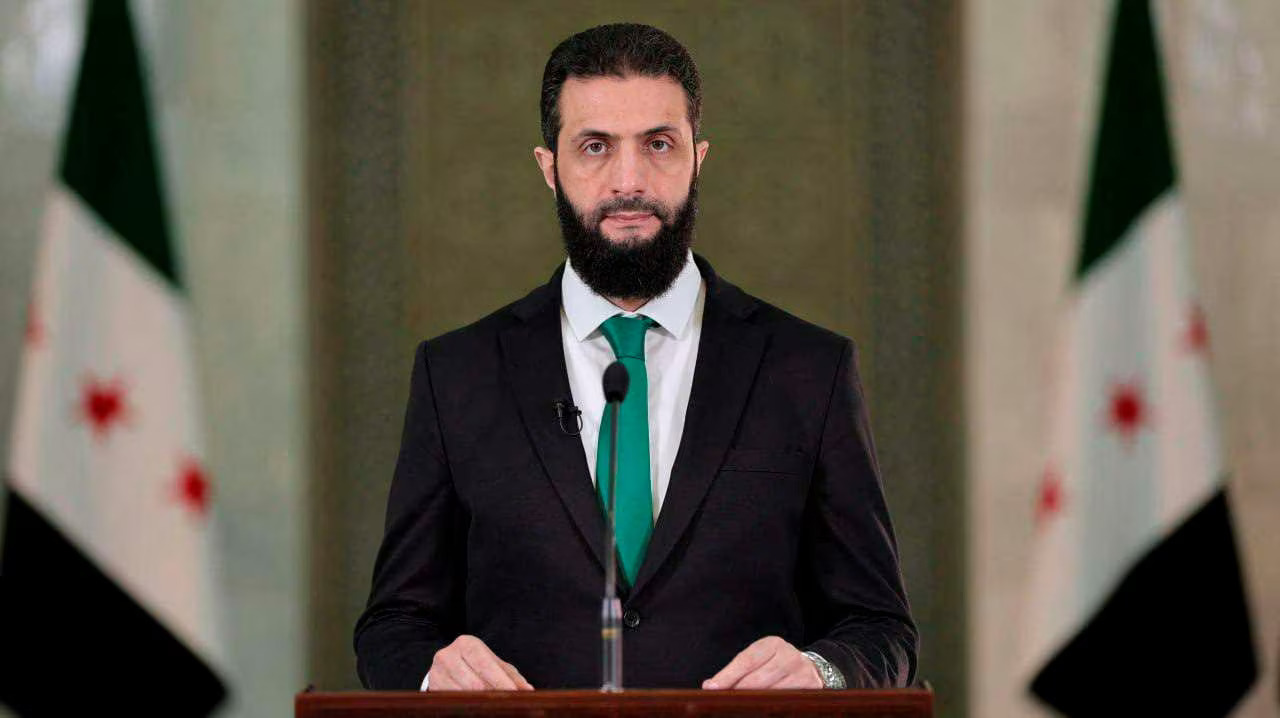
In his first official speech as President of the Syrian Arab Republic, Ahmad al-Sharaa laid out a vision for Syria’s future, emphasizing national unity, civil peace, and economic reconstruction while acknowledging the sacrifices made by Syrians both inside and outside the country. His address, delivered from the People’s Palace in Damascus, was widely praised for its inclusive tone and recognition of the collective efforts that led to the country’s historic transition.
An Inclusive & Unifying Message
Speaking directly to “all Syrian men and women,” al-Sharaa acknowledged the perseverance and contributions of the Syrian people throughout the revolution. He paid tribute to the detained, the disappeared, and those who lost their lives in the struggle against the former regime.
“Syria was liberated with the martyrs, the detainees, the tortured, the missing, and all their bereaved mothers and grieving families,” al-Sharaa said. He also honored the role of demonstrators, prisoners, and activists, recognizing that the revolution began with peaceful protests before evolving into a wider struggle. “This victory was launched from the throats of the demonstrators and the chants of the protesters in the squares and fields… It continued with the sacrifices of the revolutionaries who liberated the land of Syria despite years of suffering from missiles, barrels, and chemical weapons.”
A Roadmap for the Transitional Period
Al-Sharaa outlined several key priorities for the transitional government, he emphasized the necessity of civil peace and transitional justice to hold accountable those who committed crimes against the Syrian people while ensuring national reconciliation. Full sovereignty, he stressed, must be maintained over all Syrian territory by unifying governance and ending foreign-backed divisions within the country.
He also said that the establishment of strong, transparent state institutions free of corruption and favoritism and a revitalized economy restoring Syria’s regional and international standing while improving living conditions are vital to the nation’s future.
Al-Sharaa announced the formation of a Preparatory Committee for the National Dialogue Conference, a step toward a constitutional drafting process that will define Syria’s long-term governance structure. “Together, we will build the Syria of the future,” he said, calling on all Syrians, those inside the country and in exile, to take part in rebuilding the nation.
Regional Reactions
Al-Sharaa’s speech was met with widespread reactions from Syrian political factions, regional leaders, and international organizations. The Syrian National Coalition and the Syrian Negotiations Committee welcomed his speech and presidency. Coalition leader Hadi al-Bahra hailed it as a “historic moment” and called for a “state of equal citizenship in rights and duties.” The Negotiations Committee echoed these sentiments, with its head, Badr Jamous, expressing hope that the transitional period would lay the groundwork for “a state of justice, freedom, and democracy.”
Syria’s Christian leadership also extended congratulations. The Greek Orthodox, Syriac Orthodox, and Greek Melkite Catholic patriarchs of Antioch issued a joint statement praising the speech as “a new chapter of security, freedom, and dignity for all Syrians.”
International Responses
The UN took a neutral stance, stating that it was “not in a position to recognize” the new Syrian leadership but emphasizing the importance of the transitional phase and the need for a Syrian-led political process in line with UN Resolution 2254.
The EU was more welcoming, with spokesman Luis Bueno calling al-Sharaa’s remarks on political transition “important” and aligned with “the aspirations of the Syrian people.” EU officials also confirmed discussions with Syrian Foreign Minister Asaad al-Shaibani regarding security and sanctions relief.
The US issued a cautious statement, with a State Department spokeswoman saying Washington was “monitoring recent developments” while emphasizing the need to prevent Syria from becoming a base for international terrorism.
Meanwhile, Iran’s Foreign Minister Abbas Araghchi stated that Tehran would “support any government backed by the Syrian people,” though past statements from Iranian Supreme Leader Ali Khamenei have suggested unease with the shift in Syria’s leadership.
Arab Support for al-Sharaa’s Presidency
Many Arab states expressed strong support for al-Sharaa’s presidency. Leaders from the UAE, Kuwait, Bahrain, and Yemen sent congratulatory messages, as did Jordan’s King Abdullah II and Oman’s Sultan Haitham bin Tariq.
In a major diplomatic milestone, Qatar’s Emir Tamim bin Hamad Al Thani traveled to Damascus for a state visit, marking the first such visit by an Arab head of state since the fall of the previous regime. The Emir praised the new leadership’s efforts toward stability and pledged Qatar’s continued support for Syria’s development and reconstruction.
Saudi Arabia’s King Salman and Crown Prince Muhammad bin Salman also congratulated al-Sharaa, reaffirming Riyadh’s commitment to Syria’s unity and security. Similarly, Egyptian President Sisi extended well wishes, highlighting hopes for progress and prosperity under the transitional government. The Palestinian Authority’s President Mahmoud Abbas sent his own message of congratulations, underscoring the historical ties between the Palestinian and Syrian peoples.