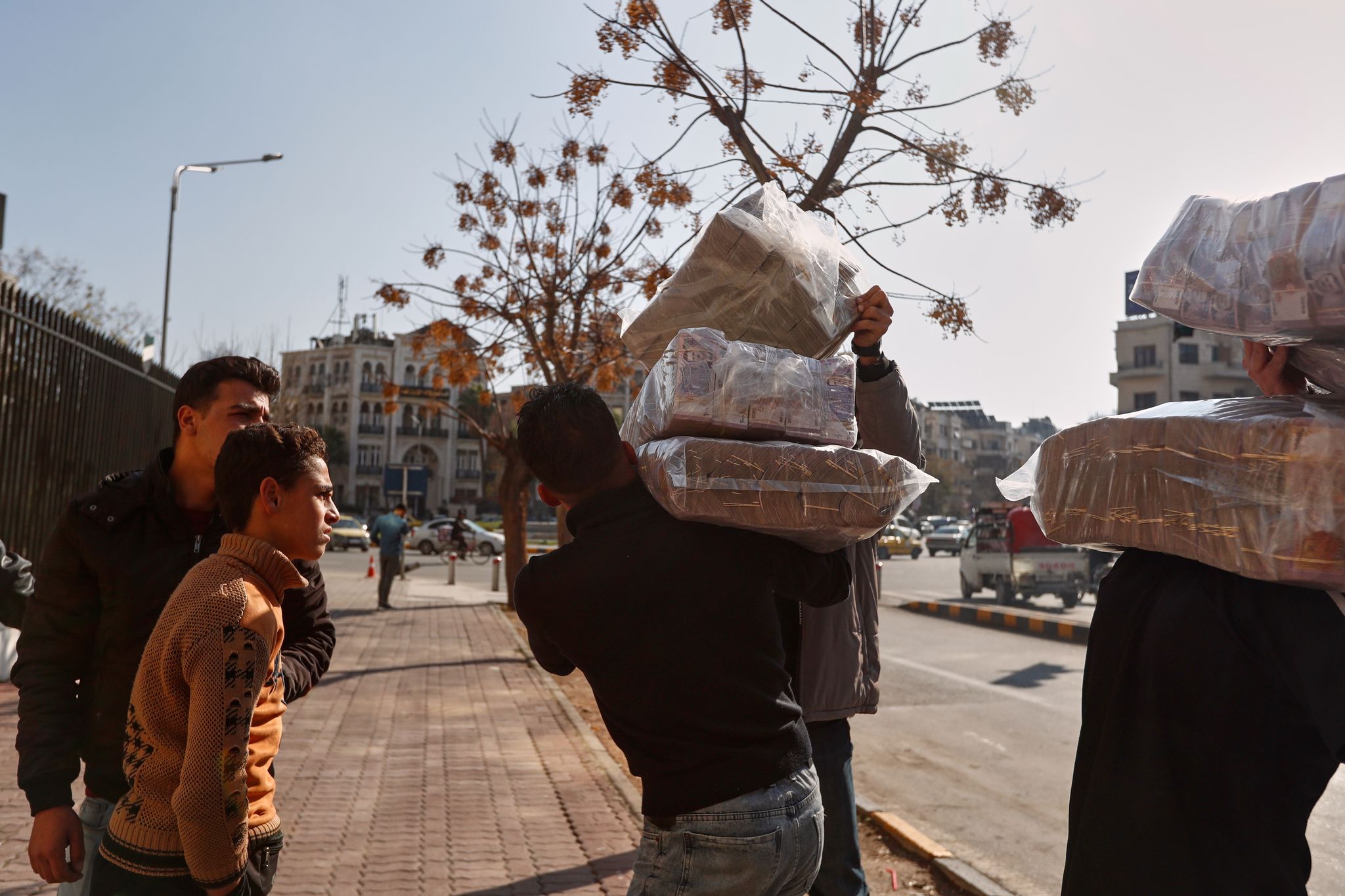
Over a year and a half after the fall of the Assad regime, the Syrian pound (SYP) continues to lose value despite sweeping political changes many expected would stabilize the economy. The easing of most international sanctions, the announcement of billions of dollars in foreign investment commitments and the recent redenomination of the currency have all failed to halt the pound’s decline, raising questions about the depth of Syria’s economic recovery.
Depreciation comes as Syria navigates a complex postwar transition. While economic activity improved in some sectors and international engagement has increased, economists warn structural weaknesses continues to undermine confidence in the national currency.
According to Benjamin Fève, senior consultant at Karam Shaar Advisory Ltd., expectations surrounding Syria’s future have improved far more rapidly than the underlying economic conditions. “The Syrian pound is still depreciating because sanctions relief and political openings have improved expectations faster than they have improved economic fundamentals,” Fève told Levant24.
He noted Syria continues to suffer from a severe shortage of foreign currency, while imports remain high and exports remain weak. “Investment announcements and reconstruction commitments can help sentiment, but they do not support the currency until money actually enters the country, projects are financed, and implementation begins,” he said.
Fève also pointed to broader regional and international pressures, arguing that the recent conflict involving Israel, the US and Iran, along with disruptions affecting the Strait of Hormuz, contributed to inflationary pressures that have also impacted Syria.
Recovery Indicators Mask Structural Problems
Recent economic indicators present a mixed picture. Syria Direct documented improvements in commercial activity, increased availability of goods and stronger consumer demand in some regions following Assad’s collapse. Post-Assad the SYP initially strengthened, improving from nearly 19,000 SYP to the dollar in the final days of the regime to around 12,100 SYP against the dollar a year later.
Researchers cited by Syria Direct attributed the recovery to improved political conditions, increased foreign engagement, sanctions relief and a growing flow of remittances via formal financial channels. However, economists caution those gains did not emerge from a substantial increase in domestic production.
Improvements in the currency, they maintain, were driven primarily by foreign inflows rather than fundamental changes in Syria’s productive capacity. While trade activity expanded and some sectors experienced growth, the economy remains constrained by damaged infrastructure, shortages of capital, the emigration of skilled workers and weak state institutions.
Fève posits the pound’s continued depreciation reflects deeper problems beyond sanctions. “The issue is not only sanctions, but also weak institutions, limited foreign reserves, damaged infrastructure, low confidence, poor financial intermediation, and uncertainty over rules, contracts, and implementation.”
He added the recent SYP redenomination may simplify transactions and carry symbolic significance, but it does not address the underlying drivers of currency weakness. “Redenomination may make transactions easier and symbolically mark a new phase, but it does not by itself restore trust, generate exports, reduce import dependence, or bring in foreign currency.”
Daily Life Still Shaped by Economic Hardship
While some Syrians benefit from increased economic activity, many continue to struggle with rising living costs. Public sector salary increases and growing reconstruction activity boosted incomes for some workers, particularly in areas such as Daraa. Business owners also reported stronger sales and increased demand for construction-related services.
At the same time, many households continue to face significant financial pressure. Fuel, electricity and basic services remain expensive relative to average incomes. Many continue facing difficulties covering household expenses despite improved market availability and greater access to goods.
The situation remains particularly difficult for displaced families living in camps, where reductions in humanitarian assistance left many households with fewer resources than before the regime’s collapse. Analysts warn improvements in economic activity alone may not translate into broad-based prosperity if inflation continues to erode purchasing power.
Turning Promises Into Capital
Looking ahead, economists argue that Syria’s recovery will depend less on political announcements and more on concrete economic reforms. Fève warned against policies which have historically weakened confidence in the currency.
“The priority should be to avoid repeating past mistakes: defending an unrealistic exchange rate, relying on administrative controls, maintaining multiple exchange rates, monetizing deficits, or announcing spending increases without credible financing.” Instead, he called for a transparent foreign exchange market, predictable monetary policy, stronger fiscal discipline and deeper integration of Syria’s banking sector into the international financial system.
Perhaps most importantly, he stressed the need to convert investment memorandums and reconstruction pledges into projects that generate real economic activity. “The most useful investments will be those that generate or save foreign currency, especially in energy, agriculture, logistics, and export-oriented production,” Fève said.
For now, the continued decline of the SYP serves as a reminder that political change and international goodwill alone cannot rebuild an economy devastated by years of conflict. While Syria’s post-Assad transition has created opportunities, economists say sustainable currency stability will ultimately depend on restoring production, attracting actual capital inflows and rebuilding confidence in the country’s economic institutions.