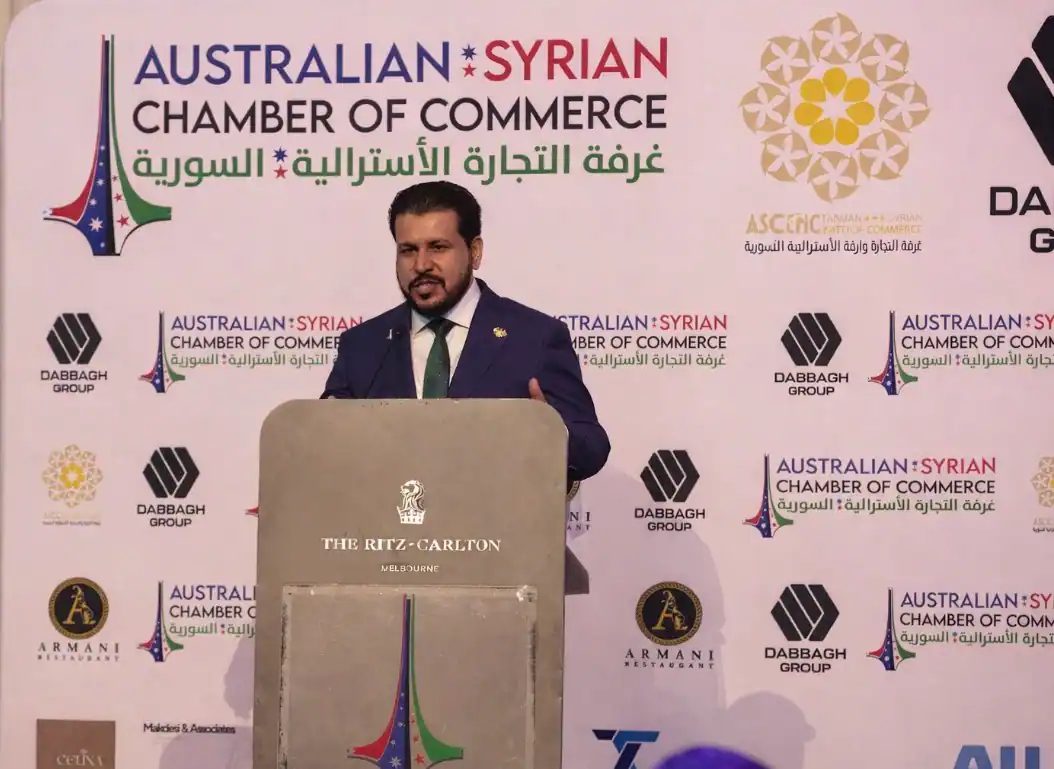
 Last year the city of Sydney witnessed the establishment of the Australian-Syrian Business Network (ASBN), a network aimed at forming a bridge for trade and investment between Australia and Syria. On April 10 of this year, Melbourne hosted the next significant milestone in Syrian-Australian relations with the launch of the Syrian-Australian Chamber of Commerce (SACOC).
The event drew senior officials and business leaders, underscoring growing interest in strengthening economic ties and expanding cooperation. The chamber is expected to serve as a central platform for Syrian and Australian entrepreneurs, particularly those interested in reconstruction and investment opportunities in Syria. Organizers and attendees described the launch as an important step toward creating direct business links and supporting long-term commercial partnerships.
Leadership and Legal Framework
The SACOC includes 11 expatriate Syrian businessmen and operates under a special license issued by the relevant Australian ministries, giving it formal legal standing. That status allows the organization to carry out its activities within an official and recognized framework.
Chaired by Syrian-Australian businessman Marwan Dabbagh, the chamber aims to strengthen trade and commerce while bringing together the efforts and expertise of the Syrian community in Australia. Its leadership says the group will focus on facilitating communication among investors, identifying opportunities and encouraging practical cooperation between businesses in both markets.
Focus on Syria’s Investment Climate
Talal al-Hilali, director general of the Syrian Investment Authority, described the chamber’s launch as a notable turning point in bilateral relations. He said the new body would create direct channels of communication between investors and business leaders in Syria and Australia, helping accelerate investment activity and the exchange of opportunities.
Hilali also said Syria’s investment environment has become more open, citing opportunities available to both domestic and foreign investors. He pointed to legal protections under the country’s Investment Law No. 114, which the government says is designed to attract capital and support economic growth.
Diaspora’s Role in Economic Ties
Speakers throughout the event emphasized the role of the Syrian-Australian community in building stronger economic and cultural ties. Presentations from Syrian officials highlighted sectors they believe offer strong investment potential, while also stressing the value of diaspora-led partnerships.
Dr. Adel al-Shamari, head of investor support at Syria’s Foreign Affairs Ministry, said the Syrian community in Australia has become an active force in advancing strategic cooperation. He said business leaders from both countries can help act as a bridge for economic exchange, shared interests and future partnerships.
The chamber’s establishment marks a new phase in Syria-Australia economic relations, with its founders positioning it as a vehicle for sustained cooperation. More broadly, the launch reflects how diaspora business networks continue to shape international investment relationships through institutional and community-based engagement.