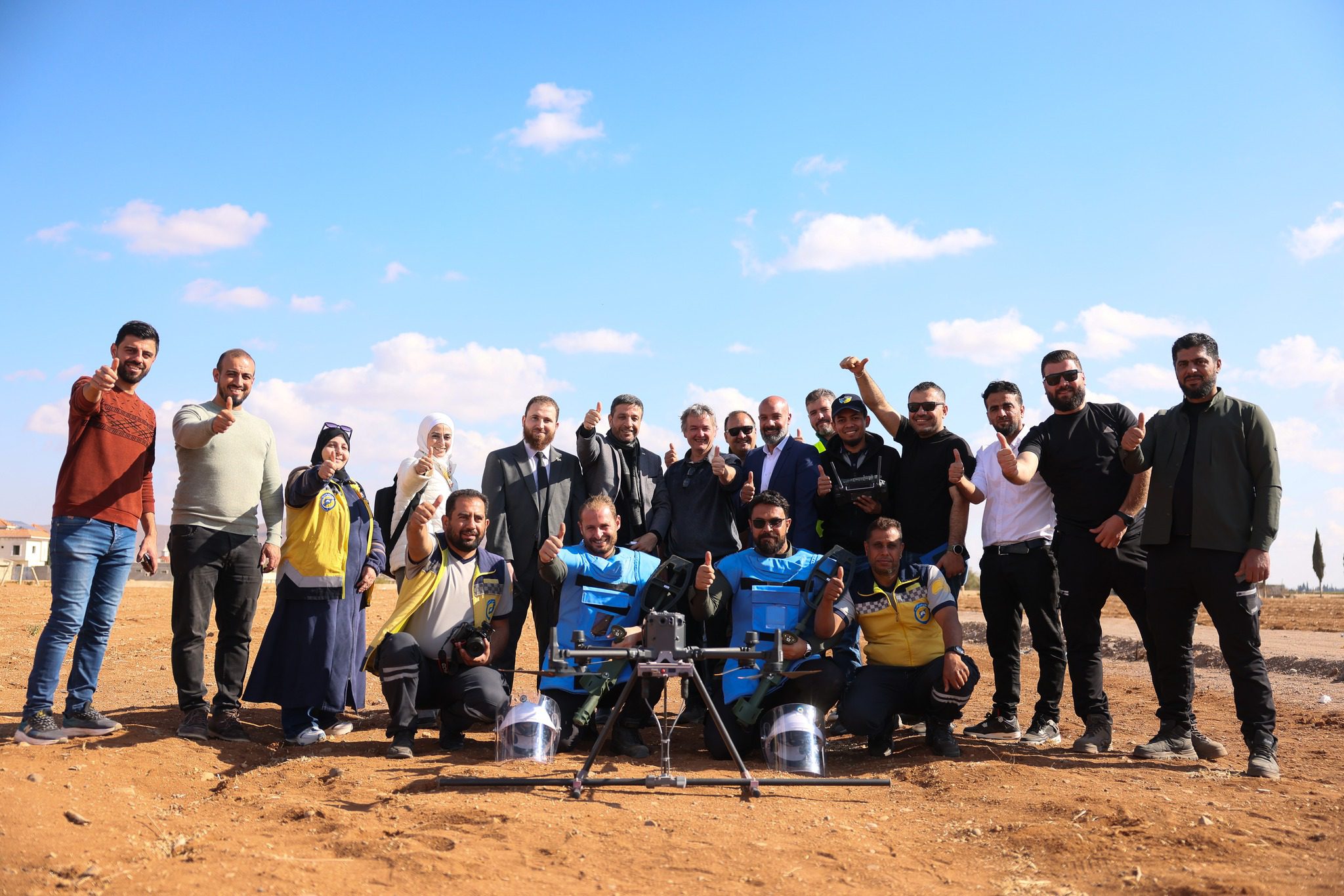
Interest in drone technology is growing in Syria, where unmanned aerial vehicles are moving beyond basic photography into tools for monitoring and data collection across various economic and service sectors. Officials and experts, such as the Syrian American Engineers’ Association (SAEA), say these systems can promote reconstruction and recovery while playing an active and strategic role in improving efficiency, safety and supporting informed decision-making.
Dr. Yasir Aliwi, director general of Syrian Arab Standards and Metrology Organization (SASO), confirmed to Al-Thawra Newspaper drones help industrial operations address field challenges by offering safer and more efficient ways to conduct inspections. He noted monitoring industrial facilities, high-voltage power lines, oil pipelines and bridges with drones reduces risks to workers while improving accuracy.
Aliwi added the value of drones lies in the data they produce. Thus creating opportunities developing local software for aerial image analysis, spatial data processing and artificial intelligence applications managing drone operations. He said such efforts could support the growth of Syria’s technology sector and create specialized jobs.
Industrial and Environmental Applications
Beyond industrial use, drones are expanding into tourism, environmental monitoring and logistics. Officials say aerial imaging can help document archaeological sites and natural landscapes, improving their visibility and appeal. In environmental work, drones assist in tracking forest conditions and monitoring changes which may lead to fires or illegal encroachment.
Aliwi said the technology could also support logistics, particularly in emergency response or areas that are difficult to access. While still limited, these applications reflect broader global trends in the use of unmanned systems.
Precision Tools for Agriculture
In agriculture, experts describe drones as a practical tool for improving productivity. Dr. Muhammad Mardini, director of communication and executive support at the General Commission for Scientific Agricultural Research, explained to Al-Thawra Newspaper drones provide high-resolution images providing farmers a clearer understanding of field conditions.
He explained early detection of crop issues allows farmers to respond more quickly, reducing potential losses. Drones also help improve irrigation management by enabling close monitoring of pivot systems, including towers, wheels and sprinkler heads, without the need for constant field visits.
Mardini said the technology can map large agricultural areas in a short time, producing accurate data supporting planning and resource use. Farmers can also use drones for targeted spraying of fertilizers and pesticides, which helps limit waste and avoid damage to crops. In addition, repeated aerial imaging allows for ongoing analysis of plant growth and performance.
Technology and Future Development
Globally, drone use continues to expand across civilian and military fields. In Syria, experts say adopting these technologies has become increasingly important for economic recovery and resource management.
While challenges remain, including infrastructure and investment needs, officials see potential in developing local expertise and integrating drone technology into key sectors. They say continued progress could support more efficient operations and contribute to rebuilding efforts in the years ahead.