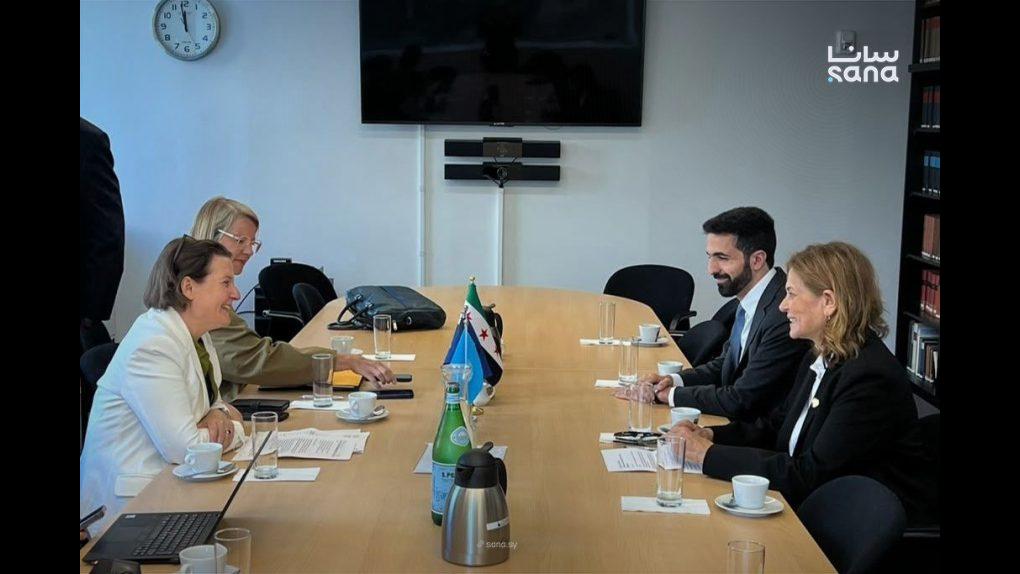
 Syria and Germany have agreed to strengthen cooperation on protecting the rights of persons with disabilities and supporting their inclusion in society, following meetings held on the sidelines of a UN conference in New York.
The discussions brought together Syrian Minister of Social Affairs and Labor Hind Qabawat, Syria’s permanent representative to the UN, Ibrahim Olabi, and Professor Annette von Kalkreuth, director-general for affairs of persons with disabilities at Germany’s Federal Ministry of Labor and Social Affairs.
The meeting took place during the 19th session of the Conference of States Parties to the Convention on the Rights of Persons with Disabilities (COSP19). Both sides agreed to enhance coordination, expand the exchange of expertise and develop partnerships aimed at supporting and empowering persons with disabilities while promoting their full participation in society.
Addressing Growing Needs in Syria
During the discussions, Qabawat outlined the ministry’s efforts and future plans related to disability rights and services. She described the issue as a shared national responsibility requiring cooperation among government institutions, ministries and civil society organizations.
Qabawat said the government’s objective is to ensure no segment of society is excluded from public life. She emphasized the importance of creating opportunities for persons with disabilities to participate fully in social and economic activities while securing access to their rights.
The minister noted the number of persons with disabilities in Syria has increased significantly as a result of years of conflict and its lasting consequences. She said the situation requires targeted measures, including employment initiatives and broader support programs designed to promote inclusion and independence.
According to Qabawat, previous efforts in this area fell short of addressing the scale of the challenge, leaving current institutions with the task of confronting years of accumulated needs and rebuilding support systems.
Mine Contamination Remains a Major Concern
Olabi highlighted another factor contributing to the rise in disability cases, pointing to the continued presence of landmines and unexploded remnants of war in many parts of the country. He stressed the importance of addressing the needs of affected individuals alongside ongoing mine-clearance operations, noting the humanitarian impact these hazards continue to have on communities across Syria.
Kalkreuth reaffirmed Germany’s commitment to strengthening cooperation with Syria on disability rights and inclusion. She said Germany has extensive experience in developing policies and programs for persons with disabilities and is prepared to share expertise and provide technical support.
She emphasized advancing disability rights requires coordination across all state institutions and ministries, describing inclusion as a responsibility that extends beyond any single government agency. Kalkreuth also noted her longstanding interest in Syria, citing her previous work on Syrian-related issues during her time working with former German Chancellor Angela Merkel. Qabawat invited Kalkreuth to visit Damascus and observe ongoing efforts while exploring additional opportunities for cooperation.