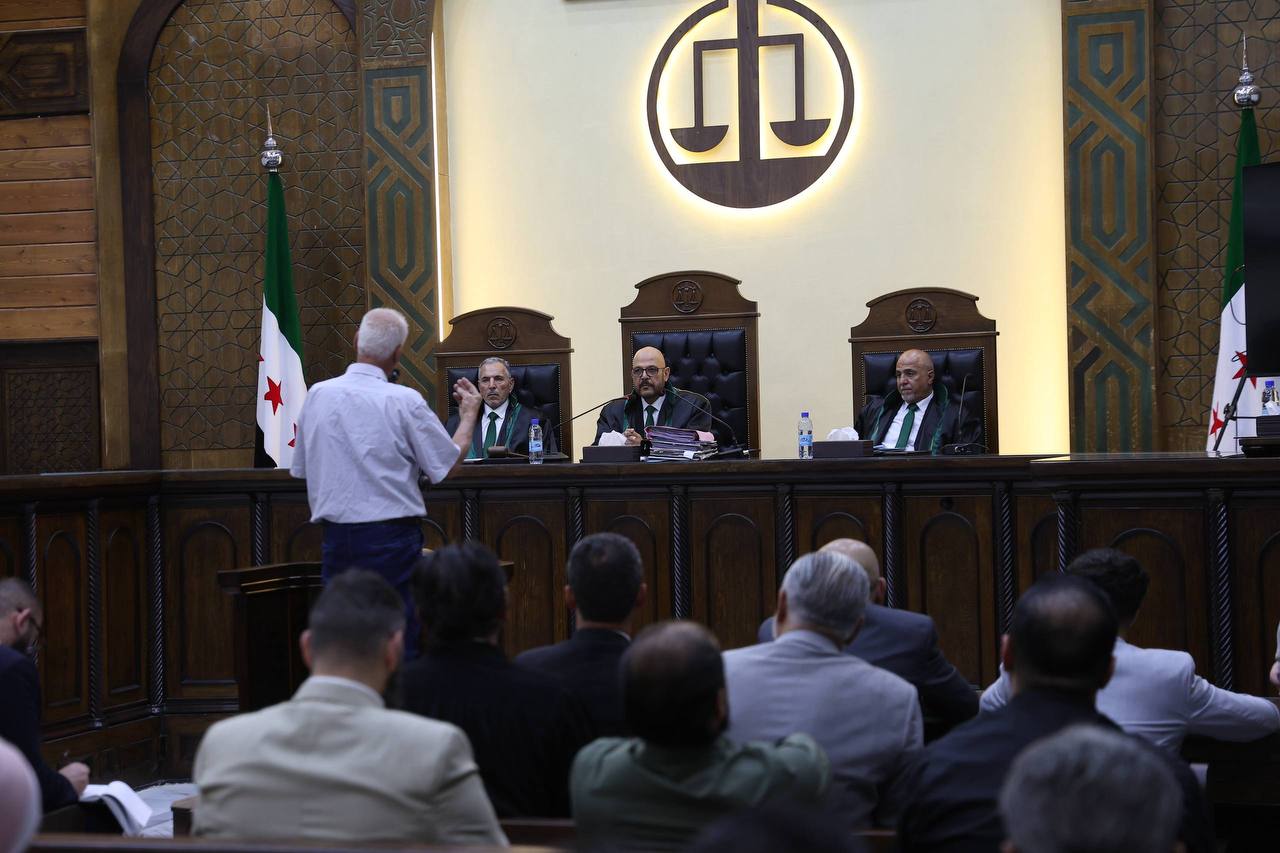
 Syria’s transitional justice process took another step forward as the trial of Atef Najib, a former security official and prominent figure under Assad’s regime in Daraa, resumed before the Fourth Criminal Court for Transitional Justice in Damascus.
Speaking to Levant24, lawyer Jassim al-Mousleh described proceedings as an important test of Syria’s commitment to the rule of law. He emphasized transitional justice should not serve as an act of public revenge or a political instrument but as a responsibility entrusted to state institutions and the judiciary.
Mousleh said Syrians should support the legal process and allow justice to proceed through fair trials rather than retribution. He pointed to President Ahmad al-Sharaa’s references to the arrest of Amjad Yusuf as an indication of the government’s commitment to accountability through lawful judicial mechanisms intended to promote reconciliation and prevent renewed conflict.
Witnesses Describe Alleged Abuses
During its fourth session on Tuesday, the court heard testimony from 13 witnesses, including a protected witness identified as “One.” According to Radif Mustafa, director of accountability at the National Commission, the hearing focused exclusively on prosecution witnesses and was attended by representatives from international and human rights organizations.
Witnesses presented testimony and evidence concerning alleged human rights violations committed under Najib’s authority. The allegations included arbitrary detention, extrajudicial killings, systematic torture and abuses against children, who reportedly represented a significant portion of detainees in the cases under review.
One witness described physical and sexual abuse inside a security branch in Daraa. Najib rejected the allegations and challenged the witness accounts. The court later adjourned proceedings until July 14, when additional prosecution witnesses are expected to testify.
Charges Tied to the Daraa revolution
Najib, a cousin of Bashar al-Assad and the former head of Political Security in Daraa province, faces charges that prosecutors say amount to war crimes. They accuse him of direct and command responsibility for systematic crimes against civilians, including murder, torture, arbitrary detention and the suppression of peaceful demonstrations.
The indictment alleges Najib oversaw the use of live ammunition and excessive force against protesters and bears responsibility for the Omari Mosque massacre, an event widely associated with the early stages of the Syrian revolution. Prosecutors also accuse him of participating in coordinated efforts with other security, military and political officials to carry out widespread abuses.
Throughout previous hearings, Najib has denied all charges. He argues other security agencies arrested the schoolchildren, whose anti-government graffiti in March 2011, helped spark demonstrations in Daraa. He has also blamed Military Security and Air Force Intelligence for opening fire on protesters claiming disagreements among senior officials influenced the government’s response to the protests.
Expanding Accountability Measures
Najib’s case is part of a broader transitional justice initiative aimed at uncovering the truth, delivering justice for victims and addressing impunity while maintaining fair trial standards. The National Commission announced upcoming trials involving other former officials, including Wassim al-Assad, a relative of Assad, and Ahmad Hassoun, the former grand mufti. Together, these proceedings reflect a wider effort to pursue accountability through legal institutions while emphasizing due process and national reconciliation in post-conflict Syria.